MIT researchers are building new models to tackle one of energy’s toughest problems: how to safely dispose of high-level nuclear waste for thousands of years.
Doctoral student Dauren Sarsenbayev is working with Professor Haruko Murakami Wainwright to design tools that predict how waste behaves underground and how barriers hold up.
Their effort comes as countries weigh long-term storage options and seek public trust in permanent solutions.
Why Nuclear Waste Demands New Tools
High-level nuclear waste, including spent fuel, remains hazardous for very long periods.
Engineers use multiple barriers, such as metal canisters, buffer materials, and deep rock, to isolate it.
Predicting how these barriers perform over centuries requires models that link heat, groundwater flow, and chemistry.
Small errors can grow over time, so researchers test assumptions and compare scenarios to reduce uncertainty.
Public confidence depends on clear analysis and transparent risk communication.
The MIT Effort
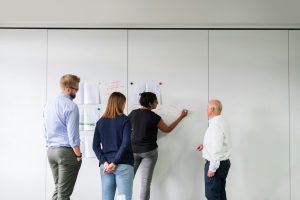
“MIT doctoral student Dauren Sarsenbayev is working with Professor Haruko Murakami Wainwright to develop models that address disposal of high-level nuclear waste.”
The team’s focus on modeling reflects a practical need.
Site conditions vary by rock type, depth, and water pathways.
A general model must adapt to different settings, such as salt, clay, or crystalline rock.
It must also capture how heat from waste affects fractures and groundwater chemistry.
These factors shape corrosion rates, mineral changes, and possible transport of contaminants.
Global Context and Lessons
Several countries are moving ahead with deep geological repositories.
Finland’s Onkalo project is often cited as the furthest along, with underground facilities built and fuel placement expected later this decade.
Sweden approved a repository plan near Forsmark after long review and local consent.
France and Canada are advancing site selection and design work with strong oversight.
In the United States, a national repository has yet to open, keeping pressure on interim storage.
- Deep rock offers isolation far from the surface environment.
- Engineered canisters and buffer materials add defense in depth.
- Models test performance under heat, pressure, and chemical change.
What Good Models Must Answer
Key questions guide today’s research.
How quickly does heat from waste move through rock and clay.
When might corrosion breach a canister under different water and chemical conditions.
What are the fastest water pathways, and how do sealing systems slow them.
How do rare events, such as earthquakes or human intrusion, change risk projections.
Clear answers support licensing, design choices, and community engagement.
Balancing Caution and Progress
Experts often disagree on details but agree on the need for evidence.
Advocates argue that proven geology and layered barriers can meet safety goals.
Skeptics point to the long timescales and prefer stronger monitoring and retrievability.
Trusted models help bridge these views by testing options and revealing trade-offs.
They also guide where added research can cut the largest risks.
Data, Validation, and Transparency
No single model can settle every question.
Field data, lab experiments, and natural analogs are needed to check results.
Open methods, sensitivity studies, and peer review build credibility.
Clear visualizations help the public and decision-makers see the bounds of risk.
The MIT team’s work aims to support this type of accountable analysis.
What To Watch Next
Several trends will shape the next steps.
Repository programs in Europe offer near-term case studies for performance confirmation.
New materials research may extend canister life or improve seals.
Advances in computing can run more complex simulations and test rare scenarios.
Public engagement practices are also evolving, with more emphasis on local consent and benefits.
The MIT project highlights a wider shift from debate to design grounded in testable evidence.
If models can clearly show how barriers perform, they can guide safer choices and steady policy.
As countries move closer to permanent disposal, strong modeling will be key to earning trust and making sound, long-term decisions.

Senior Software Engineer with a passion for building practical, user-centric applications. He specializes in full-stack development with a strong focus on crafting elegant, performant interfaces and scalable backend solutions. With experience leading teams and delivering robust, end-to-end products, he thrives on solving complex problems through clean and efficient code.