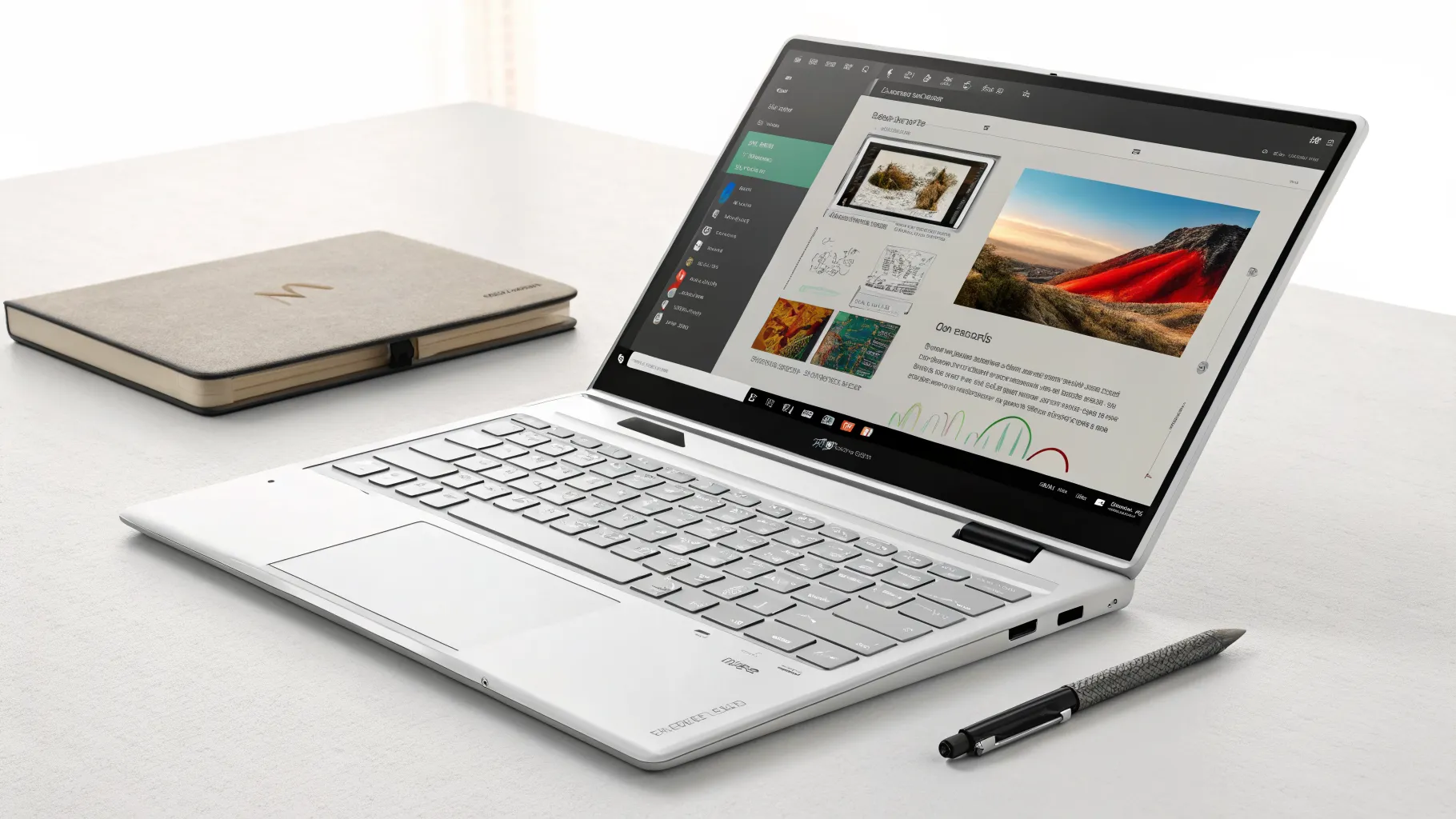
Compal is pitching a fresh take on the laptop, adding a color E Ink display to the palm rest to create a second workspace for notes, widgets, and AI tools. The concept, called the AI Book, reimagines how unused chassis space could support writing, reminders, and quick prompts without crowding the main screen.
In its pitch, the company frames the idea as a productivity aid that blends pen input with low-power visuals. The design targets students, remote workers, and anyone who juggles tasks across windows. It also nods to the wider push to bring AI features closer to everyday workflows.
“Compal’s award-winning AI Book concept adds a color E Ink display to the laptop’s palm rest area, turning otherwise unused space into a stylus-friendly workspace for notes, widgets, and AI prompts.”
Why It Matters
Laptops have seen faster chips and brighter screens, but physical layouts have changed little. The palm rest remains mostly empty real estate. Compal’s approach treats that space as a mini dashboard for quick actions and handwriting. A color E Ink panel could run glanceable information at low power, even when the main display is off.
E Ink is known for eye comfort and energy savings. It is slower to refresh than LCD or OLED, but its strength lies in static content. That makes it a fit for lists, timers, and scribbles, rather than animations or fast video. Color E Ink expands use cases for categorizing notes, labeling tasks, or visual widgets.
Design And Use Cases
The concept centers on a stylus-friendly surface. That suggests palm rejection, pressure detection, and a pen dock will matter. The panel’s size and durability will be key, given its position near the keyboard where hands rest and drinks may spill.
Compal envisions several daily uses:
- Handwritten notes during calls without covering the main screen
- Persistent widgets for calendars, to-dos, and timers
- Quick AI prompts for summaries, translations, or drafts
For creators, a second canvas could host color palettes, layer toggles, or macro keys. For students, it could replace a paper notebook during lectures. For support agents, it could display scripts or call metrics while the main display runs apps.
Potential Benefits And Trade-Offs
Battery life is the headline upside. E Ink uses power mainly when content changes. If the panel holds a to-do list for hours, it would barely sip energy. It could also stay readable in bright light, easing eye strain during long work sessions.
But trade-offs loom. Refresh speed will limit fast interactions. Typing comfort may change if the surface texture differs from a standard palm rest. Durability and smudge resistance must hold up under constant contact. Repair costs could rise if the lower panel cracks.
Privacy is another concern. Sticky notes on a palm rest can be visible to people nearby. Users will want quick hide or lock options. Enterprises may ask for policy controls to disable the panel in sensitive spaces.
Industry Reaction And Feasibility
Concept laptops often preview features that take years to ship, if they ship at all. Still, second displays are gaining ground. Gaming laptops have tried small screens above the keyboard. Foldable and dual-screen designs are carving a niche. An E Ink palm rest is a cheaper, lower-power twist on this trend.
Analysts who follow notebooks say the idea aligns with the push to surface AI tools at the edge. A one-touch prompt pad could reduce context-switching between apps. However, they also flag the need for tight software integration. Without smart handwriting recognition, custom widgets, and cross-app shortcuts, the panel could end up as a gimmick.
What To Watch Next
Three factors will signal progress. First, partnerships with note-taking and productivity apps. Second, hardware details like pen latency, color gamut, and scratch resistance. Third, enterprise features for device management and data control.
If Compal can check those boxes, the concept could move from showpiece to shipping product. If not, it may join a list of clever but short-lived experiments.
For now, the AI Book points to a simple idea with clear appeal: keep the main display focused, and hand off side tasks to a quiet, low-power panel within easy reach. Whether that balance holds in daily use will decide its future.
The next phase will likely include pilot programs with education or business customers and developer kits for app makers. If early users report stronger focus and less app juggling, other manufacturers may follow. If comfort or software falls short, the industry may look elsewhere for its next interface shift.

Rashan is a seasoned technology journalist and visionary leader serving as the Editor-in-Chief of DevX.com, a leading online publication focused on software development, programming languages, and emerging technologies. With his deep expertise in the tech industry and her passion for empowering developers, Rashan has transformed DevX.com into a vibrant hub of knowledge and innovation. Reach out to Rashan at [email protected]