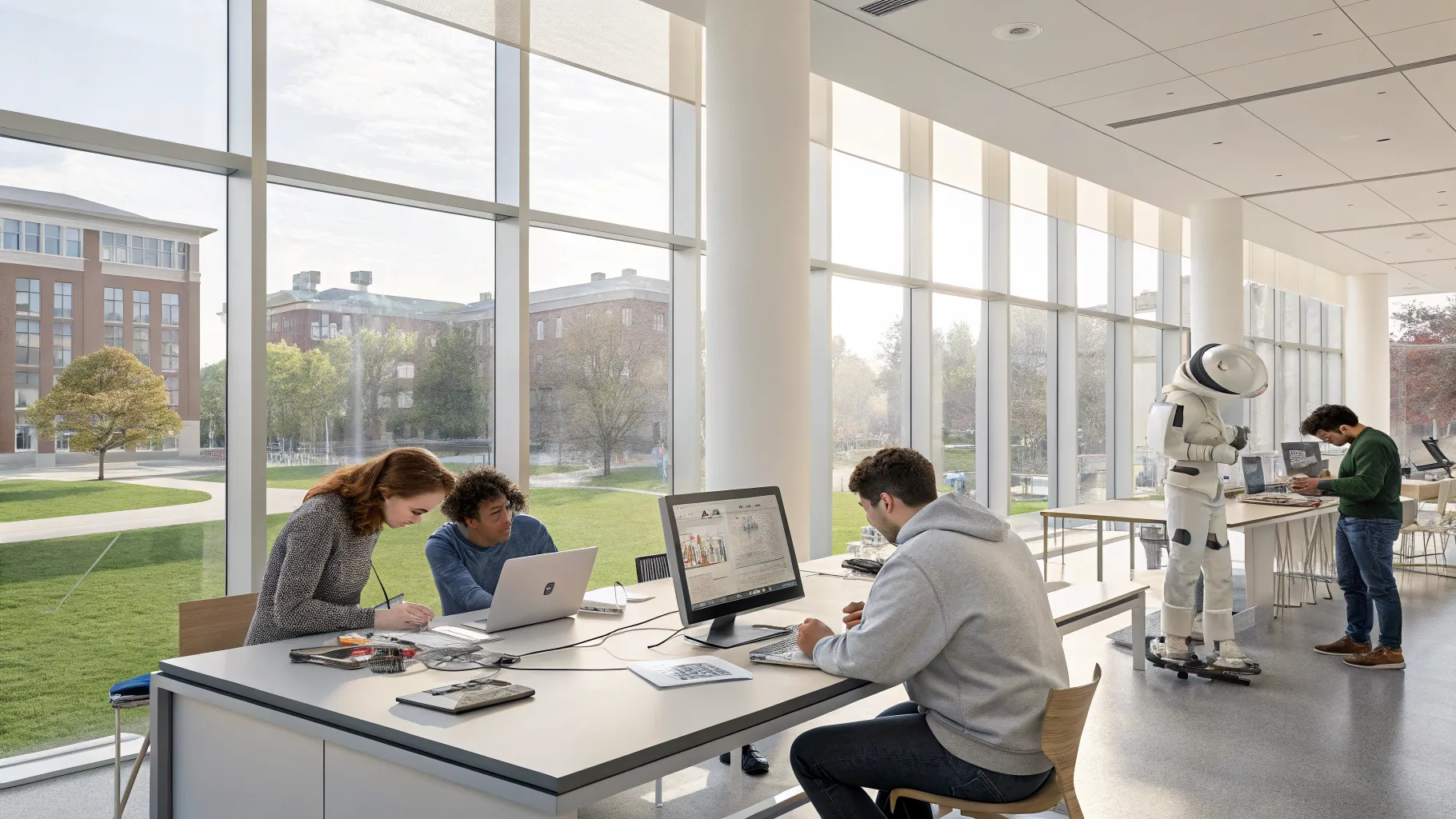
MIT and the Hasso Plattner Institute have launched a decade-long hub to link artificial intelligence with design and the creative arts, signaling a sustained push to reshape how people learn and make things with machines. The initiative, led by the MIT School of Architecture and Planning, the MIT Schwarzman College of Computing, and the MIT Morningside Academy for Design, aims to expand research and education at the intersection of AI, design, and creativity.
“MIT and the Hasso Plattner Institute establish the MIT and HPI AI and Creativity Hub, a 10-year collaboration led by the MIT School of Architecture and Planning, MIT Schwarzman College of Computing, and MIT Morningside Academy for Design to advance research and education at the intersection of AI, design, and creativity.”
Why This Matters Now
The move comes as AI tools quickly enter design studios, classrooms, and media labs. Educators and industry leaders are racing to set clear methods for human-machine collaboration. The new hub promises long-term stability, with a 10-year plan that can anchor curricula, support shared labs, and guide standards for responsible use.
Designers have adopted generative models for sketches, 3D concepts, and storyboards. Musicians and writers are testing AI for drafts and edits. This shift raises urgent questions about authorship, bias, and training data. A joint effort between a major U.S. research university and a German institute known for engineering and design education could set common practices that others adopt.
Leadership and Academic Focus
Three MIT entities will steer the work. The School of Architecture and Planning brings studio teaching and urban, product, and media design. The Schwarzman College of Computing offers machine learning, systems, and policy research. The Morningside Academy for Design links disciplines and supports project-based learning.
The partnership with the Hasso Plattner Institute adds software systems expertise and a history with design thinking. Together, the teams are positioned to test how practitioners and students can use AI tools while keeping human intent and ethics at the center.
- Duration: 10 years
- Focus: AI, design, and creativity
- Leads: MIT SA+P, MIT Schwarzman College of Computing, MIT Morningside Academy for Design
- Partner: Hasso Plattner Institute
What the Hub Could Deliver
The hub is expected to blend research with hands-on education. Possible outcomes include studio courses where students build and critique AI-driven tools, shared datasets for creative work, and open methods for evaluating quality and originality. Faculty may run joint seminars, exchange programs, and public showcases to test ideas in real settings.
Industry ties could follow. Design firms and startups need ways to compare tools, measure bias, and track provenance. Clear evaluation methods and reference projects would help teams decide when and how to use AI in their workflows.
Balancing Promise and Risk
Supporters see the chance to speed early drafts, explore many options, and improve accessibility for people with different skills. Skeptics worry about copyright, data consent, and job shifts. The hub’s structure suggests it will address both sides, from technical safeguards to policy guidance and creator rights.
Key questions likely to shape the agenda include how to credit human input, how to document training data, and how to prevent models from reinforcing bias. Classroom settings can be test beds for rules on attribution, transparency, and fair use that later extend to studios and firms.
Signals to Watch
Over the first year, observers will look for signs of momentum. New joint courses, early research pilots, and public design reviews will show how the partners set priorities. Clear benchmarks on quality, originality, and safety would help others compare results.
If the hub publishes shared tools or frameworks, adoption by schools and companies will be a key indicator. Partnerships with cultural institutions, such as museums or media labs, could bring the work to wider audiences and stress-test ideas under real constraints.
The launch marks a long-term bet that human creativity and AI can work together with care and skill. With a 10-year runway and leadership from three MIT units alongside the Hasso Plattner Institute, the hub is set to shape how students learn, how tools are built, and how creators keep control of their work. The next phase will reveal the first projects, the guardrails they set, and whether these models become standards for design and creative practice.

Rashan is a seasoned technology journalist and visionary leader serving as the Editor-in-Chief of DevX.com, a leading online publication focused on software development, programming languages, and emerging technologies. With his deep expertise in the tech industry and her passion for empowering developers, Rashan has transformed DevX.com into a vibrant hub of knowledge and innovation. Reach out to Rashan at [email protected]