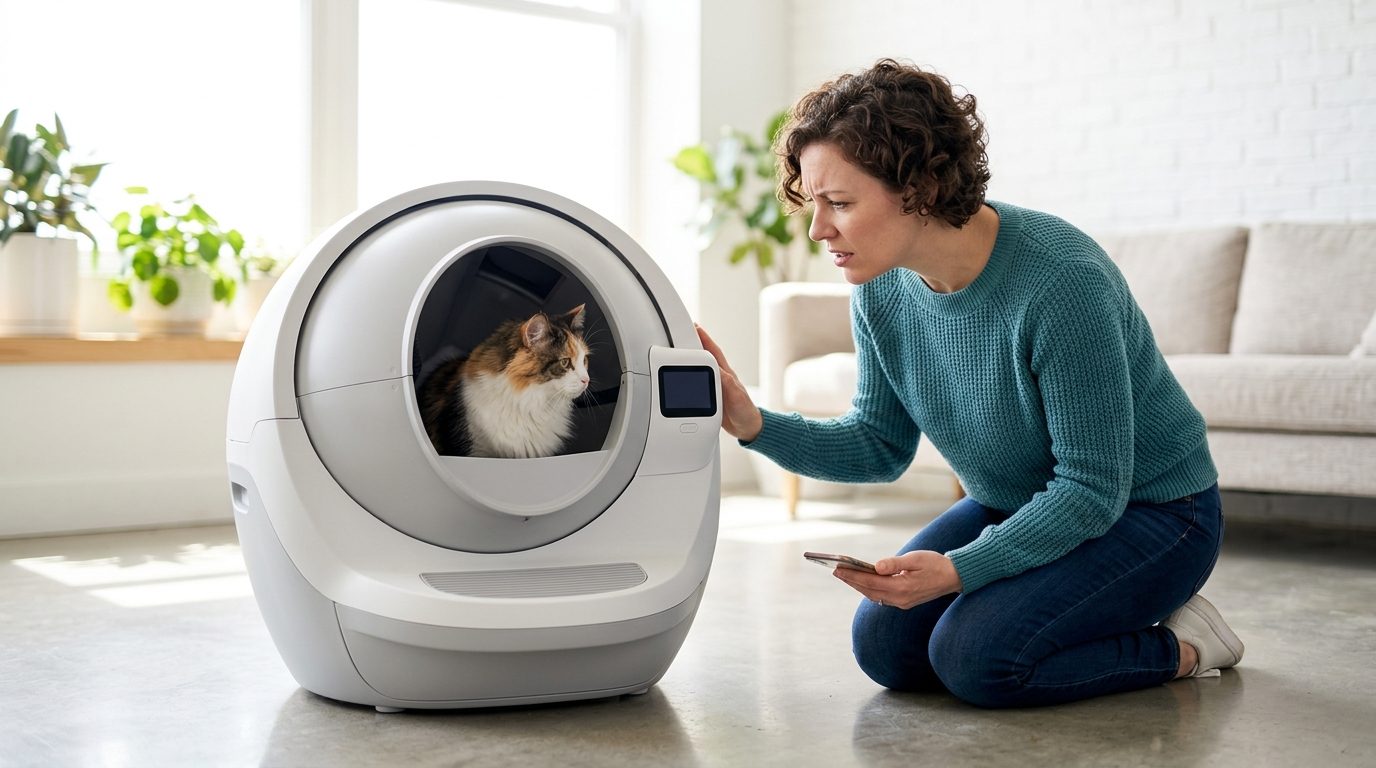
A $900 AI-powered litter box is facing a blunt consumer question: Why does a premium pet device lack the viewing feature its buyer expected?
The complaint highlights a wider challenge for connected pet products. High prices and artificial intelligence labels can raise expectations, even when buyers receive limited information about what a device actually does.
“$900 for an AI-powered litter box and I can’t even watch my cat poop?”
The product and buyer were not identified. That limits any assessment of the specific device, its advertised functions, or whether live video was ever promised. Still, the comment captures growing tension between product marketing, privacy, and practical value.
Premium Price Raises Expectations
Automatic litter boxes are designed to reduce routine cleaning. More advanced models may track visits, identify pets, measure weight, or send health alerts through a mobile application.
At $900, buyers may expect more than automated waste removal. They may also look for clear health reports, reliable notifications, easy maintenance, and detailed monitoring.
However, an AI label does not have one standard meaning across consumer products. It may refer to software that recognizes behavior patterns, separates pets by weight, or flags unusual bathroom habits. It does not always mean the device includes a camera or live video.
The gap between those functions matters. A customer may assume an expensive monitoring product offers visual access, while the manufacturer may focus on sensor-based data instead.
Video Creates Privacy and Security Questions
Adding a camera could help owners confirm which cat used the box. It could also provide visual evidence of straining, repeated visits, or other behavioral changes.
Yet indoor cameras create risks that weight sensors and motion detectors may avoid. A litter box may sit in a bathroom, laundry room, or another private part of a home.
A video-enabled model would require clear safeguards, including:
- Visible controls for recording and live viewing
- Secure storage and encrypted account access
- Clear rules for retaining or deleting footage
- Software updates for known security flaws
Manufacturers must weigh those concerns against customer demand. Excluding a camera may be an intentional privacy choice, rather than a technical omission. If so, companies should explain that choice before purchase.
Health Claims Need Careful Limits
Bathroom patterns can offer useful clues about a cat’s health. Changes in frequency or duration may prompt an owner to seek veterinary advice.
Still, automated alerts cannot diagnose illness on their own. Sensor errors, multiple cats, connectivity problems, or changes in litter habits can affect the data. Owners should treat device reports as supporting information, not a substitute for veterinary care.
The complaint also points to a need for clearer product pages. Sellers should state whether a device has a camera, what its AI analyzes, and which features require a subscription.
For buyers, the central lesson is to compare specific functions instead of relying on price or an AI label. For manufacturers, the issue is trust. A $900 device must explain its limits as clearly as its benefits. Future competition in smart pet care may depend less on flashy terms and more on useful features, privacy protections, and honest expectations.

Kirstie a technology news reporter at DevX. She reports on emerging technologies and startups waiting to skyrocket.