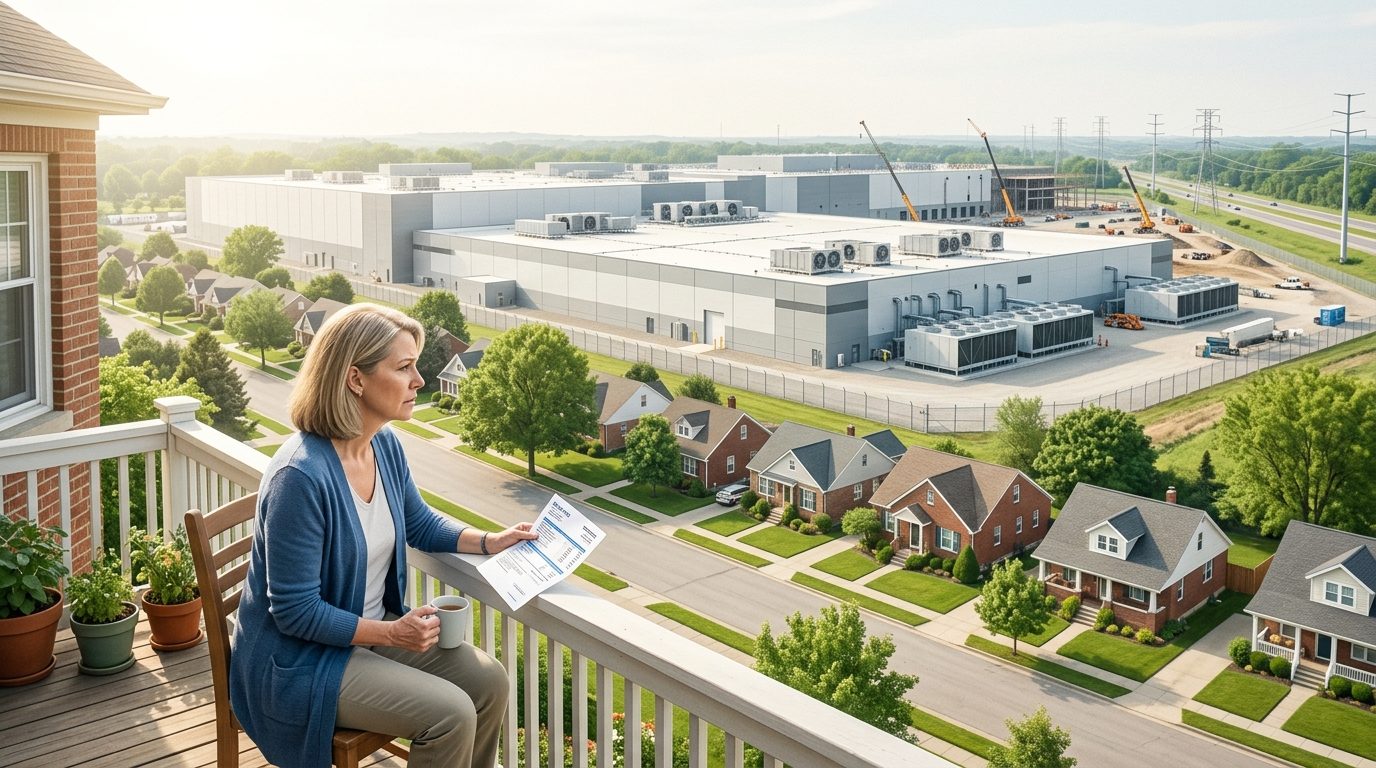
Ohio’s artificial intelligence data center boom is raising costs and disrupting neighborhoods, with some residents reporting higher electricity bills, constant noise, and pressure to leave their homes.
Fox Business correspondent Madison Alworth reported on the issue during “America Reports.” Her report highlighted the experience of Ohio resident Artie Carpenter, whose community has felt the effects of nearby data center growth.
The dispute reflects a wider challenge for communities hosting large computing facilities. Data centers can bring investment and jobs, but they also require substantial electricity, land, cooling systems, and utility infrastructure.
Residents Face Costs and Noise
Carpenter is among the residents confronting soaring electricity bills and noise pollution. Those conditions have become serious enough to force some people to relocate, according to Alworth’s report.
Noise can come from cooling equipment, backup generators, transformers, and other systems that operate around the clock. Unlike temporary construction noise, these sounds may continue after a facility opens.
Electricity costs pose a separate concern. AI systems depend on large groups of powerful computer chips. The servers consume electricity while cooling equipment uses more energy to prevent overheating.
The report did not provide specific bill increases, noise readings, or relocation figures. Still, residents’ experiences point to questions about who pays for new power generation and grid upgrades.
AI Growth Drives Demand
Technology companies are expanding computing capacity to train and operate AI models. Ohio offers several features that can attract such projects, including available land, established utility networks, and access to major population centers.
Data centers may provide local tax revenue, construction work, and long-term technical positions. Supporters also view the facilities as infrastructure needed for cloud computing, online services, and AI development.
Yet their economic benefits can be uneven. Large facilities often employ fewer permanent workers than factories of similar size. Their energy and water needs may also create costs that extend outside the project site.
- Residents want protection from persistent industrial noise.
- Households need clarity about electricity rate increases.
- Local officials must weigh tax gains against community effects.
- Utilities must plan for rising demand without shifting unfair costs.
Policy Questions Move to the Forefront
Ohio officials and utility regulators face decisions about how data centers connect to the grid. Rate structures can determine whether developers cover infrastructure costs or whether expenses are shared among customers.
Local governments also control zoning, land use, and some noise rules. Clear distance requirements, sound limits, and monitoring could reduce conflicts near homes. Enforcement would be needed after construction, not only during the approval process.
Developers can address concerns through quieter cooling systems, enclosed equipment, sound barriers, and careful site selection. Agreements could also set operating standards and create a process for residents to file complaints.
However, mitigation may not resolve every dispute. Families facing repeated noise or rising household expenses may see relocation as their only practical choice. That outcome can divide communities and reduce trust in local planning.
Ohio’s Test for Responsible Expansion
The experiences described by Carpenter show that AI infrastructure has direct effects far from corporate offices and software laboratories. Its physical footprint reaches homes, utility systems, and municipal budgets.
The next phase of Ohio’s data center growth will depend on whether officials can measure those effects and assign costs fairly. Key issues include power pricing, noise enforcement, project transparency, and protections for nearby property owners.
Data center investment may remain an important part of the state’s economic strategy. Still, the expansion could face stronger public resistance if residents believe they are absorbing the costs. Ohio’s response may offer lessons for other states weighing AI development against household affordability and quality of life.

Senior Software Engineer with a passion for building practical, user-centric applications. He specializes in full-stack development with a strong focus on crafting elegant, performant interfaces and scalable backend solutions. With experience leading teams and delivering robust, end-to-end products, he thrives on solving complex problems through clean and efficient code.