


👁️👁️A query to ChatGPT requires nearly 10 times as much electricity as a regular Google search, according to a recent estimate.https://t.co/a7ENyGRLLh via @NYTimes
— Susan Arbetter (@sarbetter) August 26, 2024
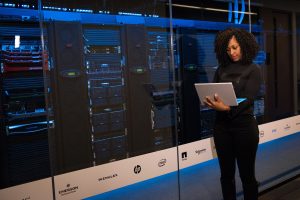
The rapid rise of artificial intelligence (AI) is fueling a surge in energy consumption by data centers, the facilities that house the computer servers powering the technology. As tech giants like Microsoft, Amazon, Google, and Meta race to incorporate AI into their products and services, they invest heavily in these power-hungry data centers. Generative AI, which can write poetry, summarize books, and answer questions with human-like proficiency, requires significantly more computing power than traditional AI.
For example, a single query to ChatGPT uses nearly ten times as much electricity as a regular Google search. Experts predict that worldwide electricity demand by data centers will at least double over the next few years. Some projections suggest a 160 percent increase by 2030, while others indicate demand could double by 2026.
Thank you @whereishayley for filling in for me on this week’s @latimes Boiling Point newsletters — and and for having the amazing idea of asking ChatGPT and Google’s AI Overview about their energy and water consumption: https://t.co/dZKTJzt5Xn
— Sammy Roth (@Sammy_Roth) August 27, 2024
This growing energy consumption is raising environmental concerns.
Why won’t Google let users turn off its “AI Overviews” tool, which gobbles up huge amounts of energy & water and sometimes tells people to put glue on pizza?
“Google did not respond to questions from The Times.”
Story by @MelodyPetersen for @latimes: https://t.co/e8WAD5jErj
— Sammy Roth (@Sammy_Roth) August 26, 2024
Ai’s environmental impact
A former Google executive called AI’s energy demands “obscene.” The increased electricity usage could lead to higher energy prices and pressure on the power grid.
However, there is another perspective on AI and the environment.
Will #AI Ruin the Planet or Save the Planet? – @NYTimes
"experts generally forecast that #energy consumption by data centers worldwide will at least double over the next few years." ~ @stevelohr https://t.co/qbPOjp99zd#climatechange #GenerativeAI
— Bob E. Hayes (@bobehayes) August 27, 2024
While the technology requires significant energy to develop and operate, it also has the potential to help reduce carbon emissions in various sectors. AI could accelerate scientific discovery and innovation in transportation, agriculture, and energy production, leading to greater efficiency and lower emissions.
As the competition for energy resources heats up, bitcoin miners also feel the impact. Some are considering repurposing their infrastructure to meet AI demands, but the transition is proving challenging due to high costs and specific infrastructure needs. The ability of the AI and bitcoin mining sectors to adapt and collaborate could shape the future energy economy.
As the global experiment in AI continues, it remains to be seen whether the technology will ultimately harm or help the planet.

Rashan Dixon is the founder and CEO of DevX, a technology media and education company covering software development, programming languages, artificial intelligence, and emerging technologies. He is also the founder and CEO of Techincon, a technology consulting business focused on technology implementation, analytics, and emerging technology trends.
Rashan brings nearly three decades of experience across enterprise technology, business systems, and consulting. He served as a Senior Business Systems Analyst at Microsoft from 2011 to 2026, following earlier experience as a Systems Analyst and Business Advisor at Kronos Incorporated. These roles inform his practical perspective on the opportunities and operational challenges of adopting new technology.
At DevX, Rashan connects enterprise technology experience with accessible coverage for developers, entrepreneurs, and business decision-makers. His areas of interest include software engineering, AI, technology strategy, digital transformation, and the intersection of emerging tools and business outcomes.