An 18-year-old high school student has made a remarkable discovery by using artificial intelligence to identify 1.5 million previously unknown objects in space. Matteo Paz developed an AI algorithm that allowed him to sift through a massive dataset from NASA’s NEOWISE telescope. Paz’s interest in astronomy began at a young age when he attended public stargazing lectures at Caltech with his mother.
In 2022, he joined the Caltech Planet Finder Academy, where he worked under the mentorship of senior scientist Davy Kirkpatrick. Kirkpatrick provided Paz with data from the NEOWISE mission, which had scanned the sky for asteroids and other objects for over a decade. The telescope had also captured data on variable cosmic objects like quasars and exploding stars, but the vast amount of data had not been fully analyzed.
Paz, who had a strong background in advanced mathematics and computer science, decided to automate the data analysis using AI. He developed a machine-learning technique to process the NEOWISE data and flag variable objects efficiently.
Caltech student uses AI for discoveries
Over the course of two years, Paz refined his AI model in collaboration with Kirkpatrick and other Caltech astronomers. The model was able to detect minute differences in the telescope’s infrared measurements, flagging and classifying 1.5 million new objects. Paz’s work has significant implications beyond astronomy.
The model I implemented can be used for other time domain studies in astronomy and potentially other fields that rely on time-series data,” he explained. Currently, Paz works at Caltech’s IPAC, analyzing data from various NASA and NSF-supported space missions. This role marks his first paying job and serves as a stepping stone in his promising scientific career.
Paz’s achievement underscores the power of combining young talent with mentorship and cutting-edge technology to push the boundaries of scientific discovery. His findings, which will be published in a comprehensive catalog in 2025, promise to open new doors for astronomical research.
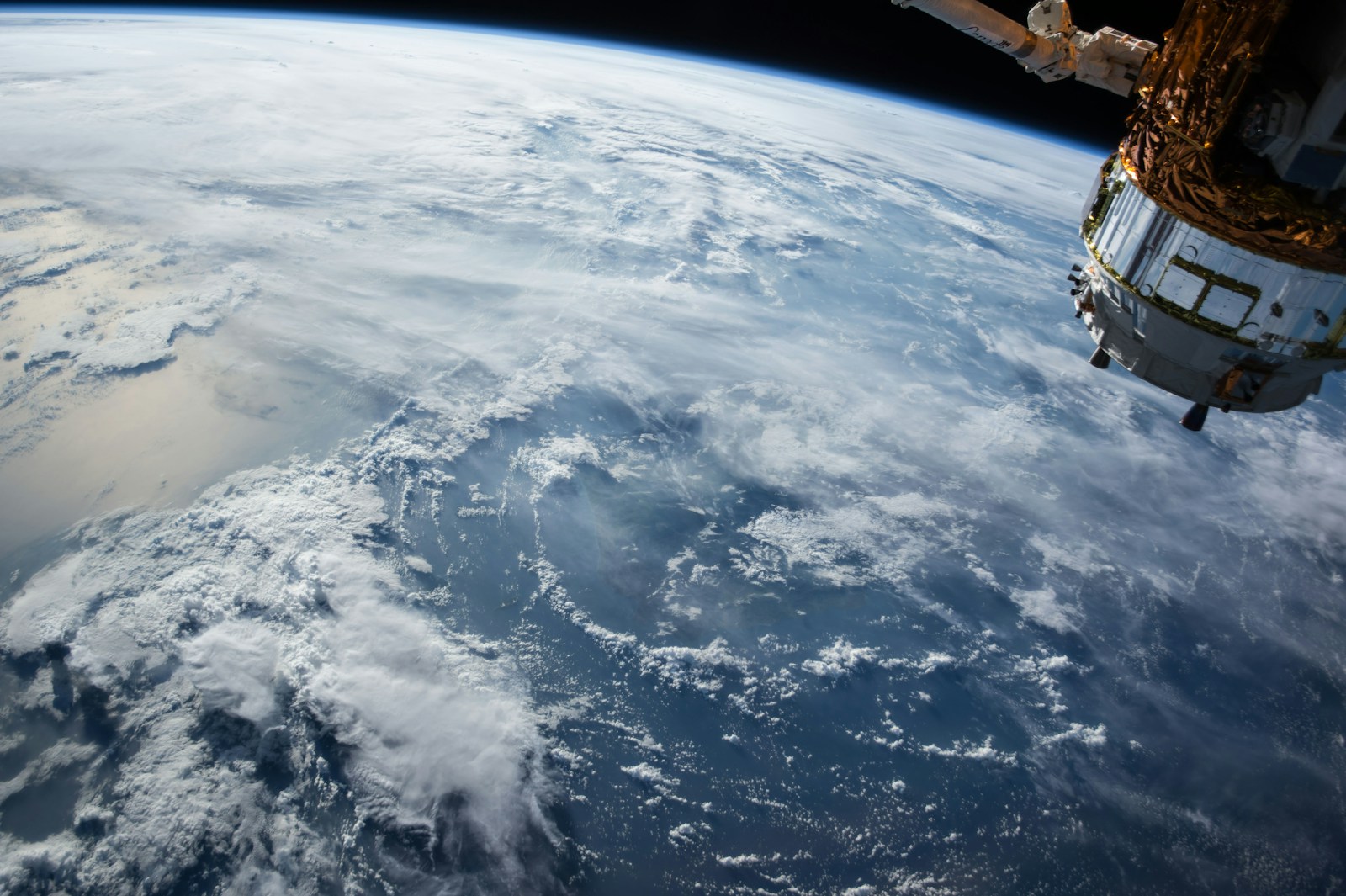
Image Credits: Photo by NASA on Unsplash

Johannah Lopez is a versatile professional who seamlessly navigates two worlds. By day, she excels as a SaaS freelance writer, crafting informative and persuasive content for tech companies. By night, she showcases her vibrant personality and customer service skills as a part-time bartender. Johannah's ability to blend her writing expertise with her social finesse makes her a well-rounded and engaging storyteller in any setting.