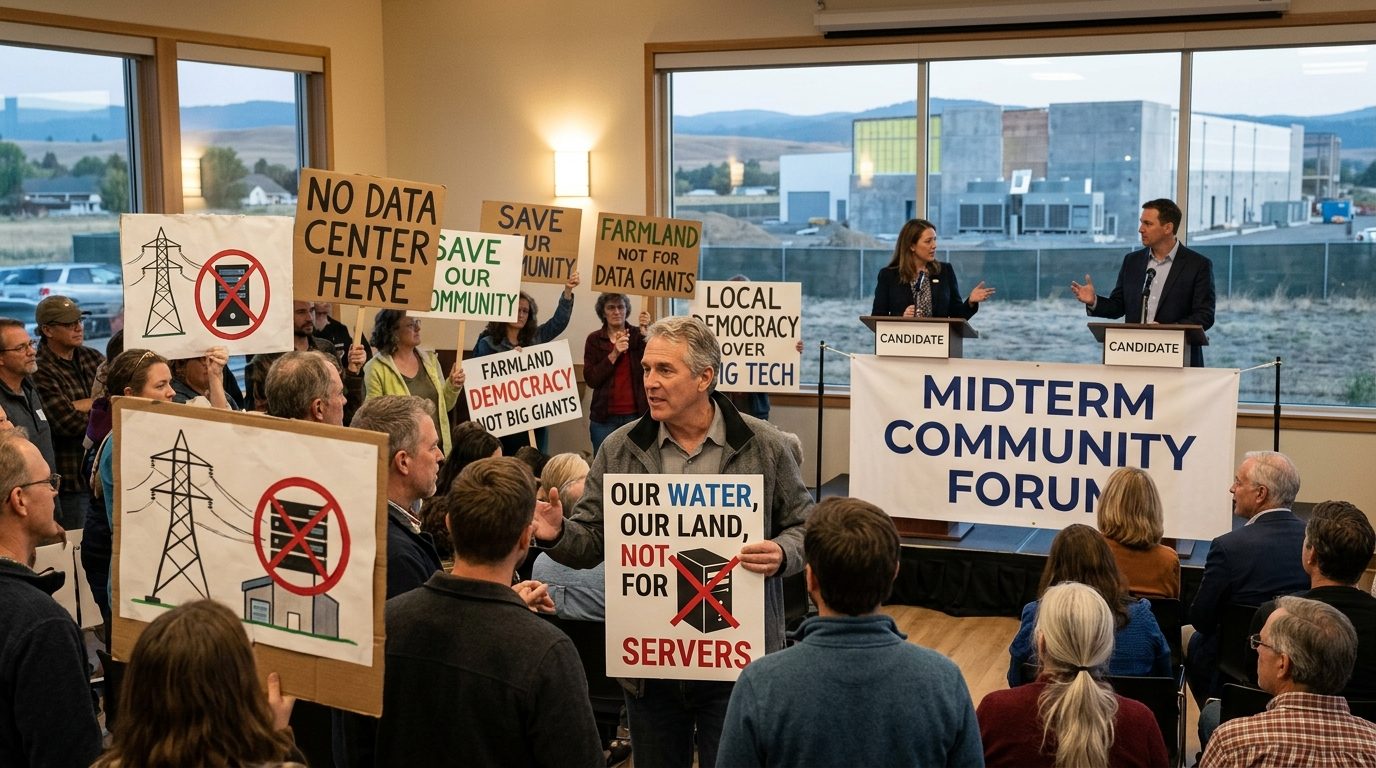
Growing resistance to data center projects is changing midterm election campaigns across the United States, turning local development disputes into a wider political test.
Communities facing proposed facilities are pressing candidates to address land use, energy demand, water consumption, taxes, and public oversight. The result is a new campaign issue that links local planning decisions with national debates about technology and economic growth.
The opposition has been described as “snowballing,” suggesting that disputes once handled by planning boards are gaining broader political force. No individual project, candidate, or state has been identified, but the trend points to rising pressure in multiple communities.
Local Projects Become Election Issues
Data centers house computer systems that support cloud services, online platforms, and artificial intelligence tools. Their location is usually decided through local zoning, permitting, and utility processes.
Those decisions can become contentious because large facilities may require extensive land and infrastructure. Residents may also question whether public incentives and expected tax revenue justify the costs.
For midterm candidates, the issue creates a difficult balance. Supporting development can signal a commitment to jobs, investment, and digital infrastructure. Opposing a project can show concern for residents who feel excluded from major planning decisions.
“The snowballing opposition to data center projects in communities across the United States has transformed the midterm election landscape.”
The political effect may be strongest where projects are proposed near homes, farms, or areas already facing pressure on power and water systems. In those places, a technical zoning matter can quickly become a measure of public trust.
Economic Benefits Face Public Scrutiny
Supporters often present data centers as sources of construction work, property tax revenue, and long-term business investment. They may also argue that the facilities are needed to support growing demand for online services.
Critics focus on the trade-offs. Their concerns can include electricity use, water needs, noise, changes to rural land, and the terms of tax agreements. Some residents also question how many permanent jobs remain after construction ends.
The central campaign questions are likely to include:
- How much energy and water will each project require?
- Who will pay for new utility and road infrastructure?
- What tax incentives have developers requested?
- How many permanent jobs will the facilities create?
- How early can residents review and challenge plans?
Clear answers could influence whether voters see a project as responsible growth or an unfair burden. Candidates who avoid the details may face criticism from both supporters and opponents.
Political Risks Cross Party Lines
Data center disputes do not fit neatly within traditional party divisions. Business development, property rights, environmental concerns, and local control can attract support from different political groups.
That mix may force candidates to build positions around specific projects rather than national party messages. It may also increase the influence of county boards, municipal officials, utility regulators, and community groups during midterm campaigns.
The issue creates risks for officeholders who approved projects with limited public discussion. Challengers can use those decisions to argue that residents were ignored. At the same time, broad opposition could expose candidates to claims that they are blocking investment or needed infrastructure.
What Voters Should Watch
The next stage will depend on whether opposition produces policy changes. Possible responses include stricter zoning rules, added environmental reviews, greater disclosure of incentives, and new limits tied to utility capacity.
Voters should also watch whether candidates distinguish among projects. Facility size, location, resource needs, and community benefits can vary, making a single national position difficult to apply.
Data centers are now more than an industrial development question. They have become a test of how governments weigh technology investment against local costs. As midterm campaigns advance, candidates will face growing demands for specific plans, public records, and measurable protections.

Deanna Ritchie is a managing editor at DevX. She has a degree in English Literature. She has written 2000+ articles on getting out of debt and mastering your finances. She has edited over 60,000 articles in her life. She has a passion for helping writers inspire others through their words. Deanna has also been an editor at Entrepreneur Magazine and ReadWrite.