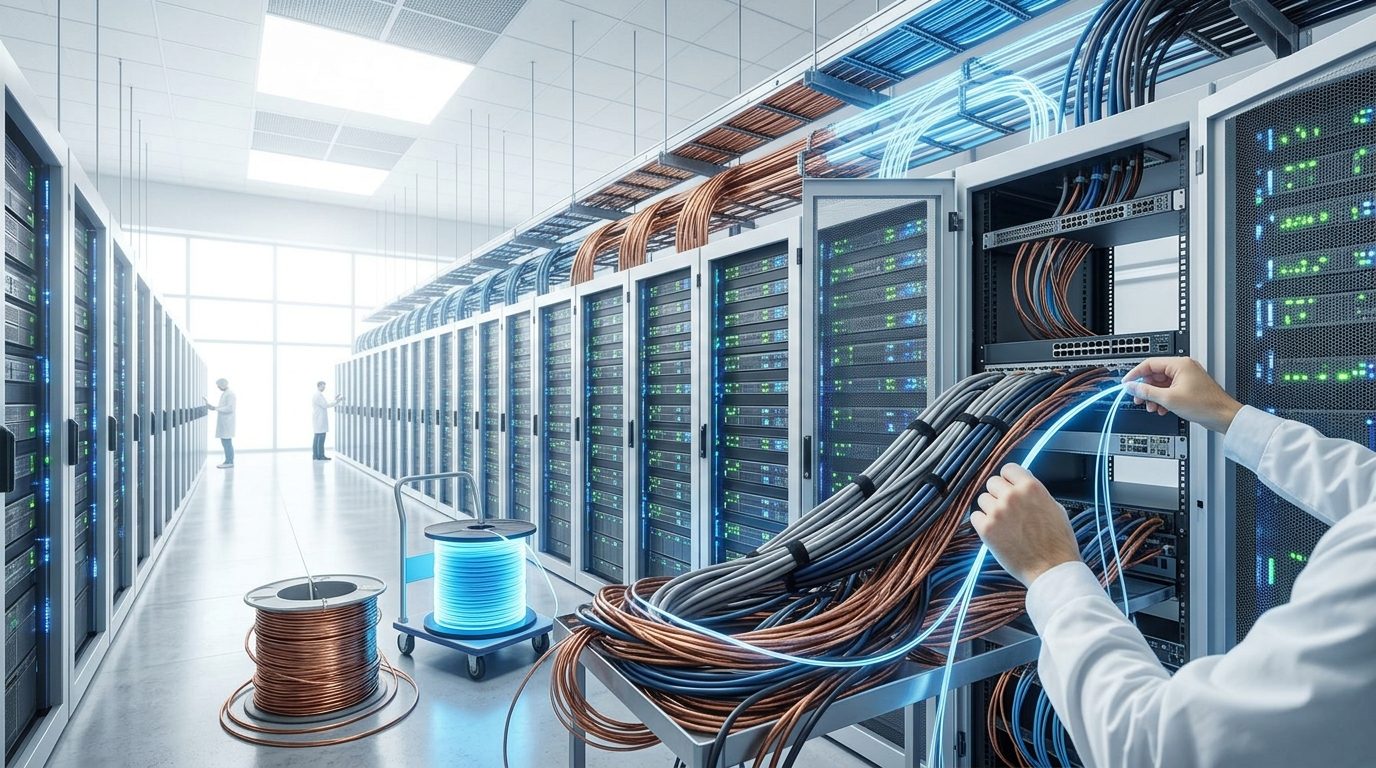
Data centres are replacing some copper connections with optical links to cut electricity use and increase computing capacity. The shift comes as artificial intelligence and cloud services place heavier demands on digital infrastructure.
Optical systems carry information as pulses of light, usually through fibre-optic cables. Copper wires transmit electrical signals. Both remain useful, but light can move large amounts of data over longer distances with lower signal losses.
Power Use Drives the Change
Modern data centres contain thousands of servers linked to storage systems and networking equipment. Moving information among those machines consumes energy and creates heat. Cooling that equipment requires still more electricity.
Copper links can work well across short distances. However, higher data rates often require more power to maintain a clear electrical signal. That problem grows as operators install faster processors and build larger computing clusters.
Optical connections offer an alternative. Light travels through fibre with less resistance than electrical signals face in copper. Fibre is also thinner and lighter, which can ease cable congestion inside large facilities.
Data centres are switching from copper wires to technology using light “to save power and add capacity.”
The energy savings from one connection may be limited. Yet the total can become meaningful when a facility uses many thousands of links. Lower heat output may also reduce pressure on cooling systems.
AI Raises Capacity Requirements
Artificial intelligence systems depend on many processors working together. Those processors must exchange information quickly during model training and while serving users.
Slow or congested connections can leave costly computing equipment waiting for data. Network capacity therefore affects how efficiently an AI cluster operates, not just how quickly information reaches customers.
The main benefits of optical links include:
- Higher data capacity across each connection
- Lower signal loss over longer distances
- Reduced cable weight and physical congestion
- Potential cuts in networking and cooling power
Copper Will Retain a Role
The transition does not mean copper will disappear from data centres. Electrical wiring remains practical for power delivery and many short connections. It can also cost less where speed and distance requirements are modest.
Optical equipment has its own limits. Systems need devices that convert electrical signals into light and back again. Those conversions consume energy, add expense and can create maintenance challenges.
Operators must therefore compare the full cost of each design. That includes cables, networking devices, power use, cooling needs and replacement schedules. A fibre link may offer clear gains across a building while providing fewer benefits between nearby devices.
Optics Move Closer to Processors
One industry goal is to place optical connections nearer to computing chips. Shortening the electrical path could reduce energy use while supporting faster communication between processors.
Such designs will require reliable manufacturing and common technical standards. Data-centre operators also need systems that technicians can repair without extended service interruptions.
The move from copper to light reflects a wider pressure on operators to gain more computing output from each unit of electricity. Future progress will depend on cost, reliability and measurable energy savings. Copper and fibre are likely to work together, with each used where it performs best.

Senior Software Engineer with a passion for building practical, user-centric applications. He specializes in full-stack development with a strong focus on crafting elegant, performant interfaces and scalable backend solutions. With experience leading teams and delivering robust, end-to-end products, he thrives on solving complex problems through clean and efficient code.