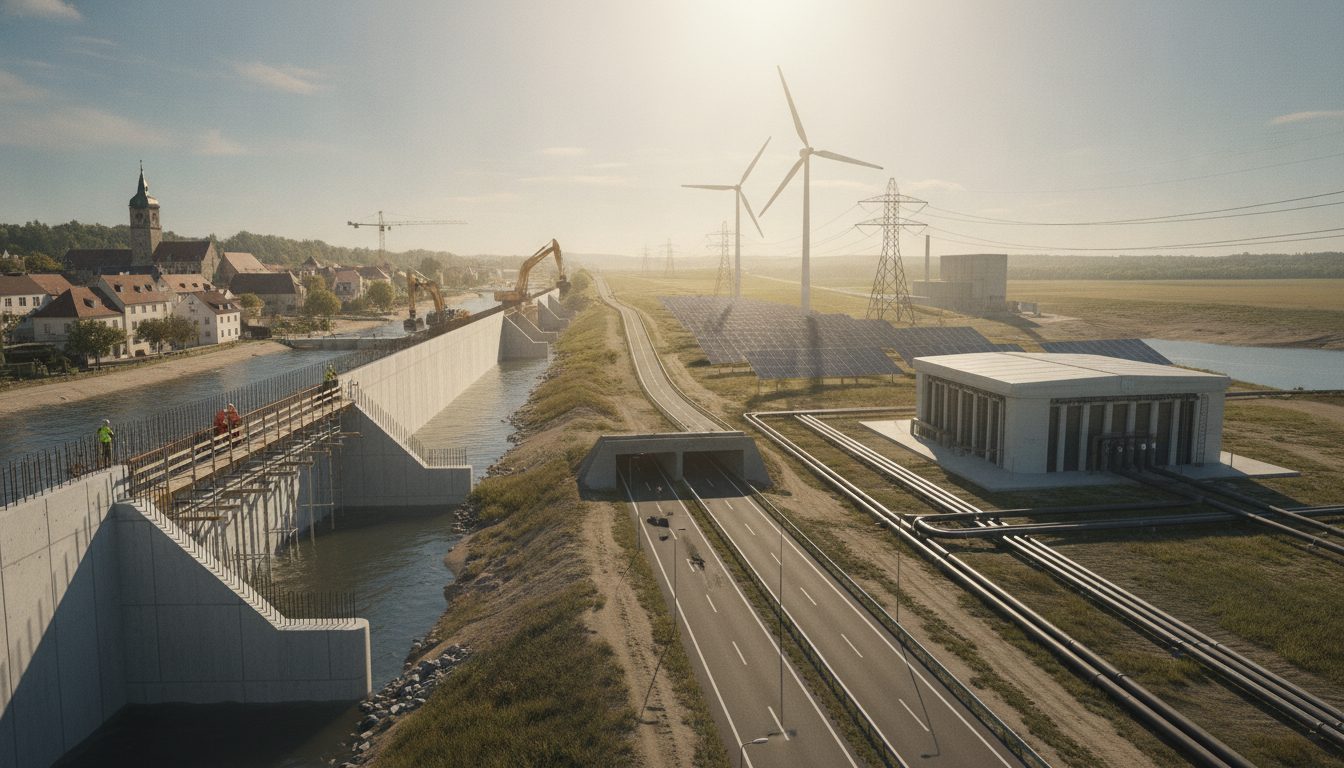
After a summer marked by heat, floods, and power strains, European companies and policymakers are moving to protect critical systems and keep economies running. Across the continent, officials are assessing weak points in energy, transport, and water networks, and private firms are revising plans to keep operations stable. The push reflects urgent lessons from recent weeks, as extreme weather and aging assets reveal costly gaps.
A summer of weather extremes and severe infrastructure stress has prompted companies and policymakers across Europe to respond.
The immediate focus is on what worked, what failed, and how to prevent repeat disruptions. Governments are preparing emergency funds and faster permits for upgrades. Utilities are reinforcing grids in high-risk zones. Insurers are recalculating exposure. The shared goal is steady service during hotter summers and more volatile storms.
Why Pressure Is Rising Now
Heat waves have lifted electricity demand while cutting power plant output. Rivers that cool thermal plants or carry freight have dropped in parts of the season, then surged during storms. Urban drainage systems have been pushed past their limits by intense rainfall. Wildfires have forced evacuations and threatened power lines.
These strains are not new, but the pace and overlap of hazards have increased. For planners, the challenge is no longer isolated events. It is the compound effect on energy supply, transport links, and food and water systems at the same time. Business leaders say the costs of short outages are rising as supply chains tighten and digital services expand.
Corporate Actions Gain Speed
Large manufacturers are increasing on-site power and storage to ride through grid swings. Data center operators are shifting workloads across regions during peak heat. Food and beverage firms are investing in water recycling and backup wells in drought-prone areas. Rail and logistics companies are testing heat-resilient track materials and adjusting schedules to avoid speed restrictions during the hottest hours.
- Energy utilities are adding sensors to monitor lines in real time.
- Builders are specifying reflective materials and shading to lower cooling demand.
- Insurers are revising premiums to reflect rising risk on assets near floodplains.
Procurement teams report tighter contract terms for delivery during adverse weather. Some firms are relocating critical inventory to higher ground. Others are consolidating suppliers to those with proven contingency plans. Executives say these moves are now part of standard risk management, not niche sustainability projects.
Policy Shifts and Public Investment
City and national authorities are advancing heat action plans, flood defenses, and grid upgrades. Transport ministries are funding cooler track ballast, overhead line tensioning, and heat-resistant road surfaces. Water agencies are expanding retention basins and nature-based solutions that slow runoff during storms.
Finance ministers are weighing targeted incentives for resilience retrofits. These include tax credits for building insulation, cooling, and water efficiency, and grants for microgrids serving hospitals and emergency services. Regulators are pushing critical operators to publish stress tests and recovery timelines, adding transparency for investors and residents.
Balancing Costs, Equity, and Speed
Rising bills are a concern. Consumer groups warn that rapid spending on upgrades could lift utility rates and transport fares. Advocates argue for phasing investments and protecting low-income customers. Industry groups, however, say delays can be more expensive if outages hit factories, ports, or data hubs.
Rural areas face distinct risks. Long distribution lines and limited backup power make small towns vulnerable during storms and heat. Policymakers are weighing targeted support for remote clinics, water pumping stations, and emergency shelters. Urban planners are focused on cooling neighborhoods with more trees, shaded transit stops, and fountains, steps that can cut heat stress quickly.
Signals To Watch In The Months Ahead
Experts point to several markers of progress. These include faster permitting for grid projects, firm funding for flood protection, and clear heat protocols for schools, transit, and outdoor work. Corporate disclosures on resilience spending will show whether adjustments are temporary or part of long-term plans.
Insurance availability is another signal. If coverage becomes scarce in high-risk zones, property owners may face steep costs or relocations. Better hazard mapping and building standards can help keep coverage accessible. Collaboration between public agencies and insurers will be key to align incentives.
Technology will play a larger role. Forecasting tools can predict local heat and storm risks days ahead. Smart meters and flexible tariffs can spread demand more evenly. Early-warning systems can give people time to move vehicles, protect equipment, and seek cool spaces.
Europe’s test this summer highlights a clear message. Resilience is now core infrastructure, not an afterthought. The coming year will show whether emergency measures harden into lasting standards and whether investment levels match the scale of risk. The pace of action, and how fairly costs are shared, will shape how well communities and businesses cope with the next round of extremes.

A seasoned technology executive with a proven record of developing and executing innovative strategies to scale high-growth SaaS platforms and enterprise solutions. As a hands-on CTO and systems architect, he combines technical excellence with visionary leadership to drive organizational success.