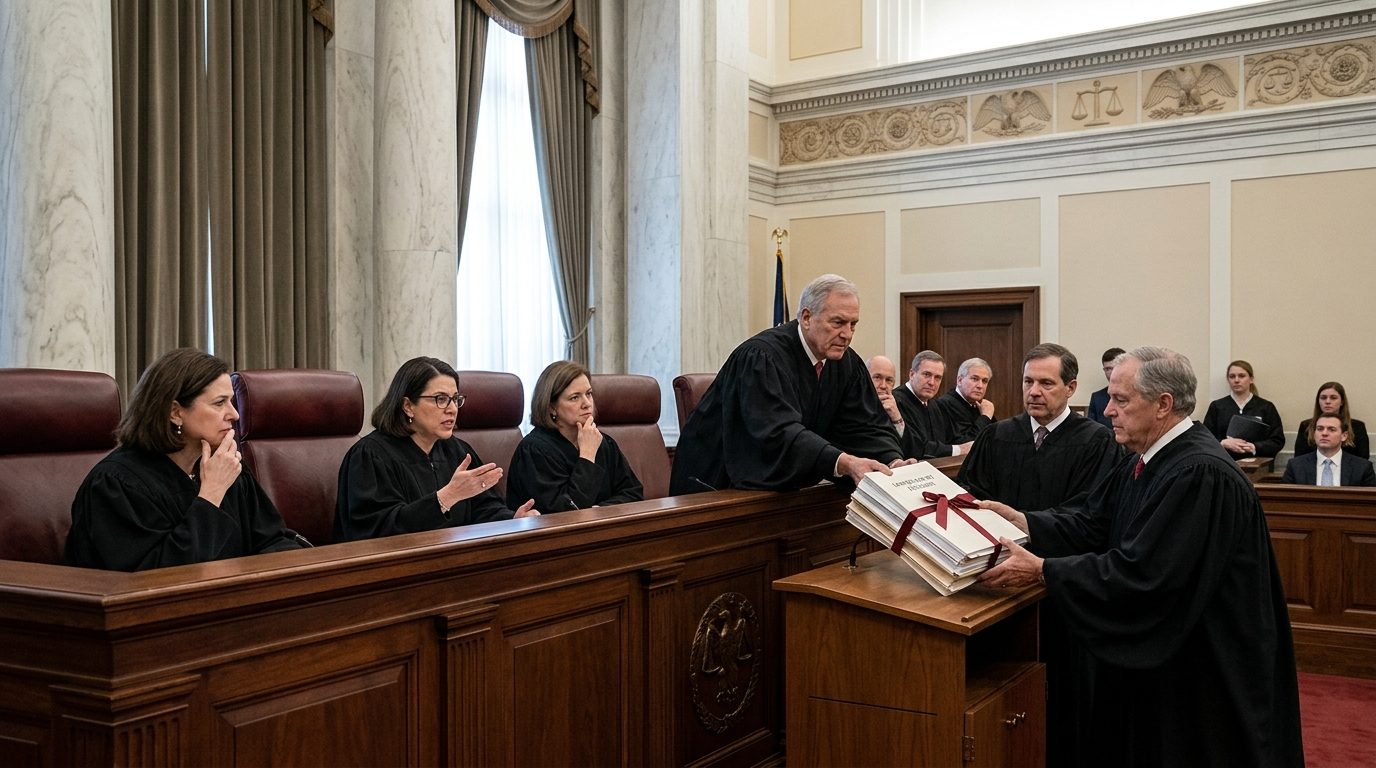
A conservative majority has temporarily lifted a lower-court decision, allowing the disputed policy or action to proceed while litigation continues. The court’s liberal justices dissented, exposing a sharp divide over whether the lower ruling should remain in force.
The temporary order changes the immediate legal situation but does not settle the underlying case. Details about the dispute, the affected parties, and the court issuing the order were not disclosed.
What the Temporary Order Means
The majority’s action appears to function as a stay, which suspends the practical effect of a lower-court ruling. Such orders often remain active while an appeal moves through the courts.
A stay is not usually a final decision on the legal claims. The majority may later reach a different conclusion after receiving full briefs and hearing arguments.
The immediate effects can still be substantial. Depending on the dispute, a stay may determine whether a government policy, regulation, or court-ordered restriction applies during months of litigation.
- The lower-court decision is not controlling for now.
- The underlying legal dispute remains unresolved.
- The liberal justices opposed the temporary intervention.
Ideological Split Shapes the Ruling
The division between the conservative majority and liberal dissenters reflects a broader debate over emergency judicial action. Conservative justices supported lifting the lower-court decision, while the liberal bloc favored leaving it in place.
“Conservative majority temporarily lifts lower-court decision as liberal justices dissent from ruling.”
No reasoning from either side was provided. As a result, the legal basis for the majority’s decision and the dissenters’ objections cannot be assessed from the available information.
In many emergency cases, justices consider several factors. These include the likelihood that an appeal will succeed, the risk of irreparable harm, and the wider public interest.
Emergency Orders Carry Lasting Effects
Temporary court orders have drawn increased scrutiny because they can alter policy before judges decide a case on its merits. Critics say short rulings may produce major consequences without full public arguments.
Supporters of emergency intervention say courts must act quickly when a lower ruling could cause serious harm. They argue that a temporary pause can preserve options until the judiciary conducts a fuller review.
The liberal dissent signals concern about lifting the lower-court order at this stage. However, without a written dissent or case details, it is unclear whether the disagreement centered on procedure, legal merits, or potential harm.
What Comes Next
The next steps will depend on the order’s terms and the stage of the appeal. The parties may submit more briefs, seek expedited review, or ask the court to hear the dispute in full.
Future filings should clarify how long the temporary order will last and who will be affected. A later merits ruling could uphold the majority’s current position, restore the lower-court decision, or send the case back for more proceedings.
For now, the clearest result is procedural but important: the lower-court decision has been put on hold. The ideological split also suggests that the case may remain closely contested as judges consider its legal and practical consequences.

Senior Software Engineer with a passion for building practical, user-centric applications. He specializes in full-stack development with a strong focus on crafting elegant, performant interfaces and scalable backend solutions. With experience leading teams and delivering robust, end-to-end products, he thrives on solving complex problems through clean and efficient code.