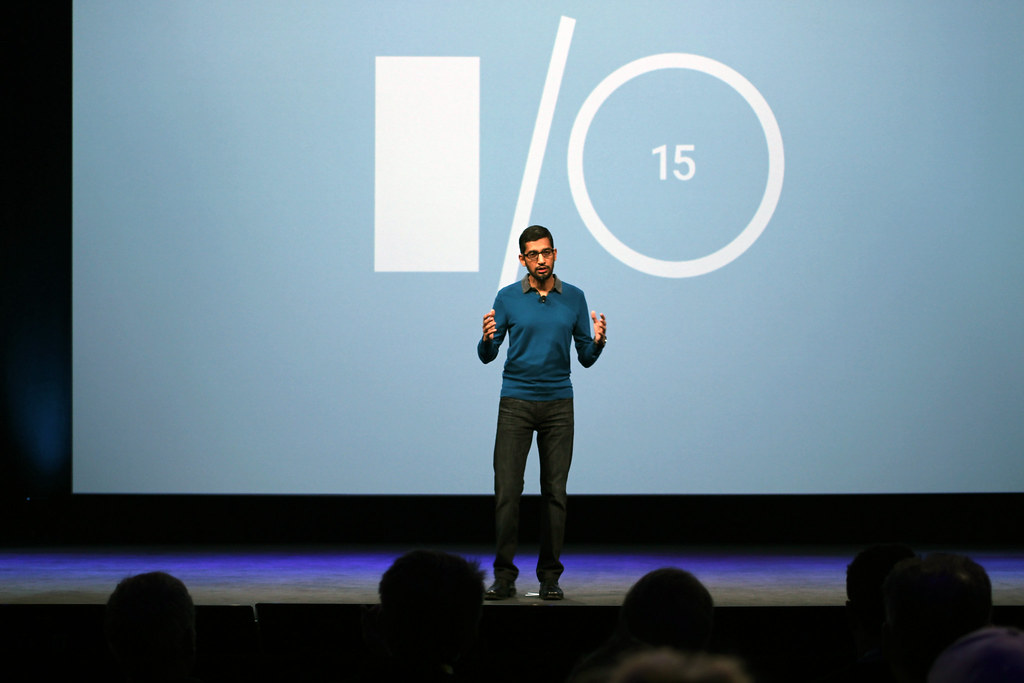
Google CEO Sundar Pichai recently held a strategy meeting to discuss the company’s plans for 2025. He emphasized the critical nature of the upcoming year and the need for Google to move faster as a company. “I think 2025 will be critical,” Pichai said.
“The stakes are high. These are disruptive moments. In 2025, we need to be relentlessly focused on unlocking the benefits of this technology and solving real user problems.”
Pichai acknowledged the global scrutiny Google has faced, including challenges related to competition, internal culture clashes, and regulatory issues.
However, he urged employees not to get distracted and to remain focused on their goals. One of Google’s top priorities for 2025 is investing in its AI initiatives, particularly the Gemini AI model.
Google’s 2025 focus and AI initiatives
The Gemini app, which offers a suite of tools including a chatbot, is seen as a potential next big success for the company. “With the Gemini app, there is strong momentum, particularly over the last few months,” Pichai said. “But we have some work to do in 2025 to close the gap and establish a leadership position there as well.
Scaling Gemini on the consumer side will be our biggest focus next year.”
During the meeting, Josh Woodward, head of Google Labs, showcased several AI-driven products, including Jules, a coding assistant, and Project Mariner, an AI-powered multitasking Chrome extension. Updates to the AI notetaking product, NotebookLM, were also highlighted. The future of large language models (LLMs) and the competitive landscape shaped by products like OpenAI’s ChatGPT were also discussed.
Pichai emphasized the importance of quality and execution over being first to market, while DeepMind co-founder Demis Hassabis shared plans to “turbo charge” the Gemini app. As Google navigates the challenges and opportunities of 2025, the company aims to emerge stronger and more innovative in the rapidly evolving tech landscape. A Google spokesperson declined to comment further on the meeting details.

Cameron is a highly regarded contributor in the rapidly evolving fields of artificial intelligence (AI) and machine learning. His articles delve into the theoretical underpinnings of AI, the practical applications of machine learning across industries, ethical considerations of autonomous systems, and the societal impacts of these disruptive technologies.