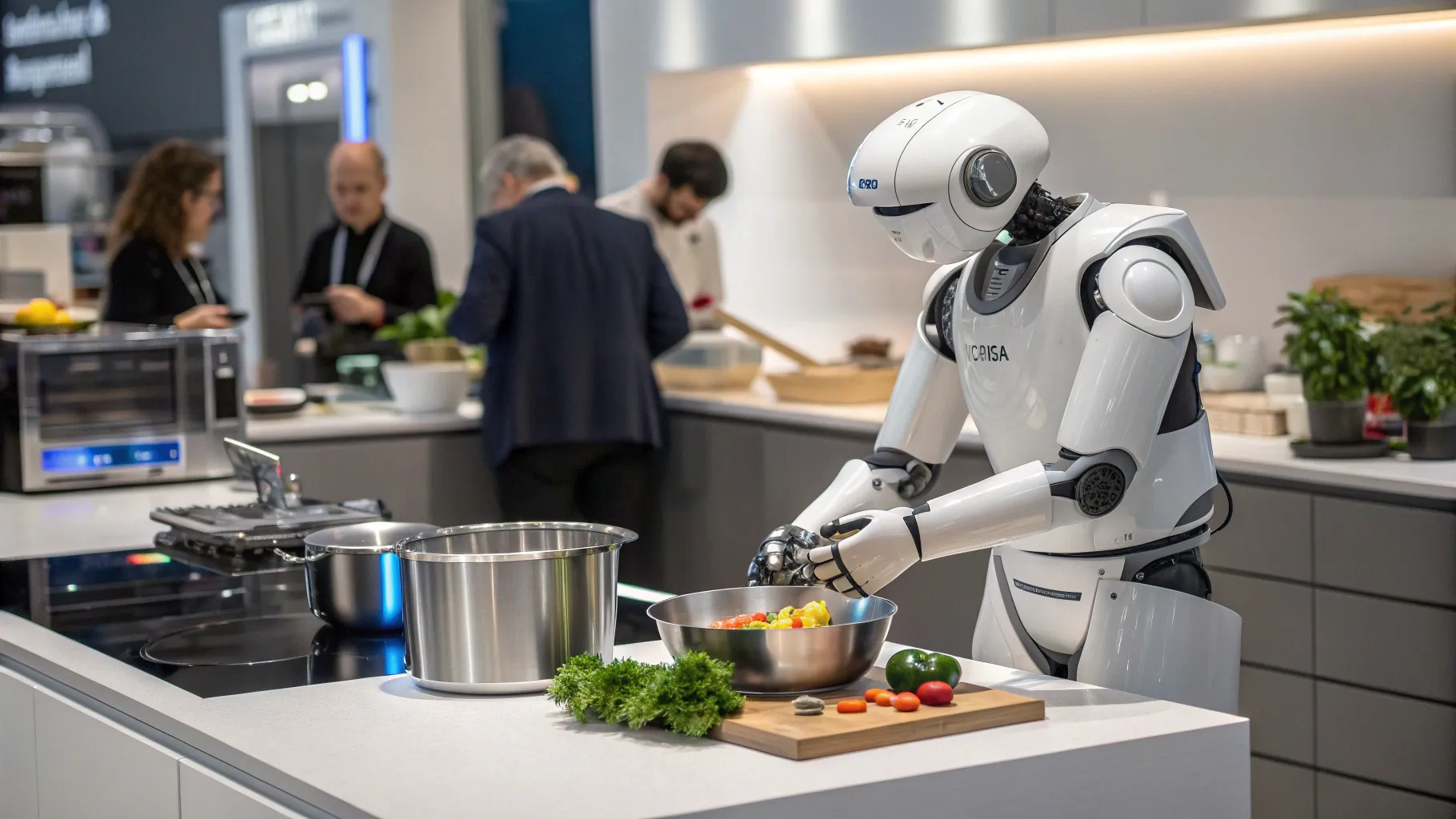
A humanoid robot showcased its kitchen mobility capabilities at the IFA trade fair in Berlin, though observers noted its notably slow pace of movement. The demonstration highlighted current limitations in robotic mobility technology while offering a glimpse into potential future applications for home assistance robots.
Robot Technology on Display
The robot, designed with a humanoid form factor, navigated through a kitchen environment set up specifically for the demonstration at IFA, one of Europe’s largest consumer electronics and home appliance trade shows. Despite its advanced design, the machine moved at what witnesses described as a “glacial speed,” indicating the ongoing challenges in developing fluid robotic movement that can match human capabilities.
This demonstration comes as technology companies worldwide continue to invest in humanoid robot development, particularly for domestic settings where tasks like cooking, cleaning, and organizing require complex movements and spatial awareness.
Current Limitations and Future Potential
The slow movement speed displayed by the robot reflects current technological constraints in several areas:
- Real-time environmental processing capabilities
- Motor control precision in human-like joints
- Safety protocols that intentionally limit movement speed
Despite these limitations, the public demonstration represents an important step in the evolution of home assistance robots. Kitchen environments present particular challenges for robots due to the variety of objects, surfaces, and potential hazards they contain.
Industry analysts point out that while the robot’s slow speed might seem disappointing to casual observers, the ability to navigate a kitchen space at all represents significant progress in robotics technology. The controlled environment of a trade fair allows companies to showcase current capabilities while managing public expectations.
Market Implications
The IFA trade fair in Berlin serves as a key venue for consumer technology companies to present their latest innovations. The inclusion of humanoid robots in this setting signals growing commercial interest in bringing such technology to consumer markets in the coming years.
Market research suggests the global personal robot market could reach $20 billion by 2030, with home assistance robots forming a significant segment. However, demonstrations like the one in Berlin highlight that considerable development work remains before such robots can function at speeds and efficiency levels that would make them practical for everyday household use.
The slow-moving kitchen demonstration also raises questions about consumer expectations versus current technological reality. While science fiction and marketing materials often depict robots moving with human-like grace and speed, the actual state of technology remains more modest.
As development continues, manufacturers will need to balance improving movement speed with maintaining safety and reliability—key considerations for any robot designed to operate in close proximity to humans, especially in environments like kitchens that contain potential hazards.

Rashan is a seasoned technology journalist and visionary leader serving as the Editor-in-Chief of DevX.com, a leading online publication focused on software development, programming languages, and emerging technologies. With his deep expertise in the tech industry and her passion for empowering developers, Rashan has transformed DevX.com into a vibrant hub of knowledge and innovation. Reach out to Rashan at [email protected]