The global push to develop artificial intelligence is colliding with local political resistance and environmental limits. Governments and technology companies want faster AI growth, but communities are questioning its costs.
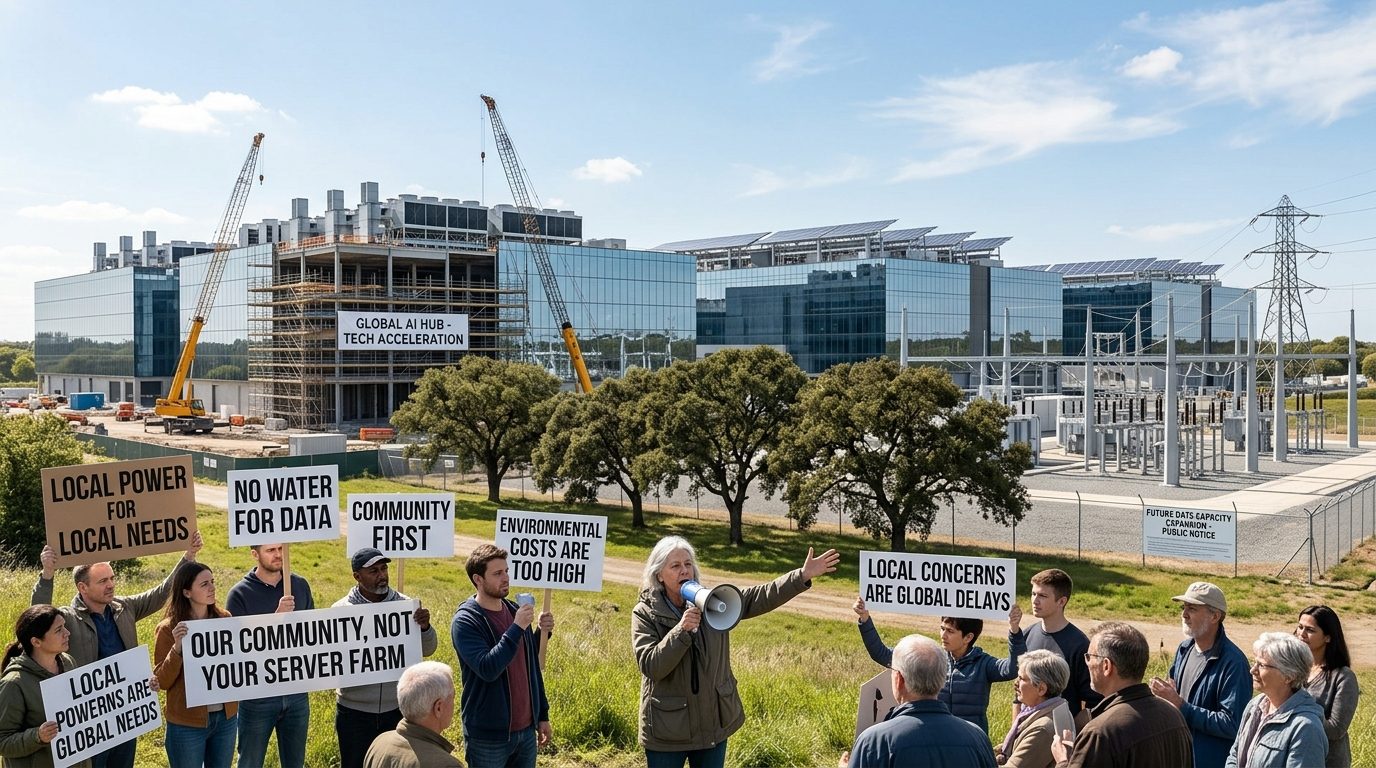
The conflict is most visible around data centers, energy supplies, water use, land planning, and public oversight. These local disputes can delay projects that support AI systems used across national borders.
Global Ambitions Meet Local Decisions
AI development is often framed as a contest among major economies and technology companies. Yet much of the required infrastructure depends on decisions made by local councils, regulators, utilities, and residents.
AI models require large computing facilities. Those sites need land, electricity, cooling systems, and connections to transmission networks. Planning approval may rest with officials focused on housing, jobs, taxes, and environmental protection.
This creates a gap between national goals and local priorities. Central governments may view AI capacity as a matter of economic security. Communities may see a proposed data center as another industrial project competing for limited resources.
“The global AI race is being hit by very localised political and environmental concerns.”
The statement captures a central problem facing the sector. Digital services may operate worldwide, but their physical costs are concentrated in specific places.
Energy and Water Pressures Grow
Electricity demand is a major concern because AI computing can require substantial and continuous power. New facilities may place added pressure on grids already serving homes, factories, and transport systems.
Utilities may need new power plants, substations, or transmission lines. Those projects can take years to approve and build. Their cost may also prompt disputes over whether technology companies or other customers should pay.
Water use presents another source of tension. Some data centers use water-based cooling, which can draw criticism in dry regions or areas facing supply restrictions. Operators can adopt other cooling methods, but those systems may use more electricity or carry higher costs.
Environmental concerns generally focus on several issues:
- Higher electricity demand and related emissions
- Water consumption for cooling equipment
- Land use near homes or protected areas
- Noise from cooling systems and backup generators
- Construction of new grid infrastructure
Political Support Is Not Guaranteed
Data centers can generate construction work, tax revenue, and investment. Supporters also argue that local computing capacity can attract research and technology businesses.
Critics question whether the facilities create enough permanent jobs to justify their energy and land needs. They may also seek binding commitments on renewable power, water conservation, and community funding.
These debates can cross traditional political lines. Officials who support business investment may resist projects that increase utility costs. Environmental groups may support low-carbon technology while opposing facilities powered by fossil fuels.
Delays Could Reshape AI Investment
Local resistance does not mean AI construction will stop. It may instead redirect investment to regions with available power, faster approval systems, cooler climates, or stronger public support.
Companies may also redesign facilities to reduce water use and shift computing activity to periods of lower electricity demand. Greater disclosure could help communities compare promised economic benefits with measurable environmental costs.
The central lesson is that AI policy cannot focus only on software, chips, and national competition. Its growth also depends on permits, power lines, water systems, and public consent. Future AI leaders may be determined not only by technical skill, but by how well governments and companies address concerns at the local level.

Kirstie a technology news reporter at DevX. She reports on emerging technologies and startups waiting to skyrocket.