Microsoft has sparked wide interest with its pursuit of a new computing design. Its latest effort focuses on a special subatomic entity that could unlock faster, more error-proof computation for tasks once seen as impossible. “After 17 years, we are showing results that are not only incredible but real.
They will fundamentally redefine how the next stage of quantum computing unfolds,” said the head of the division at Microsoft, describing the work in vivid terms. Engineers at Microsoft claim they have built the world’s first topoconductor, a semiconductor that also behaves like a superconductor. This material can manipulate Majorana fermions more efficiently, possibly curbing data corruption.
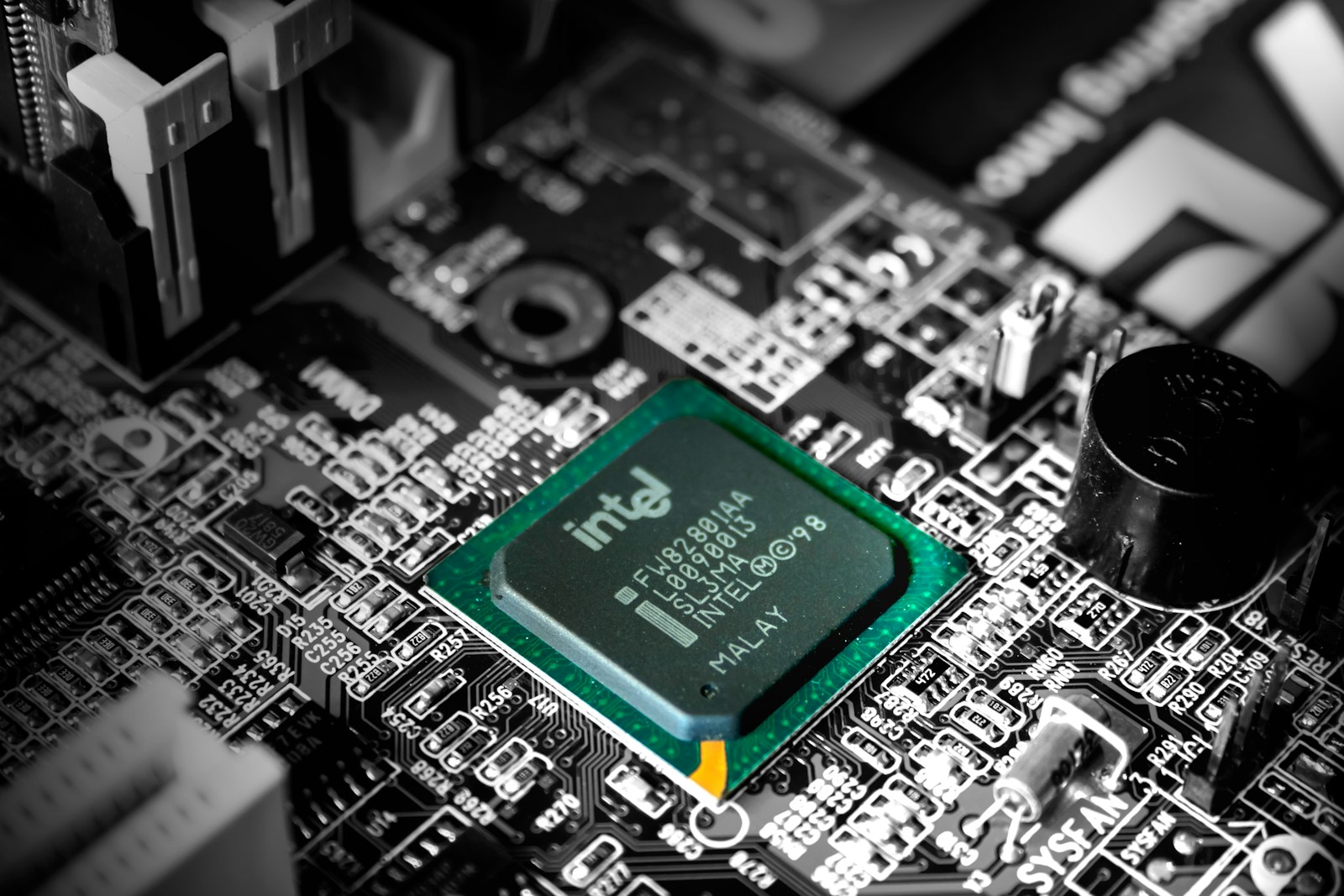
By packaging eight topological qubits on this initial chip, the team hopes to reduce error rates that hamper present-day quantum devices. Developers foresee scaling this to one million qubits, which could break barriers in fields such as drug discovery and complex material design. Quantum hardware struggles when signals become jumbled by environmental interference.
Majorana 1 is designed to lessen these effects by arranging qubits in a specific pattern that deflects common disturbances. This strategy aims to give scientists better readings without sacrificing speed. “There will no longer be a need to experiment.
You can imagine a world where a scientist computes the material they want, and they compute it with such precision that it’s right the first time,” explained Microsoft’s Alam. Company officials see a future where machines simulate chemical reactions with such accuracy that lab experiments become less necessary. Microsoft’s agreement with the Defense Advanced Research Projects Agency (DARPA) might accelerate prototypes that are fault-tolerant at scale.
Engineers believe a topological setup can sidestep the usual incremental approach and reach stable operations in just a few years. Researchers also hint that these topological qubits might allow new encryption methods. Their error correction capabilities could reinforce data security.
Microsoft’s pursuit of Majorana qubits
The chip’s functionality hinges on an array made of three quantum dots and a special nanowire. By tuning magnetic fields and gate voltages, researchers created a loop where a quantum state feature can be measured in real time.
In practice, they observed signal switches that correspond to parity changes over milliseconds, which suggests the system remains stable long enough for meaningful quantum operations. The team achieved a reliability milestone for parity detection that supports the chip’s reliability. It will solve problems that are unsolvable today with the combined global computing power,” Microsoft officials stated.
Leaders at Microsoft say these machines could solve intractable problems across fields like healthcare and clean energy. As the foundation stabilizes, outside collaborators might begin testing algorithms that can only run effectively on such quantum systems. This opens doors for scientists in various disciplines to harness quantum simulations without specialized hardware or huge budgets.
Skeptics in the field continue to ask whether Microsoft’s signals truly reflect Majorana states or cleverly tuned low-energy states that mimic them. The experimental setups show promising bimodal signals and long dwell times, but some researchers note that similar results could emerge under specific conditions. To address this, Microsoft’s team ran simulations with different models and cross-checked findings on multiple devices.
The paper acknowledges that their data cannot definitively prove the presence of topological states without further validation. Practical quantum computing is still evolving, and no system to date can handle everyday tasks at extreme scales. Hardware improvements must address coherence limits, chip manufacturing hurdles, and real-world deployment challenges.
Yet the persistence shown in designing Majorana 1 hints that commercial quantum solutions are inching closer. Recent peer-reviewed results in Nature support these claims with measured data, though experts note more demonstrations are needed. Microsoft’s focus on Majorana-based qubits sets it apart from competitors pursuing other architectures.
Industry watchers expect lively debates on the practicality of the topoconductor material. Each breakthrough prompts new questions about costs, scalability, and readiness for mass adoption.

Rashan is a seasoned technology journalist and visionary leader serving as the Editor-in-Chief of DevX.com, a leading online publication focused on software development, programming languages, and emerging technologies. With his deep expertise in the tech industry and her passion for empowering developers, Rashan has transformed DevX.com into a vibrant hub of knowledge and innovation. Reach out to Rashan at [email protected]