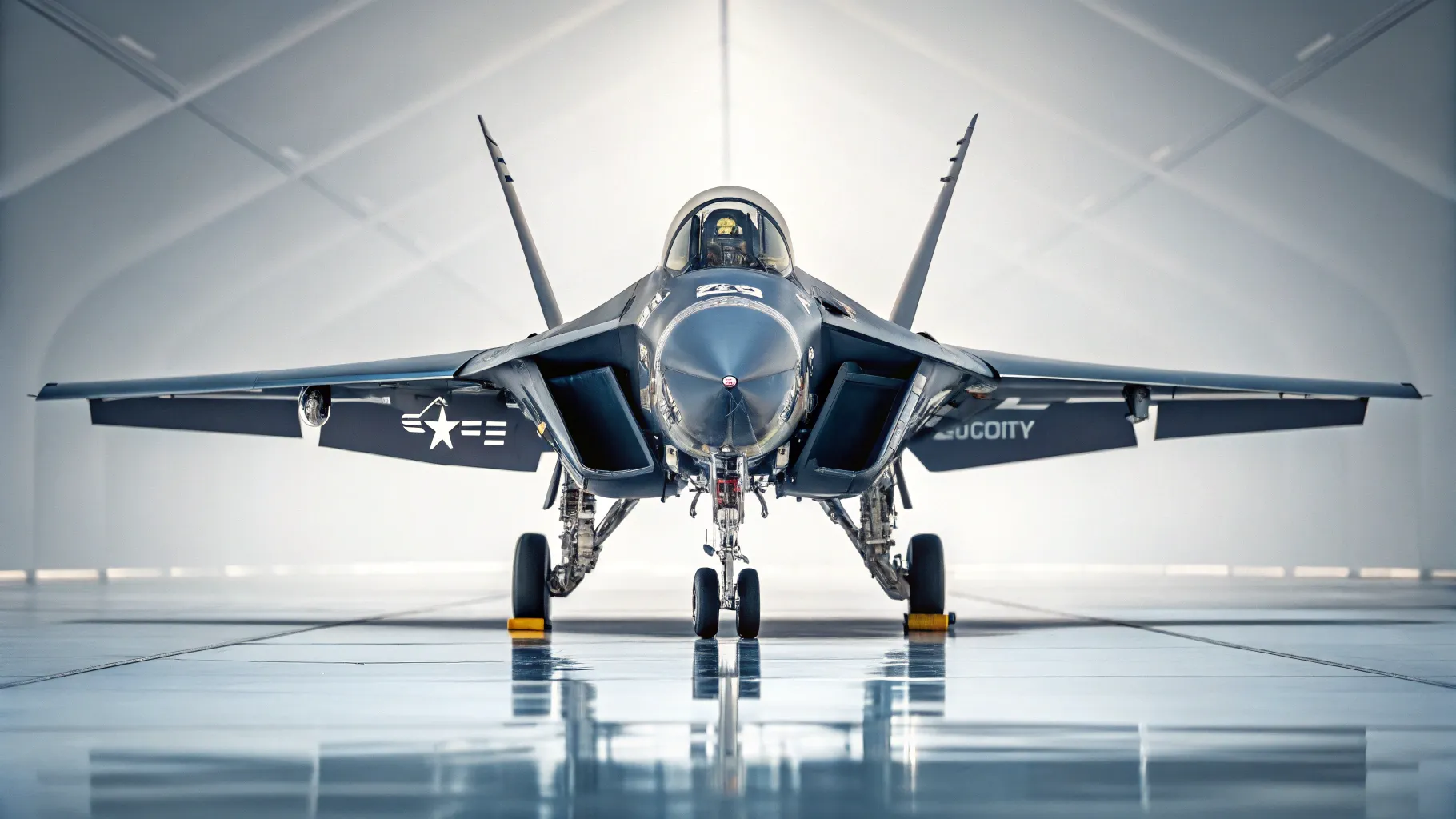
A striking new concept has entered the U.S. Navy’s F/A-XX competition, offering a triple-fuselage fighter that aims to replace the F/A-18E/F Super Hornet in the next decade. Early images and descriptions depict an unusual configuration that, as one observer put it, “looks like something out of Batman’s hangar” with “a peculiar triple-fuselage design.” The pitch adds a bold twist to the service’s Next Generation Air Dominance goals while raising questions about feasibility, performance, and cost.
The concept arrives as the Navy pushes toward a sixth-generation, carrier-capable fighter to work alongside the F-35C and manage threats at longer ranges. The service seeks more stealth, greater endurance, and tight integration with uncrewed aircraft. Any new airframe must survive catapult launches, arrested landings, and corrosive sea conditions, while flying farther and carrying more sensors than today’s jets.
Why the Navy Needs a Successor
The Super Hornet has formed the backbone of carrier air wings for more than 20 years. While upgrades extend its service life, the jet faces advanced air defenses and longer-range missiles. Planners argue that a fresh design is needed for the 2030s to maintain reach and survivability over the ocean. The Navy’s “family of systems” approach calls for a crewed fighter leading teams of uncrewed aircraft with shared sensing and strike roles.
Carrier operations also drive distinct demands. A new fighter must fold for deck storage, handle high arrestment loads, and deliver strong reliability at sea. These constraints have shaped prior designs and will test any unconventional approach.
The Triple-Fuselage Pitch
The new entrant’s most eye-catching feature is its trio of fuselages. Early depictions suggest a central body flanked by two narrower booms. Supporters argue the layout could create additional volume for fuel, sensors, or distributed systems while separating heat sources to aid stealth and cooling. It may also allow flexible payload carriage or redundant systems for survivability.
“A peculiar triple-fuselage design” that “looks like something out of Batman’s hangar.”
Yet, such a configuration would bring major engineering hurdles. Structural loads during catapult shots and arrested landings are severe. Aligning three bodies across a folding wing planform adds weight and complexity. Designers would also need to manage radar reflections from multiple joins and surfaces to preserve low observability.
Expert Views and Open Questions
Aerospace engineers often weigh trade-offs between volume, drag, and signature. Three fuselages could offer more internal space for fuel or weapons, but each surface adds potential drag and radar return. Stealth shaping, inlets, and exhaust shielding would need careful alignment to avoid performance penalties.
- Potential advantages: added internal volume, distributed systems, thermal management options.
- Key risks: structure and weight, carrier suitability, stealth integration, maintenance complexity, and cost.
Program analysts also point to affordability. The Navy must balance carrier air wing needs with shipbuilding and submarine priorities. Any unusual airframe will face pressure to prove life-cycle savings or decisive combat gains. Reliability at sea—measured in mission-capable rates—will be a focal metric.
How It Fits the NGAD Vision
Future carrier air wings are expected to pair a crewed fighter with uncrewed teammates for sensing, jamming, and strike. A larger airframe could carry powerful sensors or act as a command node for those aircraft. If the triple-fuselage concept supports more power generation and cooling, it might handle advanced radar and electronic warfare suites that demand heavy electrical loads.
Range is another driver. Pacific distances challenge carrier groups. Extra internal fuel could reduce tanker demand and extend the patrol bubble. However, added volume must not come at the expense of stealth or deck handling.
What Comes Next
The Navy has kept details of the F/A-XX effort close, and contenders are advancing rival design paths. Expect risk-reduction work on propulsion, materials, and mission systems to shape the final form. Flight testing, deck trials, and digital engineering will determine whether bold shapes meet the realities of carrier life.
For now, the triple-fuselage concept signals a willingness to rethink the fighter’s core layout. It introduces eye-catching ideas, but the service will demand proof in structure, signature, and cost. If the design can meet those marks, it could change expectations for a carrier fighter. If not, more traditional forms may prevail.
The decision will hinge on measurable gains: range, survivability, sensor power, and integration with uncrewed teammates. Watch for milestones on prototype validation and Navy budget documents in the coming cycles, which should reveal whether this striking concept advances from art to steel.

Rashan is a seasoned technology journalist and visionary leader serving as the Editor-in-Chief of DevX.com, a leading online publication focused on software development, programming languages, and emerging technologies. With his deep expertise in the tech industry and her passion for empowering developers, Rashan has transformed DevX.com into a vibrant hub of knowledge and innovation. Reach out to Rashan at [email protected]