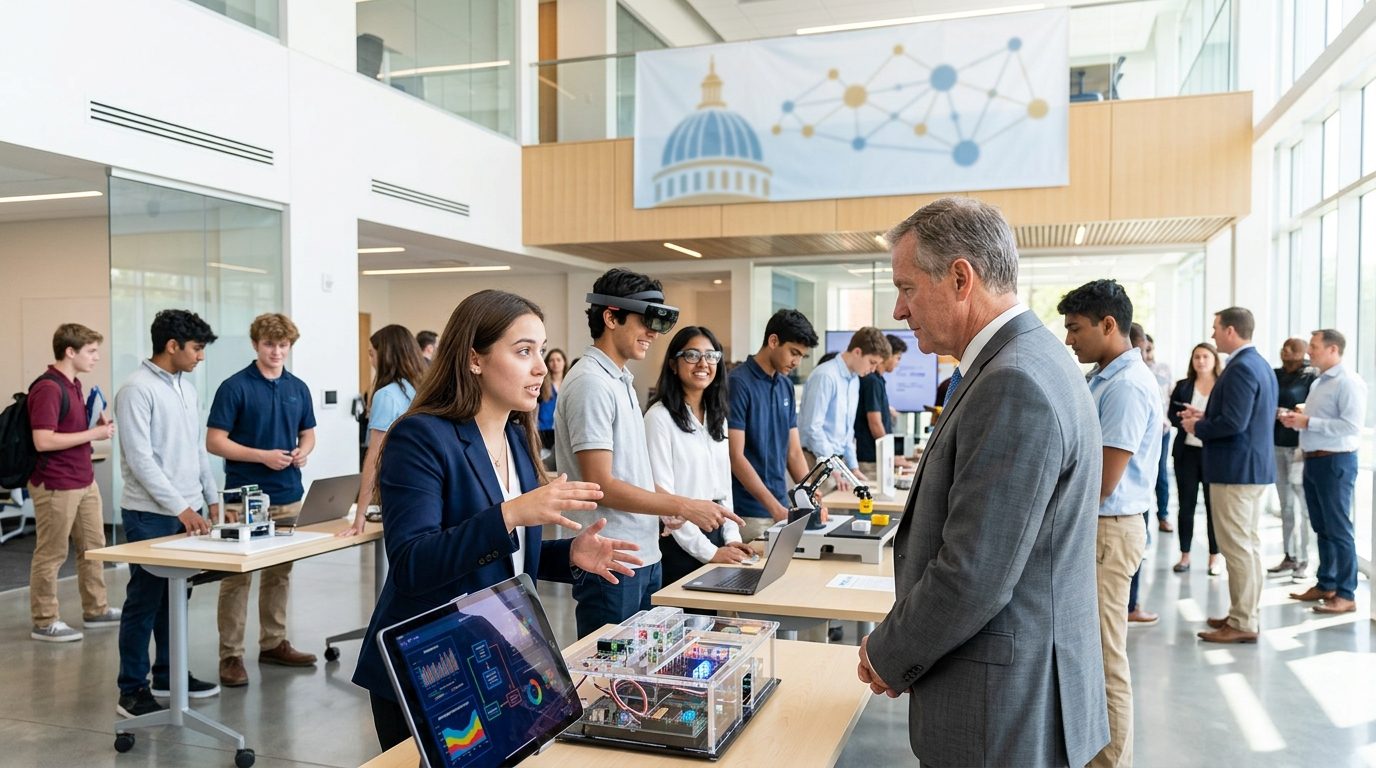
The Presidential AI Challenge is placing student-built tools at the center of a national push to prepare young Americans for an AI-driven economy.
Marc Beckman, a senior adviser to first lady Melania Trump, discussed the initiative during an appearance on “Fox & Friends.” He highlighted students’ projects and argued that AI education will play a major role in America’s future.
The effort connects a White House-backed program with a wider debate over how schools should teach artificial intelligence. Educators, families, and policymakers are weighing its benefits against concerns about accuracy, privacy, and unequal access.
Students Move From Users to Creators
The challenge draws attention to tools created by students rather than products built only by major technology companies. That focus treats young people as designers and problem-solvers, not just users of automated services.
Beckman’s remarks emphasized both student innovation and the national value of AI skills. His message suggested that early, practical experience can help students understand how these systems work and where they can fail.
The initiative highlights “student-created tools” while stressing “the importance of AI education for America’s future.”
Project-based learning can make abstract lessons easier to understand. Students may identify a problem, organize information, test an AI-assisted tool, and explain its limits. Such work can combine computing with writing, research, design, and public speaking.
Education Carries Economic Stakes
AI systems are already changing how many people search for information, write software, analyze documents, and complete routine office tasks. Schools face pressure to prepare students for those shifts without treating every new product as reliable.
Supporters of AI education say students need direct experience before entering college or the workforce. They also argue that the United States needs a larger pool of workers who can develop, manage, and evaluate automated systems.
Critics and cautious educators point to risks that must be addressed at the same time:
- AI tools can produce false or misleading information.
- Student data may be collected or stored by outside services.
- Unequal access to devices can widen existing education gaps.
- Automated work can make authorship and grading harder to assess.
Those concerns do not require schools to reject AI. They do suggest that instruction should include verification, privacy, transparency, and responsible use. Students need to know why a system produced an answer, not only how quickly it did so.
Training Teachers Will Be Essential
A student competition can spark interest, but lasting results depend on classroom support. Teachers need clear standards, suitable software, and time to learn alongside their students.
Schools also must decide which skills deserve priority. Basic AI literacy may include checking sources, identifying biased results, protecting personal information, and knowing when human judgment should override an automated recommendation.
Access will be another test. Well-funded districts may offer newer devices, technical courses, and specialist teachers. Rural and lower-income schools may have fewer options. A national education effort will need to account for those differences if it is to reach students fairly.
Challenge Puts Policy Into Practice
The Presidential AI Challenge offers a public stage for young creators and makes education part of the national technology discussion. Its larger value will depend on whether student projects lead to broader training, sound classroom rules, and sustained access.
Beckman’s appearance framed AI education as a matter of future readiness. The next questions concern execution: how schools will train teachers, protect children’s information, measure learning, and give students equal chances to participate.
The student tools provide an early view of what young people can build. The longer-term measure will be whether the initiative helps them use AI with skill, care, and independent judgment.

Rashan is a seasoned technology journalist and visionary leader serving as the Editor-in-Chief of DevX.com, a leading online publication focused on software development, programming languages, and emerging technologies. With his deep expertise in the tech industry and her passion for empowering developers, Rashan has transformed DevX.com into a vibrant hub of knowledge and innovation. Reach out to Rashan at [email protected]