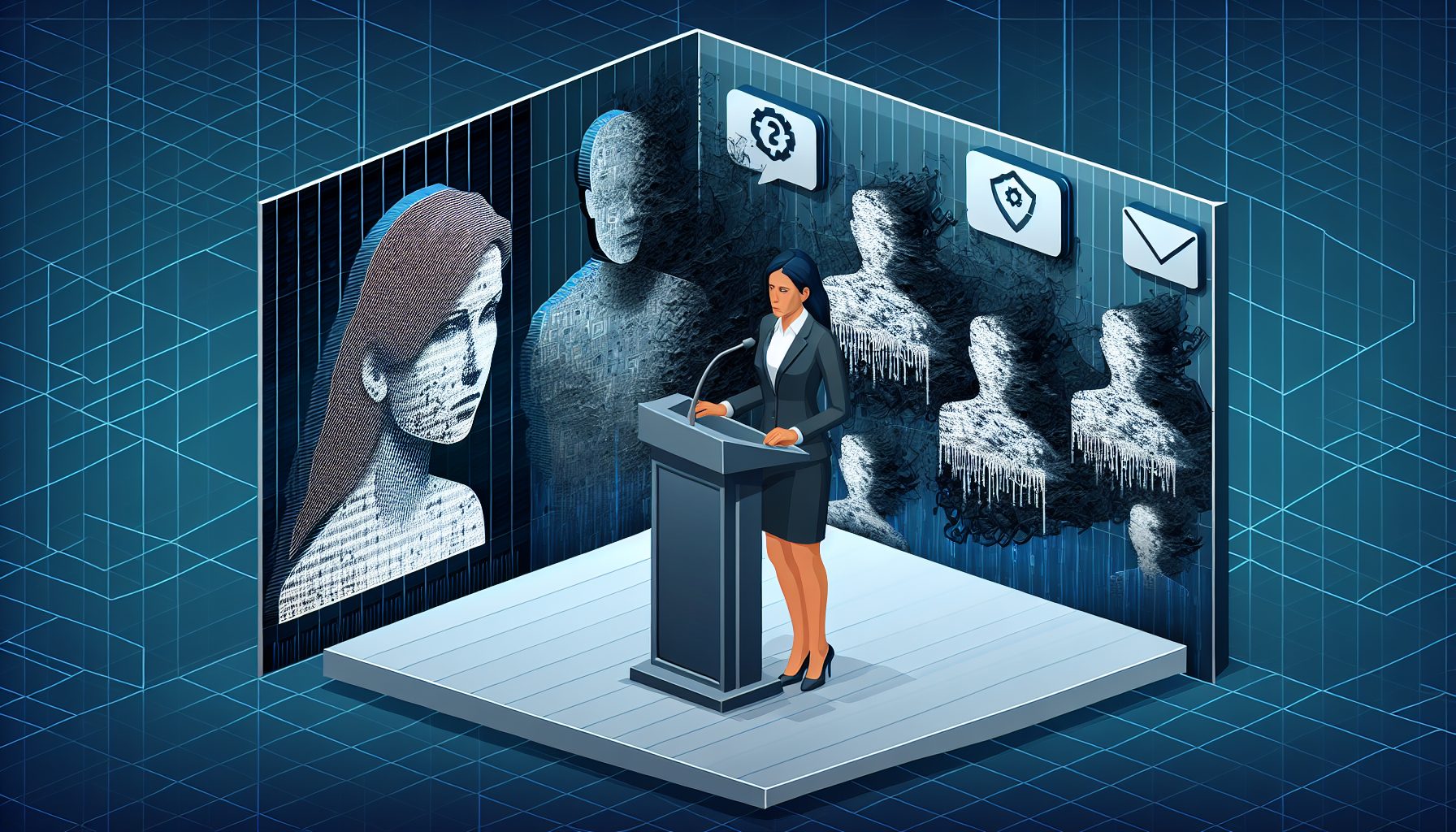
Rep. Yvette Clarke of New York’s 9th congressional district warns that artificial intelligence and deepfakes are being used to spread disinformation on a massive scale as election day nears. She says that inaction from social media platforms and lawmakers has made the situation worse.
“Not enough Americans are knowledgeable about the fact that, unfortunately, our ecosystem is the Wild West,” said Clarke, who serves on committees focused on technology and homeland security. “You can disrupt an election, you can disrupt voting. There are a whole host of ways in which this technology can be used to subvert the democratic process.
Clarke has sponsored many cybersecurity bills.
She discussed recent attacks on both presidential campaigns, the rise of AI-fueled disinformation, and ransomware attacks on local governments. Clarke said that information-sharing legislation giving CISA the authority to work with entities hit by ransomware is critical. She said it’s essential for understanding the movement of bad actors and is probably the best defense against future attacks.
Clarke has passed legislation to help state, local, and tribal authorities build strong cybersecurity. She said it’s crucial because attackers can target various entities like police departments, hospitals, and school districts. Clarke said there needs to be mandatory cybersecurity requirements across all industries because so much personal information is at risk.
Deepfake disinformation and election security
She said the entity providing the service needs to establish a strong cybersecurity posture to prevent long-lasting impacts on civil society. Clarke said that with new tools like AI and quantum computing, the U.S. is a bit behind in modernizing its cybersecurity.
She said basics like cyber hygiene are essential to building a robust system. As technology advances, attacks will occur at lightning speed, requiring even more vigilance. Clarke said it’s crucial to get the trust of entities to notify the Department of Homeland Security promptly when they have been hit by a cyberattack.
Immediate notification helps in attributing the attacks and creating actionable plans. Clarke said that while the U.S. government has historically not paid ransoms, in the private sector, the urgency to restore services may lead to ransom payments. She said while it’s not ideal, the necessity is understood from the entity’s perspective, even though it may hinder tracing and learning from the attacks.
Clarke said she introduced the Real Political Ad Act early in this election cycle, recognizing the threat of AI and deepfake technology. She said robust requirements are needed to identify and disclaim deepfakes in real time. The deployment of such technology can disrupt elections and voting processes.
“We have not protected ourselves adequately for this election cycle,” Clarke said. Educating the public is crucial to addressing these challenges.”

Johannah Lopez is a versatile professional who seamlessly navigates two worlds. By day, she excels as a SaaS freelance writer, crafting informative and persuasive content for tech companies. By night, she showcases her vibrant personality and customer service skills as a part-time bartender. Johannah's ability to blend her writing expertise with her social finesse makes her a well-rounded and engaging storyteller in any setting.