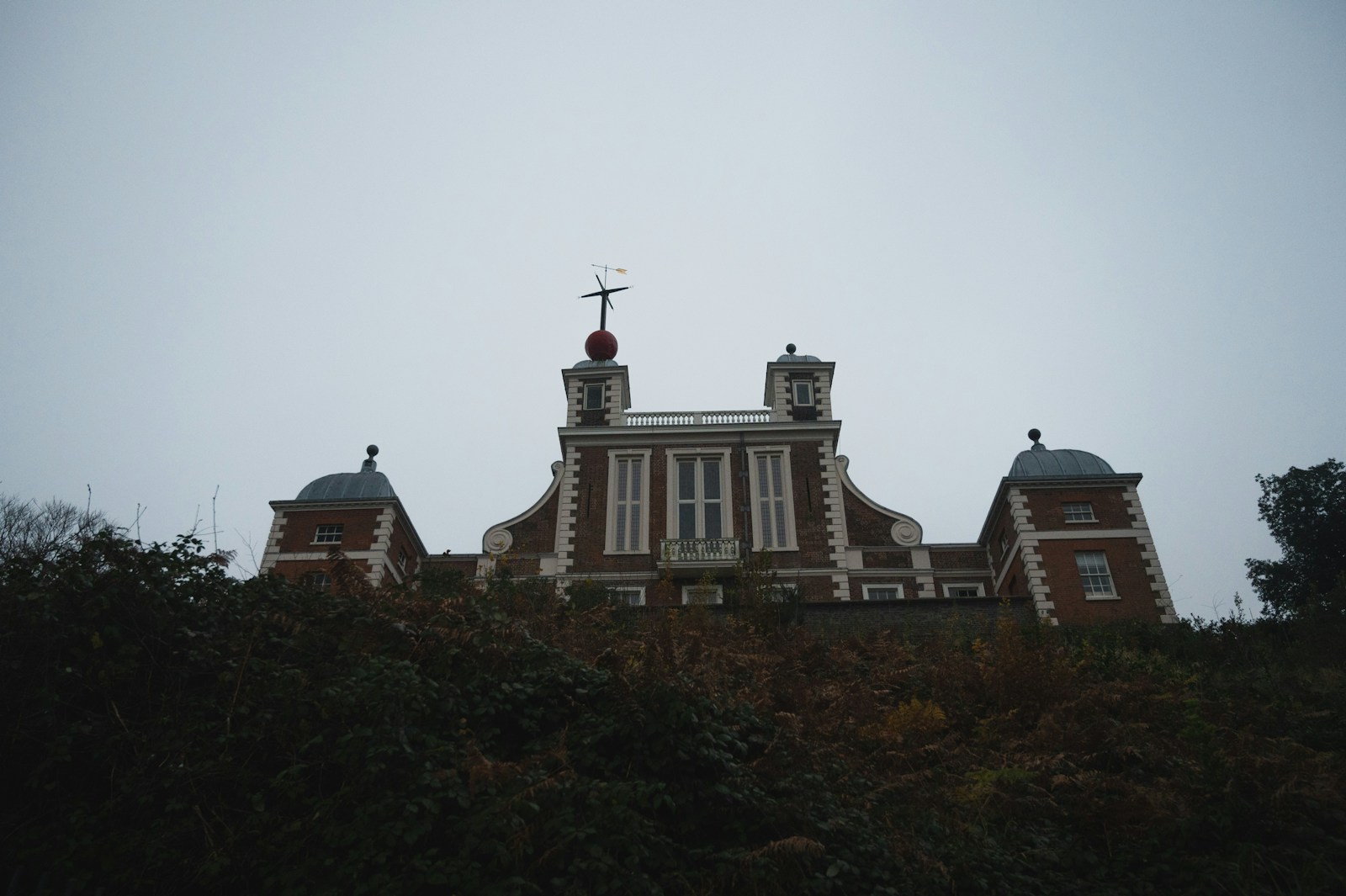
The Royal Observatory Greenwich, a historic site that has been at the forefront of astronomical research and timekeeping for over three centuries, is celebrating its 350th anniversary on June 22. The observatory was founded in 1675 by King Charles II of England to solve the problem of determining longitude at sea, which was vital for navigation, trade, diplomacy, exploration, and warfare. King Charles II appointed John Flamsteed as the first Astronomer Royal and tasked architect Christopher Wren to design the initial structure.
Generations of astronomers, scientists, and horologists worked at the observatory to find a solution to the longitude problem. They tracked the apparent movements of celestial bodies relative to the Prime Meridian, an imaginary line running north-south through the observatory. These observations led to the creation of tables predicting the positions of the moon and stars throughout the year, as well as a handbook explaining how to determine longitude at sea mathematically.
By 1770, English horologist John Harrison had developed a timepiece that functioned accurately aboard a moving ship, providing sailors with two methods to determine longitude. In the 1880s, two-thirds of the world’s ships were navigating with maps that used the Greenwich meridian as a reference line.
Observatory’s 350-year legacy
In 1884, a conference was held to decide the world’s first global Prime Meridian, and Greenwich was chosen. The invention of railway travel also necessitated the establishment of a unified time zone, which was provided by the Royal Observatory and adopted by railway companies. The new Greenwich Mean Time (GMT) was adopted during the 1884 International Meridian Conference as the global time zone system.
As centuries passed, the Royal Observatory explored other avenues of astronomy, including tracking Earth’s magnetic field, observing planetary transits, and characterizing binary star systems. In the 1890s, the observatory hired women for the first time, who worked as computers to examine and refine observational data. The site itself has faced conflict, intrigue, and danger, including an attempted anarchist bomb attack in 1894 and a V1 flying bomb detonation nearby during World War II.
In 1948, the telescopes and astronomers began relocating to the village of Herstmonceux due to light pollution, smog, vibrations, and magnetic interference from railway lines. Today, the Royal Observatory Greenwich serves as a museum and a venue for science communication, engaging and inspiring the next generation of astronomers. Visitors can explore the site that has been at the forefront of astronomical research and timekeeping for over three centuries.

Senior Software Engineer with a passion for building practical, user-centric applications. He specializes in full-stack development with a strong focus on crafting elegant, performant interfaces and scalable backend solutions. With experience leading teams and delivering robust, end-to-end products, he thrives on solving complex problems through clean and efficient code.