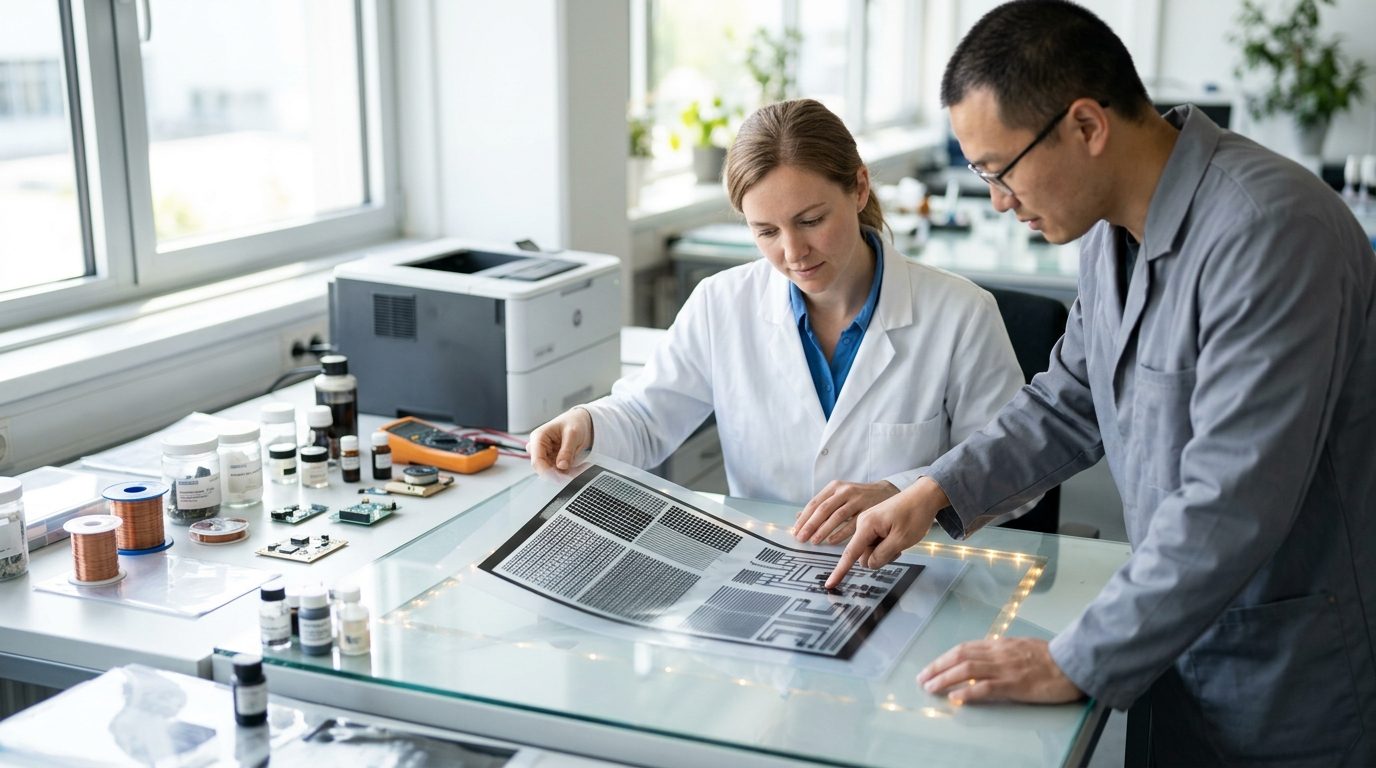
Scientists have created a touch technology using PVC, laser printing and standard printer toner, offering a strikingly simple approach to making interactive surfaces.
The method contrasts with the complex electronics and manufacturing processes behind many touchscreens. Its limited material list could make touch-sensitive controls easier to produce in research labs, classrooms and small workshops.
Few technical details have been disclosed, including performance data, production costs and the identities of the researchers. Those gaps prevent a direct comparison with commercial touchscreen systems. Still, the concept points to a possible alternative for applications that do not require a full glass display.
Making Touch Controls From Familiar Materials
Modern touchscreen devices appear simple to users. A person taps a sheet of glass, and a phone, tablet or control panel responds. Beneath that surface, however, sensors and electronic circuits must detect the contact and turn it into a usable signal.
The new method reduces the visible material requirements to three familiar items:
- PVC, a widely used plastic material
- A laser-printing process
- Regular printer toner
The researchers describe the technology as being made “using only PVC, laser printing, and regular printer toner.” That claim is important because conventional touch systems can require specialized conductive materials and tightly controlled production methods.
Laser printers place toner in precise patterns. If those patterns can help form touch-sensitive areas on PVC, designers may be able to print controls in selected shapes. The available information does not explain the sensing mechanism or identify any added electronics needed to read the input.
A Different Goal From Phone Screens
The technology should not yet be viewed as a direct replacement for smartphone displays. Commercial screens must detect touch accurately while remaining transparent, durable and responsive. Many also recognize several fingers at once and work with complex software.
A printed touch surface could serve a narrower purpose. Possible uses may include buttons, switches or simple control panels on plastic sheets. Such systems would not necessarily need to display images beneath the touch area.
This distinction matters because touch sensing and image display are separate functions. Phones combine them into one polished unit, but other products may need only a surface that detects a press.
Cost and Access Could Shape Its Value
The use of common printing supplies may lower barriers to early testing. Schools and makers could potentially produce custom interfaces without ordering specialized touchscreen parts. Researchers might also revise printed patterns faster than they could redesign a factory-made panel.
However, familiar materials do not guarantee low total costs. A usable product may still require sensors, processors, wiring and protective layers. Production speed, waste and equipment needs also influence the final price.
PVC presents another issue. The plastic is common and inexpensive, but its environmental effects may affect decisions about disposal and large-scale production. Any commercial assessment would need to consider material use across the product’s full life.
Key Tests Remain Undisclosed
Several measurements will determine whether the method can move from a scientific demonstration into practical products. These include touch accuracy, response time and performance after repeated use.
Humidity, heat, bending and surface wear could also affect printed controls. Researchers would need to show whether the toner patterns remain stable under daily handling. Safety testing and manufacturing consistency would become important if the method were used in consumer goods.
The reported achievement shows that touch input may be created from surprisingly ordinary materials. Its larger impact will depend on evidence that the printed surfaces are reliable, affordable and suitable for repeatable production.
Future disclosures should clarify how the system senses contact, how it connects to electronics and which uses it can support. Until then, the work is best seen as a promising production concept rather than a substitute for the advanced screens used in phones and tablets.

Kirstie a technology news reporter at DevX. She reports on emerging technologies and startups waiting to skyrocket.