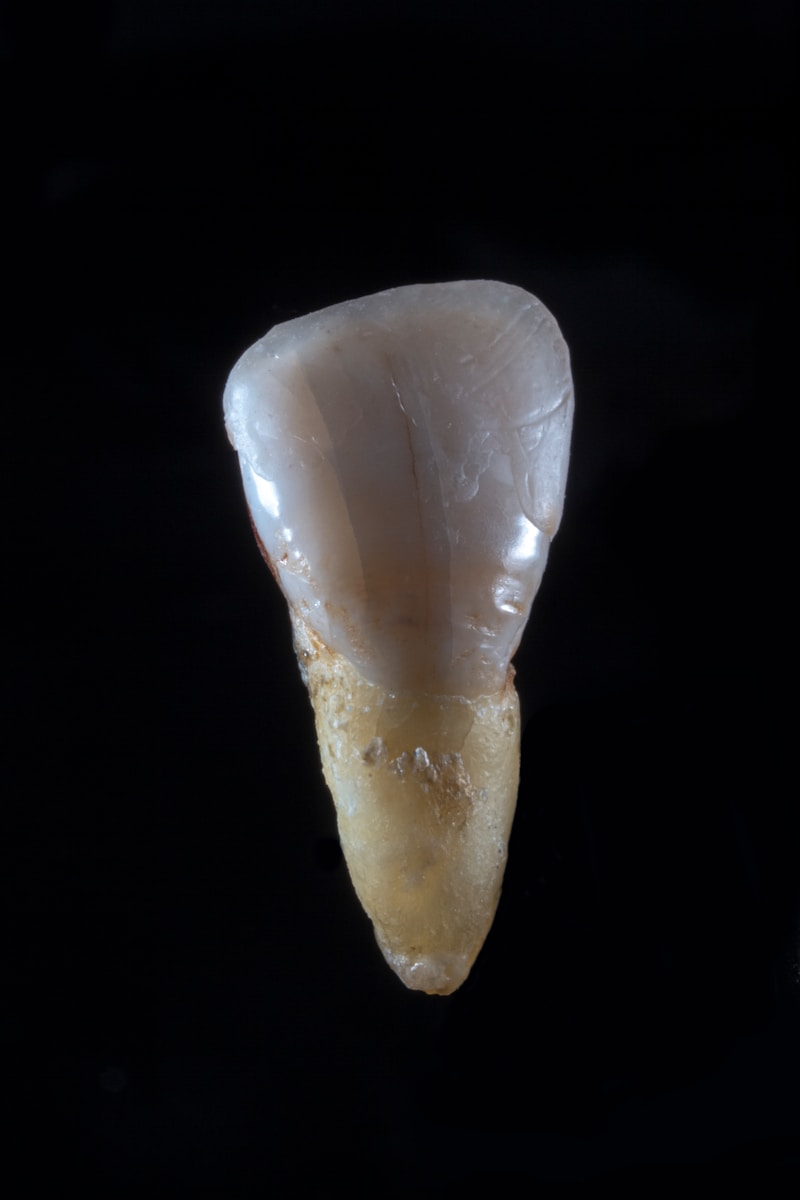
Archaeologists have made a groundbreaking discovery at the Valencina Copper Age mega-site in southwest Spain. During excavations in 2018, a rare sperm whale tooth was unearthed, dating back between 5,300 and 4,150 years. This find is the first of its kind in Late Prehistoric Iberia, providing valuable insights into the interactions between ancient human communities and the sea.
The sperm whale tooth, remarkably well-preserved, bears marks of bioerosion from marine organisms, suggesting it spent considerable time submerged before being collected by humans. Researchers believe that after its retrieval, the tooth was worked on by Copper Age craftspeople, possibly to create ornaments or culturally significant items. This discovery highlights the importance of marine resources in ancient Iberian societies, a historically underexplored area.
The sperm whale tooth shows signs of human modification, including drilled holes and cut marks, indicating its transformation into a symbolic or functional object.
Marine resources in prehistoric Iberia
To understand the tooth’s journey from the sperm whale to the archaeological site, researchers employed taphonomic analysis and 3D modeling.
These techniques revealed that the whale likely died of natural causes, and its tooth spent a significant period on the seafloor before being collected by humans. Bioerosion marks and shark bite marks support this theory, while the 3D model allowed researchers to identify subtle signs of human alteration without causing damage to the artifact. The deliberate burial of the tooth after it was worked on suggests it held importance beyond mere functionality, possibly as part of a ritual or symbolic practice.
This discovery offers valuable insight into the spiritual and cultural life of early coastal communities in Iberia and their profound symbolic connection to the sea. The discovery of a sperm whale tooth at the Valencina Copper Age mega-site is a significant milestone in understanding the complex relationship between ancient human societies and the marine environment. It opens new avenues for archaeological and scientific exploration, shedding light on the extensive movement and symbolic significance of marine objects in prehistoric societies.

Rashan is a seasoned technology journalist and visionary leader serving as the Editor-in-Chief of DevX.com, a leading online publication focused on software development, programming languages, and emerging technologies. With his deep expertise in the tech industry and her passion for empowering developers, Rashan has transformed DevX.com into a vibrant hub of knowledge and innovation. Reach out to Rashan at [email protected]