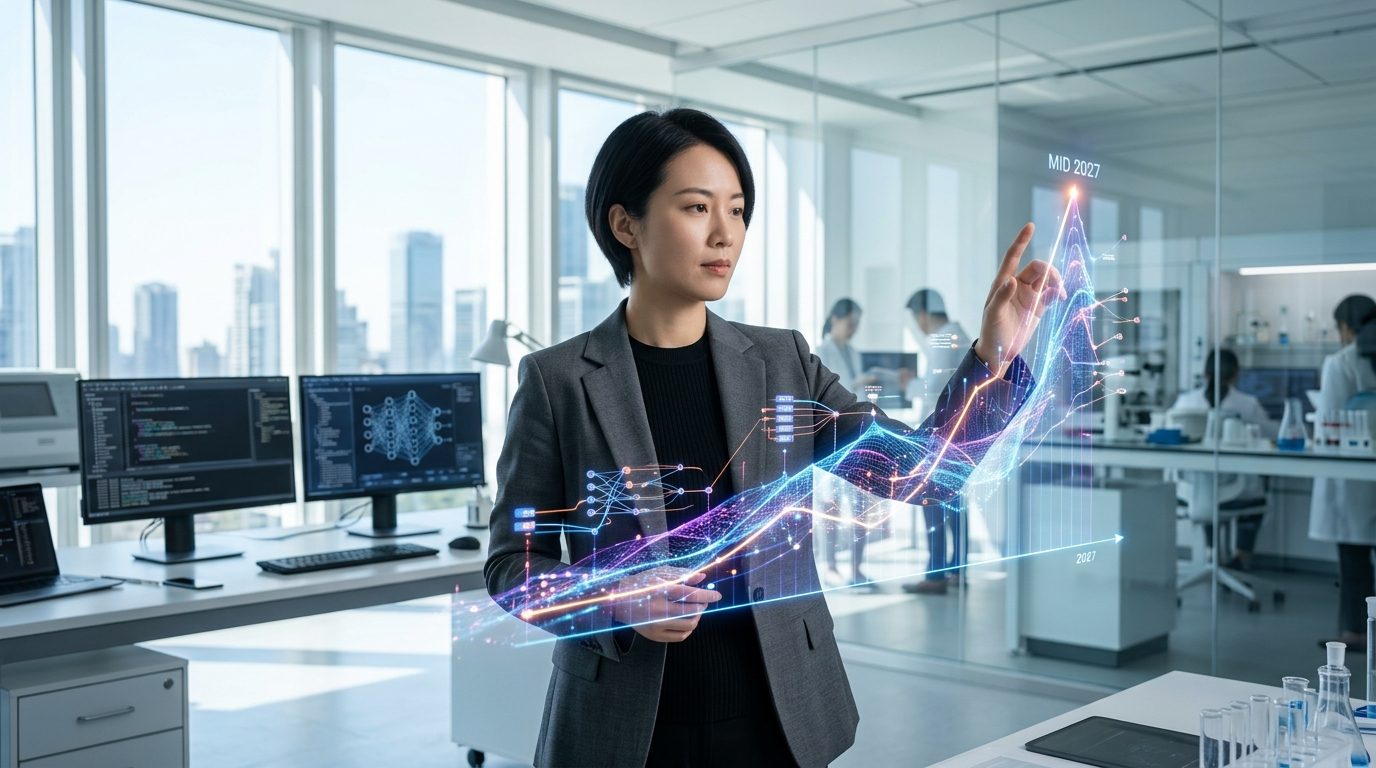
A major artificial intelligence advance comparable to OpenAI’s GPT-3 could arrive by mid-2027, according to Gao Yang, co-founder and chief scientist of Spirit AI.
The forecast gives the technology industry a possible timetable for its next major leap. It also points to continued competition among AI developers seeking models with stronger and more useful abilities.
“An industry breakthrough comparable to OpenAI’s landmark GPT-3.0 model could come around mid-2027,” Gao said.
Gao did not identify a specific model, company, or technical method expected to produce the advance. The prediction should therefore be viewed as an expert forecast rather than a confirmed product schedule.
Why GPT-3 Remains a Key Benchmark
OpenAI introduced GPT-3 in 2020. The system drew wide attention because it could generate fluent text, answer questions, summarize material, and perform tasks from written instructions.
Its release helped move large language models from research settings into commercial software. Developers began using such systems for writing tools, customer support, coding assistance, and information services.
GPT-3 also demonstrated the gains possible from training a model with large amounts of data and computing capacity. That approach influenced later systems from OpenAI and competing technology companies.
Calling a future development comparable to GPT-3 sets a high bar. Such an advance would need to alter industry expectations, not merely produce modest improvements on existing tests.
What a New Breakthrough Could Mean
Gao’s forecast leaves open the form that the next advance may take. Progress could involve better reasoning, lower operating costs, improved reliability, or stronger performance across text, images, audio, and video.
Several measures would help determine whether a new model represents a true industry shift:
- Clear gains on practical tasks, rather than narrow test scores.
- Lower costs for training and daily use.
- More accurate responses with fewer invented claims.
- Wider adoption by companies, developers, and consumers.
A GPT-3-scale event could affect investment decisions and product plans. It could also increase demand for chips, data centers, electricity, and skilled researchers.
The effects would extend outside the technology sector. More capable systems could change office work, education, media production, scientific research, and public services. Those gains may come with concerns about job disruption, copyright, privacy, and misuse.
A Forecast With Major Unknowns
AI progress does not follow a fixed calendar. Research gains can depend on access to computing resources, high-quality data, engineering talent, and successful experiments.
Regulation and infrastructure may also shape the timing. Governments are examining safety rules, while companies face limits tied to energy use, chip supply, and the cost of training advanced models.
The meaning of “breakthrough” is another open issue. Researchers, investors, and users may judge the same system differently. A model can perform well in demonstrations yet struggle with reliability during routine work.
Gao’s mid-2027 estimate offers a clear marker for an industry that often relies on broad predictions. The key test will be whether any new system produces measurable gains and widespread use comparable to GPT-3’s impact.
Until then, attention will center on technical results, deployment costs, and evidence from real users. Those factors will show whether the next generation represents steady improvement or a genuine turning point.

Rashan is a seasoned technology journalist and visionary leader serving as the Editor-in-Chief of DevX.com, a leading online publication focused on software development, programming languages, and emerging technologies. With his deep expertise in the tech industry and her passion for empowering developers, Rashan has transformed DevX.com into a vibrant hub of knowledge and innovation. Reach out to Rashan at [email protected]