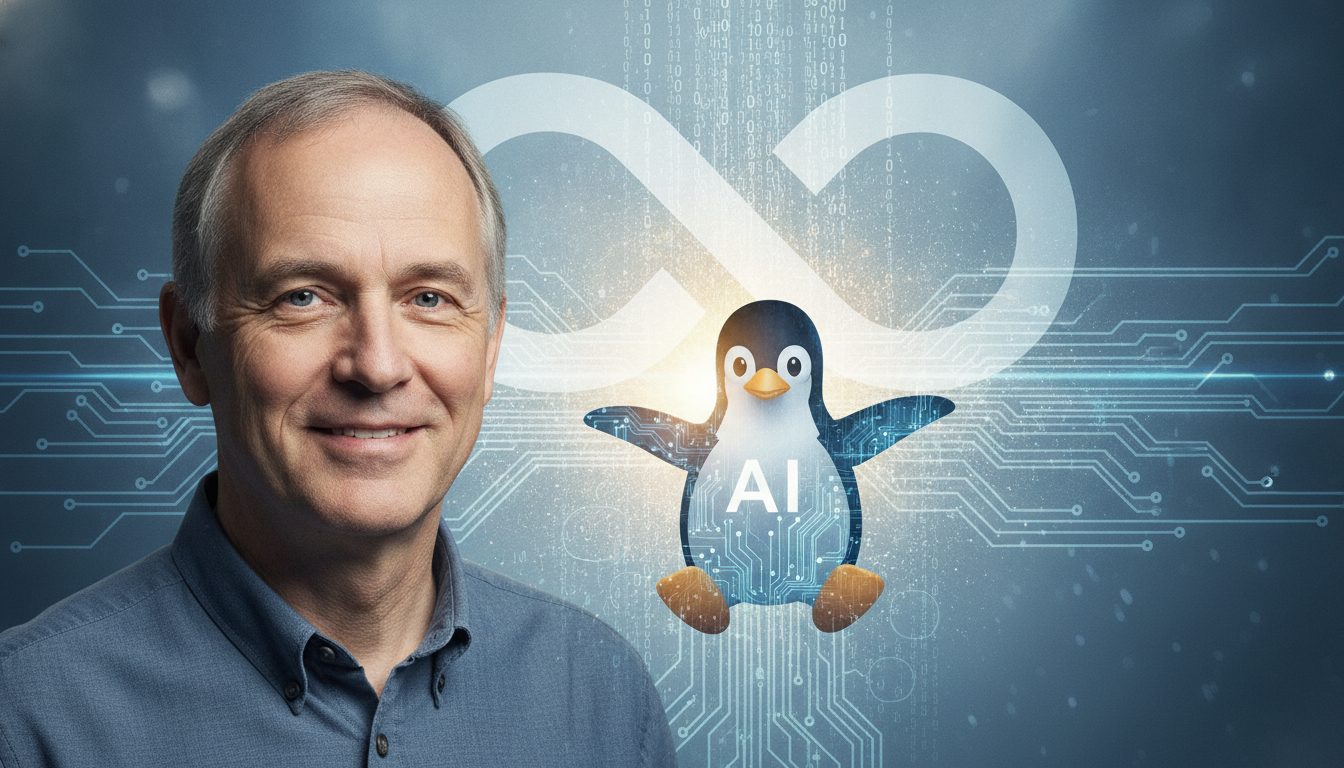
Linus Torvalds sent a clear message this week to critics of artificial intelligence in software work, saying the Linux project will not adopt an anti-AI stance. His comments signal how the world’s most influential open-source operating system will navigate rising tension over AI tools and code generation.
Speaking as the project’s top maintainer, Torvalds made plain that AI-generated code will be judged on its merits like any other patch. He also pointed to the core open-source principle that anyone unhappy with project decisions can fork the codebase.
“I realize that some people really dislike AI, but this is an area where I’m willing to absolutely put my foot down as the top-level maintainer,” Torvalds said this week. If someone has issues with Linux not being anti-AI, “they can do the open-source thing and fork it.”
His remarks were first reported by The Register.
Why It Matters Now
Linux underpins a wide share of modern computing. It runs most cloud servers, powers Android devices, and drives systems from cars to routers. Choices in the kernel project often ripple across the tech industry and shape how tools are built and vetted.
AI coding assistants and large language models have moved from experiments to common tools for developers. They can suggest code, write tests, and summarize patches. That shift has triggered arguments about accuracy, licensing, and the future of human review in open-source projects.
What Torvalds Is Signaling
Torvalds has long prioritized code quality, clear authorship, and proper review over politics around tools. His latest comments indicate that the Linux process, not a blanket rule, will govern AI use. Maintainers will still ask for rationale, test results, and sign-offs. They will still reject weak patches, no matter who or what wrote them.
He also reaffirmed a basic right in open source. If a group wants a different policy, they can fork the code and build their own path. That option has existed for decades under the GPL license that covers the kernel.
Community Reactions and Concerns
Supporters of AI tools say they speed routine work and help new contributors learn faster. They argue that maintainers remain the gatekeepers, which protects quality. They also point to gains in testing and documentation produced with AI help.
Critics worry about license hygiene and originality. They cite lawsuits and disputes over training data, including questions about whether models were trained on GPL code without clear consent. Some maintainers in other projects now ask contributors to disclose if AI tools were used.
- Risk of license conflicts if generated code mirrors restricted sources
- Bug introduction from incorrect or stale patterns suggested by models
- Loss of authorship clarity when tools write large sections of code
Legal experts note that the GPL requires source availability and rights to modify and share. If AI outputs reproduce copyrighted code, that could create conflicts. Many cases remain unsettled in courts, so projects are drafting their own guidance.
How Linux May Handle AI-Generated Contributions
The kernel already relies on strict review, testing in public trees, and traceable authorship lines. Patches must include a Developer’s Certificate of Origin and pass automated checks. That process can absorb AI-assisted work without special rules, as long as contributors stand behind their code.
Kernel maintainers often require benchmarks, regression tests, and clear commit messages. AI does not change those bars. It may raise the need for stronger style checks and plagiarism detection to spot near-duplicate code from unknown sources.
Industry Context and Forward Look
Many large tech firms encourage AI-assisted development to cut costs and speed releases. Cloud providers sell AI services alongside Linux-based infrastructure. Toolmakers are building guardrails, such as stricter filtering and reference tracking, to reduce legal and quality risks.
For Linux, the practical impact may show up in routine areas first. Examples include device driver scaffolding, documentation updates, and test generation. Core subsystems that affect stability and security will likely see slower adoption, with extra scrutiny on any AI-touched code.
Observers expect projects to publish clearer contribution rules. These may ask for AI use disclosure, add similarity scans, and require stronger testing. A few communities have tried AI-free pledges, but enforcement is hard, and forking fragments effort.
What To Watch
Three signals will show where this debate is heading. First, whether courts offer clearer guidance on training data and code outputs. Second, if kernel maintainers report more rejections linked to AI errors. Third, whether companies contributing to Linux formalize AI usage policies in their engineering handbooks.
Torvalds’ stance keeps the door open while defending the review process that built Linux. The project will judge code by results, not by the tool that wrote the first draft. The next phase will test whether AI can meet the kernel’s high bar without eroding trust in how open source is made.

Kirstie a technology news reporter at DevX. She reports on emerging technologies and startups waiting to skyrocket.