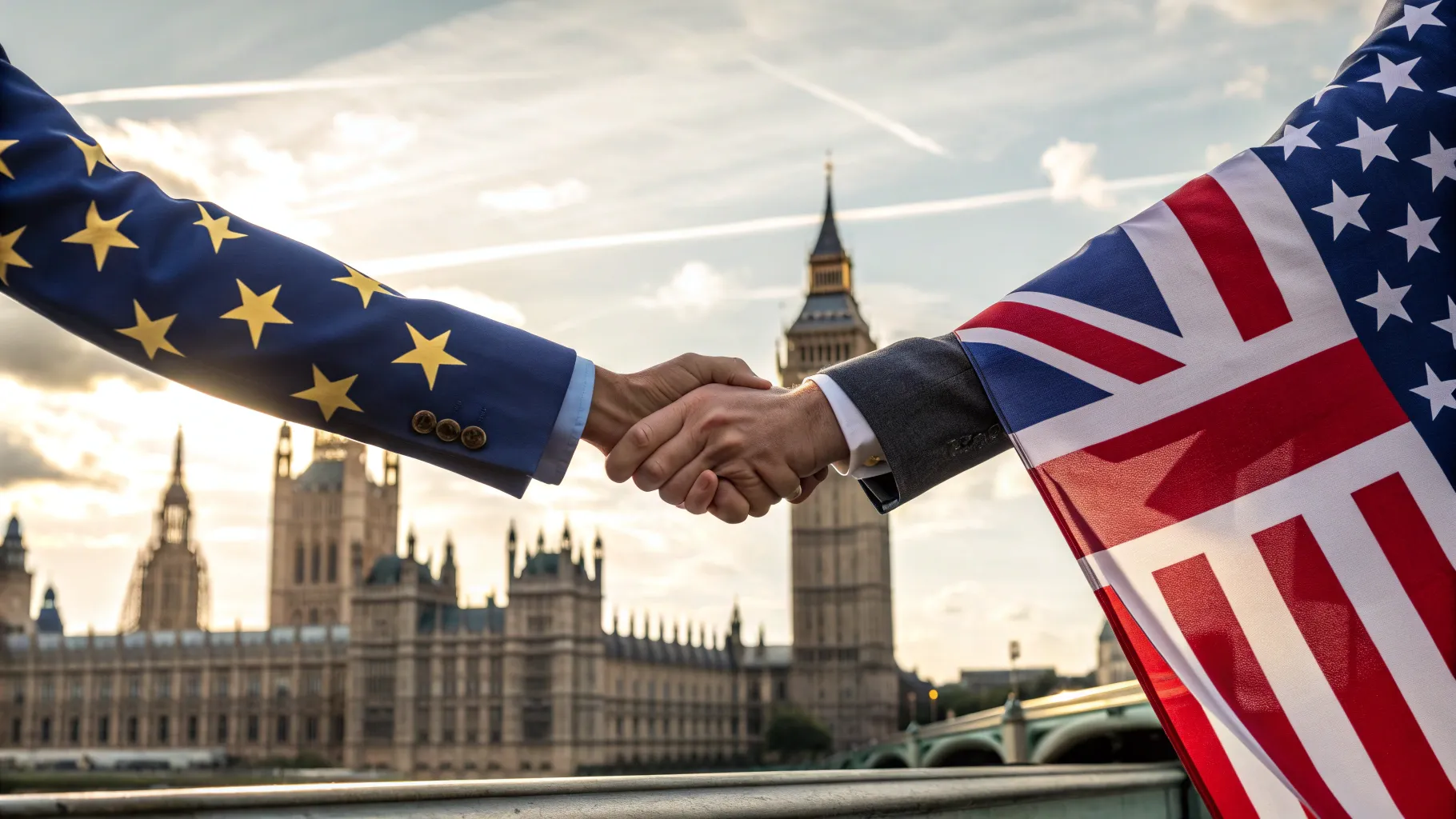
The United States and the United Kingdom unveiled a narrow trade agreement that keeps existing U.S. tariffs in place while easing a few sector limits. The announcement, made by U.S. President Donald Trump and British Prime Minister Keir Starmer, preserves a 10% tariff on British exports. It offers modest new access for agricultural goods in both directions and trims steep U.S. duties on British car exports. The move arrives as Chinese officials worry about deeper isolation amid closer trade talks between Washington and key partners.
Tariffs Shape a Narrow Agreement
The pact reflects a limited approach rather than a full free trade deal. The White House held the line on broad tariffs while carving out targeted relief. British automakers get a break from prohibitive U.S. duties, a change that could revive select models priced out of the market. Farmers on both sides gain some additional access, but not enough to transform trade flows.
Officials confirmed the tariff stance and the sector tweaks in Thursday’s joint announcement. As summarized in the remarks:
“A limited bilateral trade agreement … leaves in place Trump’s 10% tariffs on British exports, modestly expands agricultural access for both countries and lowers prohibitive U.S. duties on British car exports.”
The structure aims to protect U.S. industry while signaling goodwill to London. For the U.K., it offers incremental wins without opening sensitive sectors to sweeping competition.
China Watches With Growing Unease
The deal lands amid rising concern in Beijing about the impact of tariffs and shifting alliances. Officials there, according to people familiar with internal discussions, fear economic fallout as more partners deepen trade talks with Washington.
“Behind closed doors, Chinese officials have grown increasingly alarmed about the U.S. tariffs’ impact on their economy and the risk of isolation as China’s trading partners have started negotiating deals with Washington.”
These worries reflect a broader trend. Supply chains have been recalibrating since earlier tariff rounds. New bilateral deals, even narrow ones, can nudge sourcing decisions away from China at the margins.
Industry Impact and Stakeholder Views
Auto manufacturers in the U.K. may see a lifeline for select exports. Lower duties could reopen the U.S. market for models that had become uneconomic. Yet the general 10% tariff still limits the scope for a broader rebound.
U.S. and British farmers will look for openings in niche categories. Expanded quotas or streamlined checks can boost shipments of specialty products, though price and safety rules still matter. Food producers welcome progress but caution that logistics and certification will decide the gains.
Trade lawyers view the agreement as a testing ground. Limited deals can be implemented faster, face fewer political hurdles, and target areas with clearer benefits. At the same time, they add patchwork rules that businesses must navigate, raising compliance costs for smaller exporters.
Geopolitical Signals and Strategy
The announcement sends a message beyond commerce. Washington retains leverage through tariffs while rewarding allies with targeted relief. London secures a deliverable while keeping room to negotiate later.
For Beijing, the risk is drift rather than shock. Each deal that makes U.S. partners less reliant on Chinese suppliers adds pressure. Officials may respond with their own incentives, market access offers, or regulatory easing to keep investment at home.
- Tariffs stay as a core U.S. policy tool.
- Targeted carve-outs aim to limit domestic blowback.
- Allies seek practical gains without sweeping concessions.
Market Reaction and Outlook
Traders will parse the fine print for sector winners. Auto and agriculture shares in the U.K. could see a short-term lift. U.S. consumer stocks tied to imported British models may also react if prices fall.
Currency moves should be modest. The deal is narrow and unlikely to shift growth forecasts. Still, it signals a path for more targeted agreements, which markets tend to favor for their predictability.
Next steps will focus on implementation: tariff schedules for listed car categories, specific farm products, and regulatory cooperation to move goods more quickly.
The agreement stabilizes a key relationship without sweeping change. It offers practical relief for select exporters, keeps the tariff framework intact, and hints at a template for future mini-deals. Watch for detailed schedules on auto duties, product lists in agriculture, and any parallel moves by China to cushion its exporters. The bigger question is whether this narrow approach becomes the norm, shaping trade policy one sector at a time.

Rashan is a seasoned technology journalist and visionary leader serving as the Editor-in-Chief of DevX.com, a leading online publication focused on software development, programming languages, and emerging technologies. With his deep expertise in the tech industry and her passion for empowering developers, Rashan has transformed DevX.com into a vibrant hub of knowledge and innovation. Reach out to Rashan at [email protected]