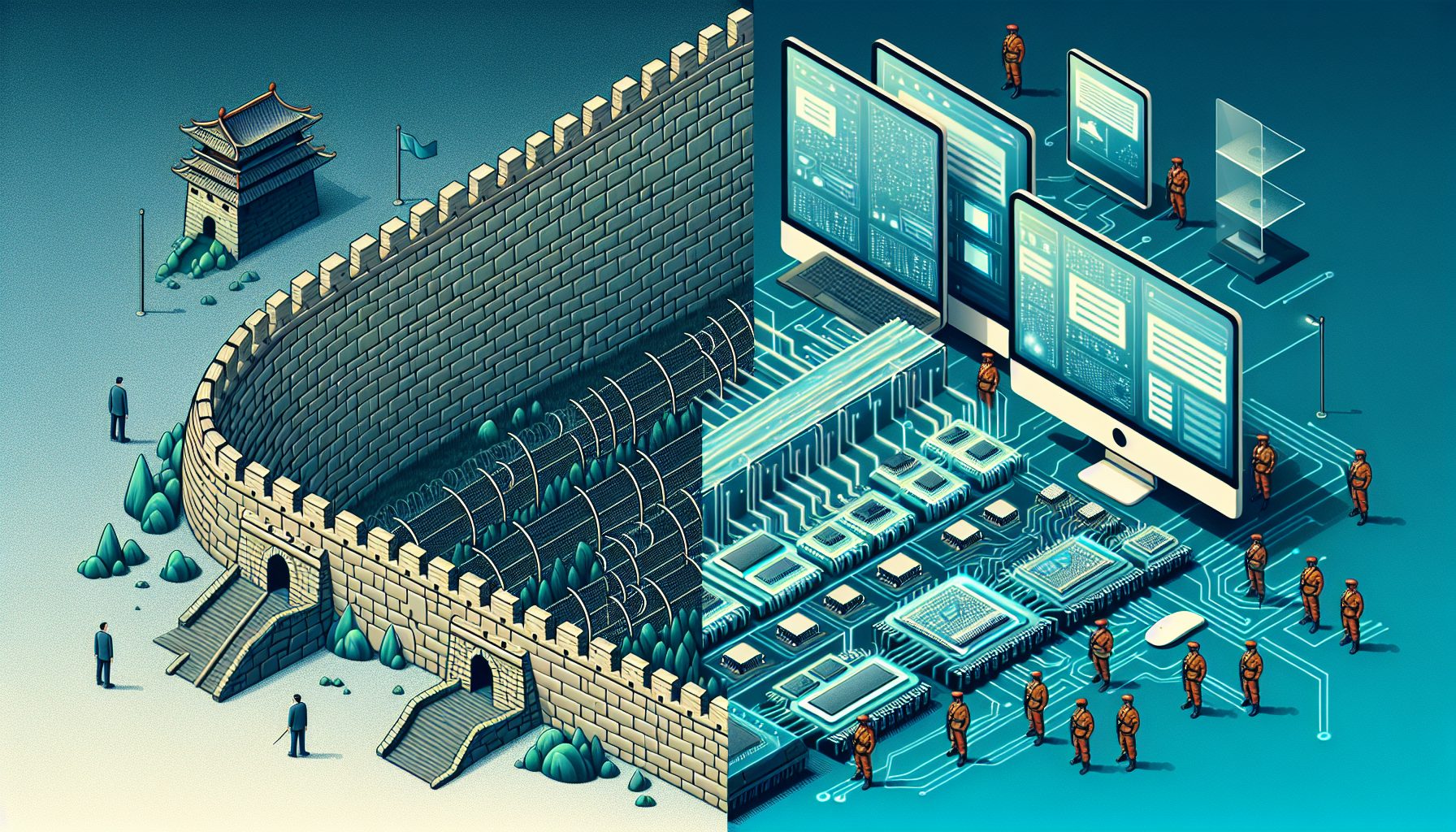
The Chinese government has criticized America’s introduction of new export controls on US-made semiconductors.
China’s retaliation is a signal to both the current Biden & incoming Trump administrations that it will fight fire with fire. Raises likelihood of escalatory spiral in coming months. https://t.co/nZxr3SS0DQ via @NYTimes
— Scott Kennedy (@KennedyCSIS) December 3, 2024
Washington is concerned that Beijing could use this technology to develop the next generation of weapons and artificial intelligence (AI) systems. These measures, announced by the Biden administration, have intensified political tensions between the world’s top two economies.
China has lodged serious protests with the US for once again slapping export controls on semiconductors, sanctioning Chinese companies, and suppressing China’s technology progress. pic.twitter.com/FM2Ja7XPVy
— Spokesperson发言人办公室 (@MFA_China) December 3, 2024
Chinese leader Xi Jinping has made technological self-sufficiency a cornerstone of his strategy to elevate China as a tech superpower. On Monday, the US Commerce Ministry revealed curbs on the sale of two dozen types of semiconductor-making equipment and imposed restrictions on numerous Chinese companies from accessing American technology. The goal of the new controls, according to US officials, is to slow China’s development of advanced AI tools that can be used in warfare and to hinder the growth of China’s domestic semiconductor industry, citing national security concerns.
The US has been overstretching national security, abusing export controls, and imposing illegitimate unilateral sanctions&long-arm jurisdiction on Chinese companies. This is hurting global trade, the global supply chain and the interests of all countries. China firmly rejects it. pic.twitter.com/hONRoEqCj9
— Spokesperson发言人办公室 (@MFA_China) December 3, 2024
China’s Commerce Ministry condemned the move, accusing the US of “abuse” of export controls and posing “a significant threat” to the stability of global industrial and supply chains. “The US preaches one thing while practicing another, excessively broadening the concept of national security, abusing export control measures, and engaging in unilateral bullying actions. China firmly opposes such actions,” stated the ministry.
NEW: The Biden admin announced new export controls today that make it harder for China to manufacture its own semiconductors
In my reporting, I learned that a sanctioned Chinese chip fab literally built a bridge connecting it to a non-sanctioned fab lol https://t.co/0Xlnl8ZSEC
— Louise Matsakis (@lmatsakis) December 2, 2024
In retaliation, China has outright banned the sale of several materials crucial for producing semiconductors and electric vehicle batteries to the US. The export of gallium, germanium, antimony, and other key materials will now be prohibited, given their potential military applications.
US enacts tight export controls
The race for superior military technology has profoundly influenced US-China relations. The US has expressed growing concerns about a possible Chinese invasion of Taiwan. China has become increasingly assertive towards Taiwan, which it claims as its own territory despite never having governed it.
Senior US officials have also accused China of stealing American-made AI software, allegations that Beijing denies. “They’re the strongest controls ever enacted by the US to degrade the PRC’s ability to make the most advanced chips they’re using in their military modernization,” Secretary of Commerce Gina Raimondo told reporters, referring to the People’s Republic of China. The new rules include restrictions on the sale of high bandwidth memory chips essential for high-end applications such as generative AI training, along with fresh software and technology controls.
Monday’s announcement marks the third round of export restrictions imposed on Beijing by the Biden administration in as many years. Last October, the Commerce Ministry restricted the types of semiconductors American companies can sell to China, aiming to close loopholes in previous regulations. In September, the Commerce Ministry proposed a separate ban on the sale or import of smart vehicles using specific Chinese or Russian technology, citing security concerns.
China, for its part, is pressing ahead with its goal to dominate future advanced technologies. In May, Beijing announced the creation of its largest-ever semiconductor state investment fund, worth $47.5 billion, with investments from six of the country’s largest state-owned banks. This move underscores Xi’s push to bolster China’s position as a technological giant.

Rashan is a seasoned technology journalist and visionary leader serving as the Editor-in-Chief of DevX.com, a leading online publication focused on software development, programming languages, and emerging technologies. With his deep expertise in the tech industry and her passion for empowering developers, Rashan has transformed DevX.com into a vibrant hub of knowledge and innovation. Reach out to Rashan at [email protected]