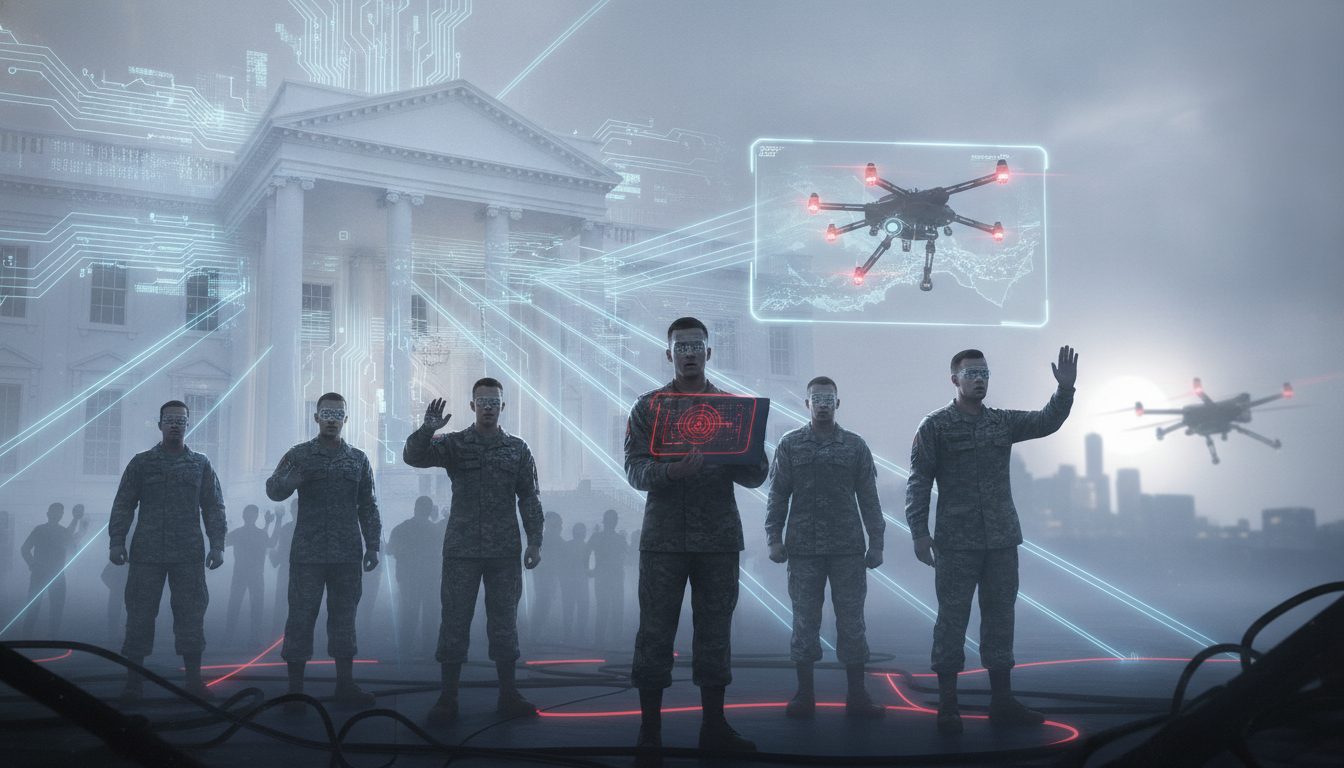
The White House is urging the Pentagon to move faster on artificial intelligence, pressing for systems that can select and strike targets with less human control. The push is testing long-standing resistance inside the military and among humanitarian groups. It also comes as rivals invest in similar tools, adding urgency to the debate over how to keep pace while staying within legal and moral limits.
The administration is pushing the military to use AI, testing long-standing opposition to weapons systems that can pick and attack targets on their own.
At issue are autonomous and semi-autonomous weapons. These systems use sensors and algorithms to find, track, and engage threats. Supporters see speed and precision. Critics worry about mistakes, accountability, and escalation risks. The discussion is moving from theory to practice as the Pentagon funds new programs and runs field tests.
Why This Fight Is Different Now
The Pentagon has used AI for years in back-office and intelligence work. Project Maven, launched in 2017, uses machine learning to sift drone video. Recent combat has shown the spread of loitering munitions and uncrewed systems in Ukraine and the South Caucasus. These tools shorten decision times and can swarm targets.
Policy is catching up. The Department of Defense updated Directive 3000.09 in 2023. It sets requirements for testing, commander accountability, and senior-level approvals for autonomous weapons. The aim is to keep a human on the loop, even when machines act faster than people can.
The administration’s pressure reflects two worries. One is that adversaries will field swarms that outnumber U.S. platforms. The other is that manual targeting cannot handle the speed of modern conflict. That tension drives the current push and the internal resistance to it.
Supporters See Speed and Survivability
Officials who back the shift point to new initiatives, including the Replicator program announced in 2023. It seeks to deploy thousands of small, cheap, autonomous systems within two years. The goal is to saturate the battlespace and complicate enemy defense.
Proponents argue that AI can reduce civilian harm by sorting targets more accurately. Better pattern recognition could flag decoys and protect protected sites. They also say autonomous platforms can take on the riskiest missions and keep pilots and sailors out of harm’s way.
- Faster sensor-to-shooter timelines reduce exposure.
- Smaller, cheaper systems can be replaced quickly.
- Automation can filter noise and cut human error in detection.
Opponents Warn of Legal and Moral Risk
Humanitarian groups and many officers push back. They ask how a machine will apply principles of distinction and proportionality under the laws of war. They also question who is accountable if an algorithm makes a wrong call.
At the United Nations, many countries and the International Committee of the Red Cross have urged new rules for autonomous weapons. Some want a ban on systems that select and engage targets without meaningful human control. The United States favors rules and best practices rather than a blanket ban.
Military skeptics raise practical concerns. Adversaries may spoof sensors or feed false data. New software can fail in strange ways outside the lab. Field commanders warn that trust in automation, once lost by a single tragic error, is hard to regain.
Testing, Data, and Oversight
Officials point to expanded testing and evaluation. The updated Pentagon policy requires rigorous verification of software, training data, and fail-safes. Independent reviews are mandated for higher-risk systems. The services are building test ranges that mix live assets with digital twins to simulate edge cases.
Congress has pressed for clearer reporting on deployments and mishaps. Lawmakers want to see audit trails that record how a target was selected. That record would be vital in any investigation. It could also guide improvements to models and procedures.
Global Competition and What Comes Next
China and Russia are moving quickly on military AI, according to public statements and open-source reporting. U.S. officials argue that restraint does not mean standing still. They seek systems with meaningful human control, along with hard limits on where autonomy can be used.
The next year will test these plans. The Pentagon plans more trials of uncrewed aircraft teaming with pilots. The Navy is expanding use of autonomous vessels for scouting and mine hunting. Each step will face scrutiny from ethicists, engineers, and Congress.
The outcome will shape future battle planning and procurement. It will also influence diplomatic talks over global norms.
The administration has set a faster pace, and the military is weighing how to meet it without crossing red lines. Supporters see a chance to gain speed and save lives. Opponents see new risks to civilians and stability. The key questions now are how much human control is enough, and how to prove it. Watch for new testing rules, congressional oversight moves, and any incidents that force a pause or reset.

Kirstie a technology news reporter at DevX. She reports on emerging technologies and startups waiting to skyrocket.