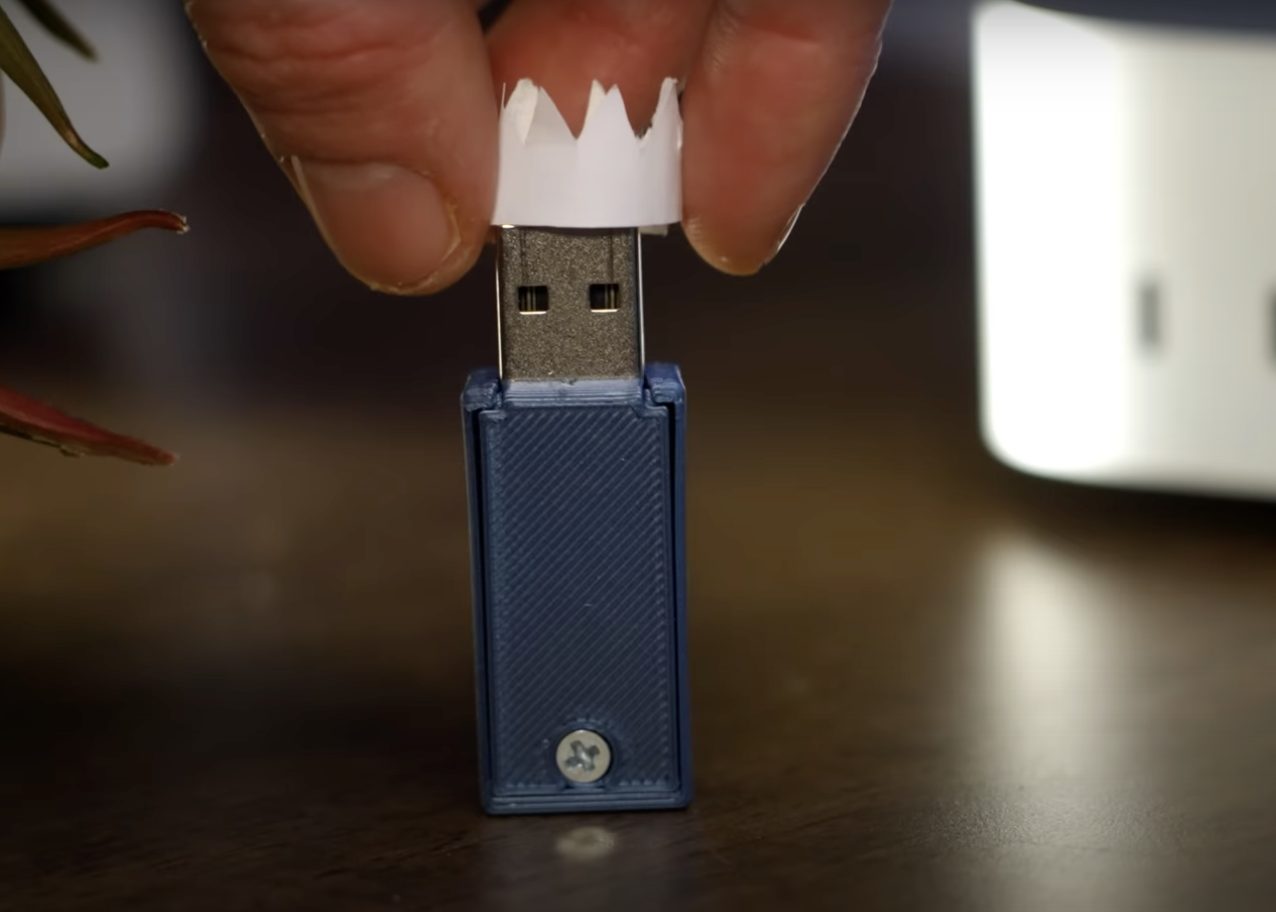
Storage technology has always been a delicate dance between reliability and capacity. While we’ve made incredible strides in cramming more data into smaller spaces, we’ve sacrificed longevity in the process. Our current storage device solutions are surprisingly fragile – hard drives can fail from simple physical shock, and solid-state drives suffer from data rot that can corrupt our precious memories over time.
Enter the Blouse storage device – a $30 marvel that challenges everything we know about data storage. With speeds matching high-end gaming PC RAM and immunity to magnetic disruption, this device promises something unprecedented: data retention for 2.7 billion years. That’s longer than human civilization has existed, and roughly half the age of Earth itself.
The Price of Immortal Data
The seemingly modest $30 price tag hides an uncomfortable truth: this device only stores 8 kilobytes of data. To put this in perspective:
- Storing a single high-resolution photo would require multiple devices
- Replacing a 2TB SSD would cost over $7 billion
- Each character you type takes up roughly one byte of storage
Yet, the value proposition isn’t about capacity – it’s about permanence. While modern SSDs might last 9 months to 3 years of daily write cycles, this device could theoretically outlast our species.
The Science Behind Eternal Storage
The secret lies in ferroelectric RAM (FERAM), which uses microscopic crystals containing floating atoms. Unlike a traditional storage device, methods that rely on unstable electron states, FERAM physically moves entire atoms to represent data bits. These atoms remain stable in their positions without power, creating truly non-volatile storage.
Key advantages of FERAM include:
- Radiation resistance
- No power required for data retention
- Instant write capabilities
- Extremely low power consumption
- Immunity to electromagnetic interference
Practical Applications
Despite its limited capacity, this device serves specific crucial purposes:
- Storing cryptocurrency keys
- Preserving critical passwords
- Creating ultra-long-term time capsules
- Data logging in extreme environments
- Military and aerospace applications
The Density Dilemma
The fundamental challenge preventing widespread adoption of FERAM is density. Current FERAM technology is approximately 250,000 times less dense than modern SSDs. This limitation isn’t just a manufacturing issue – it’s a physical constraint. The crystals used in FERAM cannot maintain their data-storing properties below certain sizes.
Research continues into new ferroelectric materials that might overcome these limitations, but progress faces an uphill battle. The tech industry has little incentive to invest heavily in FERAM development when current storage solutions adequately serve most computing needs.
Looking to the Future
While FERAM might not replace our everyday storage devices anytime soon, its unique properties make it invaluable for specific applications. The ability to store data for millennia without power, combined with its durability, creates possibilities we’re only beginning to explore.
The most fascinating aspect might be its future-proof nature. Even if current computer technology becomes obsolete, the data stored in FERAM can be accessed using simple electrical tools. This level of technological independence is unprecedented in digital storage.
Frequently Asked Questions
Q: What makes FERAM different from regular computer RAM?
FERAM maintains data without power and uses physical atom movement rather than electron states. This makes it non-volatile and extremely durable compared to traditional RAM, which loses data when powered off.
Q: Can FERAM replace current storage devices?
Not currently. While FERAM offers exceptional durability and longevity, its extremely low storage density makes it impractical for everyday storage needs. A device with the same capacity as a modern SSD would be physically enormous.
Q: How much does it cost to store significant amounts of data on FERAM?
The cost is prohibitive for large amounts of data. At $30 for 8 kilobytes, storing one gigabyte would cost approximately $3.75 million, making it impractical for general storage purposes.
Q: What are the best uses for FERAM storage?
FERAM is best suited for storing small amounts of critical data that must survive for extremely long periods. This includes encryption keys, crucial passwords, time capsule messages, and data logging in harsh environments.
Q: Will FERAM technology improve in the future?
While research continues into new ferroelectric materials, fundamental physical limitations make significant density improvements challenging. The technology may evolve, but it’s unlikely to match the storage density of current solutions in the near future.

Finn is an expert news reporter at DevX. He writes on what top experts are saying.