Today the world discovered who had been awarded the 2024 Nobel Prize in Chemistry.
Did you miss it? Catch up now. #NobelPrize pic.twitter.com/qvMW3B3GUi
— The Nobel Prize (@NobelPrize) October 9, 2024
The Nobel Prize in Chemistry has been awarded to David Baker, Demis Hassabis, and John Jumper for their groundbreaking use of artificial intelligence (AI) in understanding and creating proteins. The Nobel Committee praised Baker for designing new types of proteins and Hassabis and Jumper for developing an AI model that predicts the complex structures of proteins. “The potential of their discoveries is enormous,” the committee stated during the announcement in Sweden on Wednesday.
The prize comes with a cash award of 11 million Swedish kronor ($1 million). Proteins, composed of amino acids, serve as the building blocks of life. They form hair, skin, and tissue cells; read, copy, and repair DNA; and transport oxygen in the blood.
Today's announcement marks the twenty-eighth occasion three laureates have shared the chemistry prize.
David Baker was awarded half the prize, while the other half was jointly awarded to Demis Hassabis and John Jumper. pic.twitter.com/nJyWv8iJXl
— The Nobel Prize (@NobelPrize) October 9, 2024
🏆 Congratulations to Cambridge alumni Sir Demis Hassabis and Dr John Jumper, who have been jointly awarded this year’s @NobelPrize in Chemistry for developed an AI model to predicting proteins’ complex structures.
Read more 👇 https://t.co/N643U68tA3 #NobelPrize pic.twitter.com/wNCQalSH9I
— Cambridge University (@Cambridge_Uni) October 9, 2024
Despite comprising only around 20 amino acids, proteins can fold into highly complex structures, creating a vast array of functions. The prize acknowledges two major achievements. The first honors Hassabis, a British computer scientist and co-founder of Google’s AI research lab DeepMind, and Jumper, an American researcher at DeepMind.
ai innovations in protein chemistry
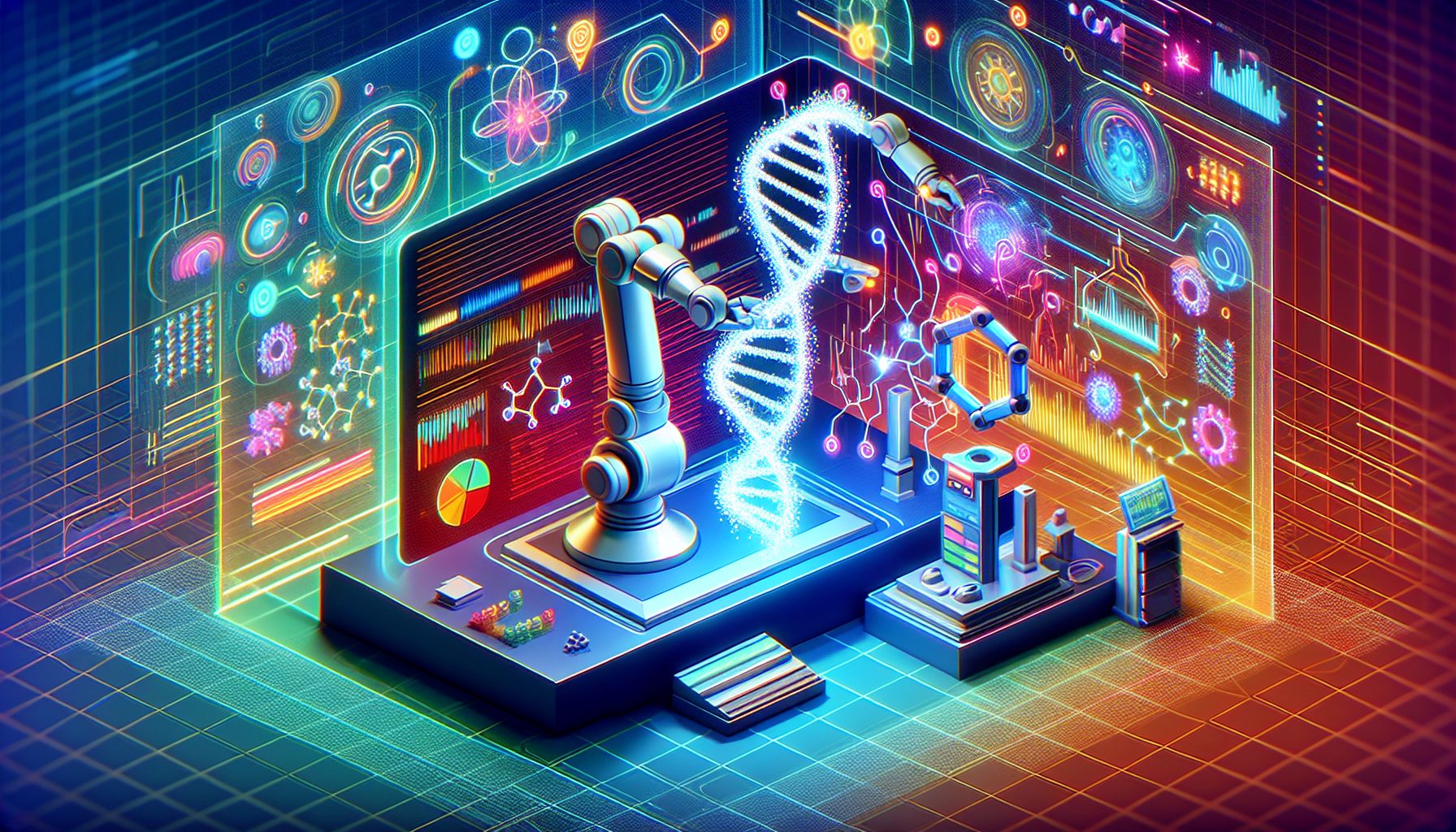
They developed an AI program, the AlphaFold Protein Structure Database, that predicts the three-dimensional structure of proteins from amino acid sequences. At least 2 million researchers have already used their AI program, which acts as a “Google search” for protein structures.
Anna Wedell, a professor of medical genetics at Karolinska Institutet in Sweden and a member of the Royal Swedish Academy of Sciences, described the breakthrough as solving a “traditional holy grail in physical chemistry.”
The second recognition goes to Baker, a professor at the University of Washington. He used computational methods to create proteins that previously did not exist, providing new and unique functions. Johan Aqvist, a Nobel committee member, noted that Baker’s work on designing new protein structures and determining the corresponding amino acid sequences has led to the creation of entirely new kinds of proteins.
The potential applications of these custom-designed proteins are vast, ranging from developing new pharmaceuticals to creating vaccines more efficiently. The AI contributions by the laureates have underscored the transformative impact of artificial intelligence on scientific research. The recognition of AI by the Nobel committees, particularly its dual acknowledgment in different scientific categories, is unprecedented.
Adrian Smith, president of the Royal Society, highlighted the critical role AI plays in science, heralding Hassabis as a visionary in championing AI to tackle significant scientific challenges and benefit society extensively. This year’s Nobel Prize in Chemistry underscores the vital intersection of computational methods and traditional scientific inquiry, marking a new era in the understanding and application of protein research.

Johannah Lopez is a versatile professional who seamlessly navigates two worlds. By day, she excels as a SaaS freelance writer, crafting informative and persuasive content for tech companies. By night, she showcases her vibrant personality and customer service skills as a part-time bartender. Johannah's ability to blend her writing expertise with her social finesse makes her a well-rounded and engaging storyteller in any setting.