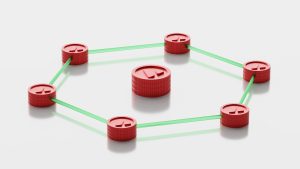
You can run a modern microservices platform for years without ever touching a service mesh. You can also hit a point where mTLS by default, uniform retries, and traffic shaping become oxygen. The trick is knowing which world you live in. A service mesh is an infrastructure layer, usually sidecar or data plane based, that takes cross cutting concerns, like service discovery, TLS, policy, observability, and resiliency, and moves them out of your app code into a consistent control plane.
If that definition sounds abstract, use this rule of thumb. A mesh centralizes network behavior you would otherwise rebuild in every service or library. That centralization can harden security and reduce on call chaos. It can also add operational weight, extra hops, and a new failure mode. The right answer is situational, not fashionable.
What we heard from the trenches
We compared notes with engineers who ship and operate these systems at scale. Kelsey Hightower, Staff Developer Advocate, Google, put it bluntly in a public talk: “Complexity is a cost, so you should prove you need it before you adopt it.” Translation for your roadmap, measure the pain you want the mesh to remove, then make it show up in an SLO or a ticket queue.
Matt Klein, creator of Envoy, has argued for years that meshes help only when you need consistent, enforced behavior across many services. In his framing, if you cannot articulate the policy you want to enforce, you are not ready to enforce it everywhere. William Morgan, CEO at Buoyant (Linkerd), often emphasizes starting from reliability and security outcomes, not features. His practical take, minimize knobs, turn on mTLS, get golden metrics, keep it boring.
Taken together, these voices suggest a simple synthesis. Treat a mesh as a safety and consistency tool for teams that already feel the heat from security audits, noisy incidents, or divergent libraries. If you are still fighting basic deployment or ownership problems, fix those first.
What a mesh actually buys you (and what it costs)
A mesh buys you predictable request behavior across services. It gives you mTLS without changing app code, per route policy, rate limits, circuit breaking, outlier detection, timeouts, distributed tracing, and traffic controls for deploys, like canaries and blue green. The cost is real. You add sidecars or a node proxy, a control plane, CRDs, and new dashboards. You also add data plane CPU and memory overhead, latency per hop, and another source of outages.
Here is the decision lens that works in practice. If you cannot currently answer “who calls what,” “how secure is this call,” and “what happens when it fails,” you probably need the mesh. If you already answer those with simple, boring tooling, keep it.
A quick diagnostic: do you meet the mesh threshold?
Use five signals. If you hit three or more, you are likely ready.
| Signal you see in prod | What it means |
|---|---|
| You must implement mTLS everywhere for audit or zero trust | Centralized, uniform TLS is cheaper than rolling your own |
| 30+ services with mixed stacks and libraries | Consistency beats per language client tuning |
| You do weekly canaries and need traffic shaping and aborts | You want programmable traffic, not ad hoc scripts |
| Incidents cite timeouts, retries, and cascading failures | Declarative policies prevent blast radius |
| You lack per service golden metrics and traces | Sidecars produce uniform telemetry with no code changes |
If your platform is ten services, one language, and an internal network with permissive trust, the mesh is probably premature. If you already have a hardened API gateway, strong libraries, and one deployment path, you might never need one.
A worked example with numbers
Assume you run 80 microservices, average 2,000 RPS across the cluster during peak, and you commit to 99.9 percent monthly availability. Your monthly error budget is 43 minutes. Today, failed retries during dependency brownouts consume 30 minutes per month. A mesh with outlier detection and proper timeouts can drop brownout retries by 60 percent. That returns 18 minutes to your budget. If your business values one minute of outage at 2,000 dollars of lost revenue and support time, that is 36,000 dollars saved per month. Now factor the mesh overhead. Sidecars add 35 MiB memory and small CPU per pod, which on 500 pods is roughly 17.5 GiB extra memory. If your node cost makes that 6,000 dollars per month, the net value is still materially positive. If your numbers do not work out like this, you have your answer.
How to introduce a mesh safely
Step 1: Prove the problem with baseline data.
Capture the current state for 30 days. Measure handshake security coverage, p99 latencies per hop, retry storms, and canary overhead. Treat these as success criteria. If the baseline is already good enough, stop here.
Step 2: Start with the control plane, not the features.
Pick a mesh that matches your operational model. If your teams want minimal configuration and native Kubernetes focus, Linkerd often fits. If you already run Envoy everywhere and want rich traffic policy, an Istio based mesh might fit. Install it with features off. Stabilize the control plane. Confirm upgrades and backup. Only then move to data plane injection.
Step 3: Onboard one path with tight guardrails.
Choose a single critical request path, for example, checkout to payments. Enable sidecar injection on a dedicated namespace. Turn on mTLS and uniform telemetry only. Verify that golden signals still meet SLO. Add timeouts and retries next. Only when stable, expand to the next hop. Keep a fast rollback by label or namespace.
Step 4: Treat traffic policy as code.
Store mesh policy in Git next to service manifests. Review timeouts and retry budgets the same way you review API changes. Wire your canaries to policy, not scripts. For example, put 5 percent traffic weight, max 50 QPS, 2 consecutive 5xx abort rule, and auto rollback when p95 > threshold. The mesh gives you the switch, your process decides when to flip it.
Alternatives you should try first
You can often push the pain back without a mesh.
-
Harden client libraries. Add sane defaults for timeouts, jittered backoff, and bounded retries. Ship a single library per language.
-
Use an API gateway for the edge. Terminate TLS, do rate limiting and auth at the edge, and keep internal calls simple.
-
Standardize golden signals. Adopt one OpenTelemetry collector and a small set of histograms and counters for every service.
These are not band aids. For small to medium platforms, they are the entire cure.
When not to add a mesh
If your biggest problems are ownership, pipelines, or release discipline, a mesh will not fix that. If your teams cannot keep CRDs and Helm charts healthy today, a mesh will only widen the blast radius. If you deploy a single monolith plus a few helpers, centralizing behavior buys little. If your security team does not require mTLS yet and your services sit in one trust zone, do not add crypto just to keep up with conference talks.
FAQs
Does a mesh reduce latency?
Usually no. It adds a small hop. The goal is smoother failure behavior and better observability, which often reduces tail latency during incidents, not raw single hop time.
Can I use a mesh for multi cluster or multi-region?
Yes, but be careful. Many teams discover that multi-region complexity dwarfs the mesh itself. Start single cluster, earn trust, then expand.
Will a mesh replace my API gateway?
No. Keep the gateway for ingress concerns, like bot protection, WAF, and customer auth. Use the mesh for service to service controls.
How hard is incident response with a mesh?
Different, not automatically worse. You will debug policy and control plane health along with app behavior. Good runbooks and dashboards make this manageable.
Honest Takeaway
A service mesh is a lever. If you already carry the weight of many services, strict security, and complex deploys, the lever moves something heavy. You get uniform safety controls, observability that requires no code, and traffic policy you can review like software. If you do not feel that weight yet, the lever mostly tilts your platform into more complexity.
Make the decision with your own numbers. Prove the pain, run a narrow pilot, put policy in version control, and expand only when your SLOs and engineers tell you it was worth it.

Rashan is a seasoned technology journalist and visionary leader serving as the Editor-in-Chief of DevX.com, a leading online publication focused on software development, programming languages, and emerging technologies. With his deep expertise in the tech industry and her passion for empowering developers, Rashan has transformed DevX.com into a vibrant hub of knowledge and innovation. Reach out to Rashan at [email protected]