

Definition of Common Access Card
A Common Access Card (CAC) is a smart card issued by the United States Department of Defense (DoD) to military personnel, civilian employees, and select contractors. It serves as a multi-functional identification card, providing physical access to secure areas and granting access to DoD computer networks and systems. The card contains personal information, biometrics, and cryptographic features, ensuring secure and authorized usage.
Key Takeaways
- Common Access Card (CAC) is a secure identification card used by the United States Department of Defense for physical and digital access to military resources, networks, and systems.
- Each CAC contains an encoded chip that stores personal biometric data and digital certificates for secure communication and authentication purposes.
- CACs are not only used for security purposes but also to conveniently access essential services and benefits, such as healthcare and financial resources by military personnel, contractors, and affiliates.
What does the common access card contain?
1. Integrated Circuit Chip (ICC)
The Integrated Circuit Chip (ICC) is a crucial part of the Common Access Card (CAC). It acts like a mini-computer, storing and processing data securely. This chip helps in verifying the identity of the cardholder and is essential for secure transactions.
2. Magnetic Stripe and Its Removal
The CAC used to have a magnetic stripe, but it has been removed to enhance security. This change helps prevent unauthorized access and reduces the risk of data theft. The removal of the magnetic stripe is part of the Department of Defense’s efforts to improve card security.
3. Bar Codes on the CAC
The CAC features two types of bar codes:
- PDF417 on the front
- Code 39 on the back
These bar codes store important information about the cardholder, such as their name and identification number. They are scanned for quick access to data.
4. Encryption Standards
Encryption is vital for protecting the information on the CAC. The card uses advanced encryption methods to ensure that data remains safe from unauthorized access. This technology is essential for maintaining the integrity of sensitive information.
The CAC is designed to be a secure identification tool, making it difficult for anyone to misuse or replicate.
Quick overview of the CAC
The Common Access Card (CAC) is the main ID for active duty members of the U.S. military. It is a smart card, similar in size to a credit card, and is used by various defense personnel, including the Selected Reserve and DoD civilians. The CAC allows access to buildings and secure computer networks, proving eligibility for various services.
History and evolution of the CAC
The CAC has evolved significantly since its introduction. Initially designed for military personnel, it has expanded to include civilians and contractors. Over 17 million CACs have been issued, reflecting its importance in the Department of Defense (DoD).
Importance of the CAC in the DoD
The CAC is crucial for several reasons:
- Access Control: It enables entry to secure facilities.
- Network Security: It provides access to defense computer systems.
- Identification: It serves as an official ID under international law.
The CAC is essential for acquiring or renewing your military ID card, allowing access to installations and secured networks.
What is the importance of the Common Access Card?
The Common Access Card (CAC) is a crucial element in modern technology, particularly for matters of security and authentication.
Serving as a personalized smart card that carries an individual’s credentials such as electronic certificates, biometric data, and other relevant information, it plays a pivotal role in securing sensitive data and physical access to facilities.
For many organizations, including governmental and military sectors, the CAC streamlines identity management and enhances security by minimizing unauthorized access to protected resources, ensuring that only authorized personnel can access critical systems and data.
Furthermore, this advanced identification method boosts overall efficiency and plays a vital role in maintaining organizational security measures in the digital age.
What is the issuance and eligibility of a CAC?
Who is Eligible for a CAC?
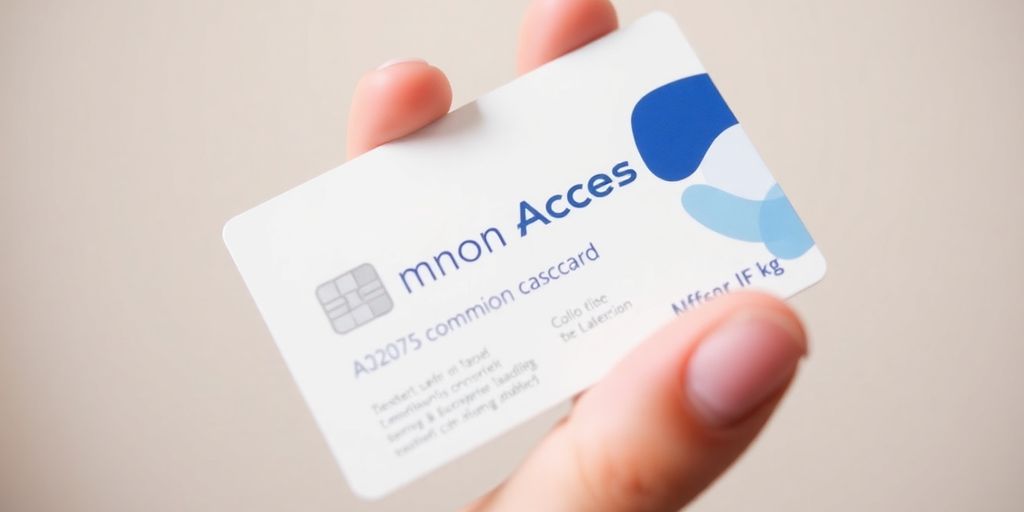
The Common Access Card (CAC) is available to various groups. Here’s a list of those who can get a CAC:
- Active Duty U.S. Armed Forces members
- Reserve members of the U.S. Armed Forces
- National Guard members
- Civilian employees of the DoD
- Contractors working with the DoD
- Certain veterans and their dependents
As a veteran, military retiree, spouse or dependent of a service member, you may be eligible for a next generation uniformed services ID card.
Process of Issuing a CAC
The process to get a CAC involves several steps:
- Eligibility Verification: Your sponsor must confirm your eligibility.
- Background Check: A background investigation is required for CAC applicants.
- Application Submission: Fill out the DoD Form 1172-2.
- Card Issuance: Visit a RAPIDS site to receive your card.
Renewal and Replacement Procedures
Renewing or replacing your CAC is straightforward:
- Renewal: You can renew your CAC at a RAPIDS site before it expires.
- Replacement: If your card is lost or damaged, report it and apply for a replacement at a RAPIDS site.
The CAC is essential for accessing various military services and facilities, making it crucial for eligible personnel to maintain their cards properly.
What are the design and features of the CAC?
1. Front side features
The front side of the Common Access Card (CAC) displays essential information. This includes:
- A color photo of the cardholder
- The cardholder’s name
- The cardholder’s rank or title
- A unique identification number
2. Back side features
On the back, you will find:
- A magnetic stripe (removed in 2018)
- Two types of bar codes: PDF417 and Code 39
- Additional identification information
3. Color code schemes
The CAC uses different color codes to indicate the cardholder’s status:
- Green: Active duty personnel
- Blue: Reserve members
- Red: Retired personnel
4. Security elements
The CAC is equipped with several security features:
- Integrated Circuit Chip (ICC): Contains personal data and digital certificates.
- Encryption Standards: As of 2008, the CAC uses 2,048-bit encryption for enhanced security.
- Two-Factor Authentication: Combines something you have (the card) with something you know (the PIN).
The CAC is a vital tool for ensuring secure access to military facilities and networks, making it essential for defense
DevX’s Explanation
A Common Access Card (CAC) primarily serves as an identification tool that enhances the security of various processes within an organization, particularly for governmental or defense institutions. The main purpose of a CAC is to provide individuals with a highly secure and reliable method for accessing different facilities and information systems.
This multi-functional smart card technology adds an extra layer of protection to sensitive data and physical access points, thereby reducing the risk of unauthorized access, data breaches, and identity theft. As a standard form of identification, a CAC usually contains an individual’s photo, name, affiliation, and an electronic chip that stores personal and biometric data.
The card enables both physical access to secure facilities and logical access to computer networks and systems. To ensure that only authorized personnel gain access to vital information, the card features multiple authentication methods such as Personal Identification Numbers (PINs), fingerprints, or digital certificates.
Consequently, the use of a Common Access Card significantly bolsters the security of an organization’s premises and information systems, thus providing an essential tool for maintaining the integrity of critical data and safeguarding national security interests.
What are the applications of the card?
1. Physical Access to Buildings
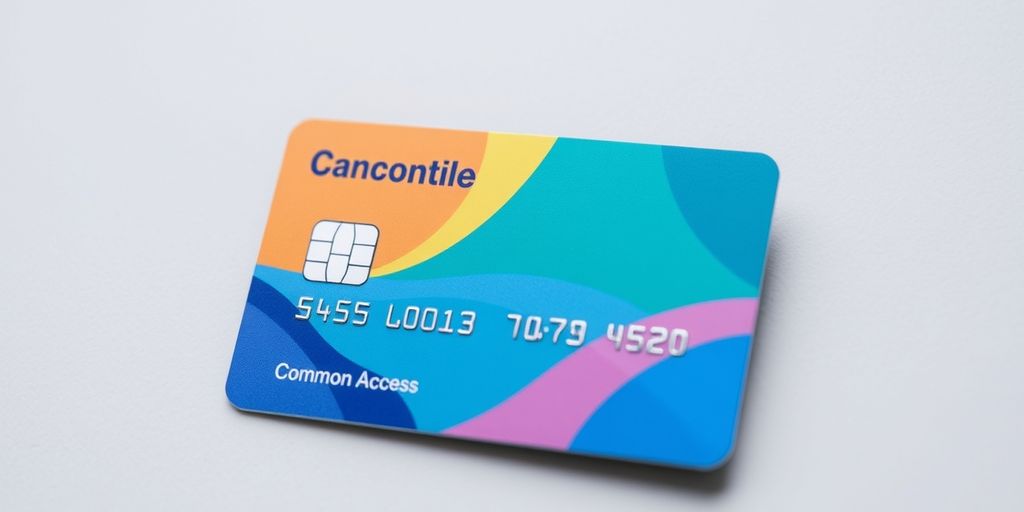
The Common Access Card (CAC) is essential for gaining entry to military installations and buildings. It acts as a key, allowing authorized personnel to access secure areas. Without a CAC, entry is typically denied.
2. Access to Computer Networks
The CAC is also crucial for accessing computer networks within the Department of Defense (DoD). It verifies the identity of users, ensuring that only those with the proper credentials can log in. This is especially important for maintaining security in sensitive environments.
3. Visual Identification
Another important use of the CAC is for visual identification. It contains a photo of the cardholder, which helps in confirming identity during security checks. This feature is vital for maintaining safety and security in various settings.
4. Use as a Government-Issued ID
The CAC serves as a government-issued ID for military personnel and certain civilians. It is recognized across various government agencies, making it a versatile form of identification.
The CAC is not just a card; it is a vital tool for security and access in the military environment.
| Application | Description |
|---|---|
| Physical Access | Entry to secure buildings and installations |
| Computer Network Access | Authentication for logging into DoD networks |
| Visual Identification | Photo ID for confirming identity |
| Government ID | Accepted ID across various government agencies |
Examples of Common Access Card
A Common Access Card (CAC) is a smart card used by the United States Department of Defense for identification and secure access to information systems and buildings. Here are three real-world examples of how CAC technology is used:
Military Base Access: Military personnel, civilian employees, and contractors are required to use a CAC card to gain entry to secured military installations. The card is inserted into a card reader, verifying the person’s identity, and granting access only to those who possess the appropriate clearance levels and job requirements.
Secure Computer Networks: Within the Department of Defense, a CAC is used as a form of two-factor authentication to access secure computer networks, systems, and sensitive data. Users insert their CAC into a card reader connected to their computer, and input a Personal Identification Number (PIN) to gain access to the network, ensuring that only authorized individuals can access the sensitive information.
Secure Email Communication: Employees and military personnel utilizing secure email communication platforms within the Department of Defense are required to use their CAC for digitally signing, encrypting, and decrypting emails. This process helps protect sensitive information from unauthorized personnel and ensures the integrity of the messages being sent between users. Using a CAC helps verify the sender’s identity and ensures the email has not been tampered with during transmission.
Security features of Common Access Cards
Two-Factor Authentication
The Common Access Card (CAC) uses two-factor authentication to enhance security. This means you need both the physical card and a personal identification number (PIN) to access systems. This method helps ensure that only authorized users can gain entry to sensitive information and areas.
Digital Signatures and Data Encryption
CACs also support digital signatures and data encryption. The integrated circuit chip (ICC) on each CAC stores important information, including biometric data and digital certificates. This allows for secure communication and authentication, making it difficult for unauthorized users to access sensitive data.
Common Security Issues
While CACs are designed to be secure, there are still some common issues:
- Wear and Tear: Over time, the card can become damaged, making it unusable.
- PIN Lockouts: After three incorrect PIN attempts, the card locks, requiring a visit to a RAPIDS facility for reset.
- RFID Risks: If not properly shielded, the card can be vulnerable to unauthorized scanning.
Fraud Prevention Measures
To prevent fraud, the DoD has implemented several measures:
- Regular Monitoring: The system is continuously monitored for suspicious activity.
- RFID Shielding: Each CAC comes with a shielding sleeve to protect against unauthorized scanning.
- User Education: Users are trained on how to protect their CAC and recognize potential threats.
The CAC is a vital tool for security in the Department of Defense, ensuring that only authorized personnel can access sensitive information and facilities. Each CAC contains an encoded chip that stores personal biometric data and digital certificates for secure communication and authentication purposes.
Full list of security features:
- Integrated Circuit Chip: The card contains a tamper-resistant integrated circuit chip that stores and processes information securely.
- Public Key Infrastructure (PKI): CACs use PKI technology for secure authentication, digital signatures, and encryption.
- Biometric Data: The card stores biometric information, typically fingerprints, for enhanced identity verification.
- Holographic Images: CACs feature holographic images that are difficult to replicate, providing a visual security measure.
- Magnetic Stripe: While less secure than the chip, the magnetic stripe provides an additional layer of data storage and authentication.
- Barcode: A two-dimensional barcode on the card contains encoded information for quick scanning and verification.
- PIN Protection: Access to the card’s digital features requires a Personal Identification Number (PIN), adding an extra layer of security.
- Photograph: A clear, high-resolution photograph of the cardholder is printed on the card for visual identification.
- Micro-printing: Tiny text that is difficult to reproduce is incorporated into the card’s design.
- Color-shifting Ink: Certain elements on the card are printed with ink that changes color when viewed from different angles.
These security features work together to make CACs highly resistant to forgery and unauthorized use, ensuring that only legitimate cardholders can access protected resources and information.
What we think of its evolution and future
The Common Access Card has evolved significantly since its introduction, and its future development is likely to incorporate emerging technologies:
- Initial Implementation: Introduced in 2000, CACs initially served primarily as physical identification and building access cards.
- Digital Integration: Over time, CACs incorporated digital certificates for network access and secure email communication.
- Biometric Enhancement: The addition of biometric data, particularly fingerprints, improved identity verification capabilities.
- Mobile Integration: Recent developments have focused on integrating CAC functionality with mobile devices, allowing for more flexible authentication options.
- Contactless Technology: Newer versions of CACs incorporate contactless technology, enabling tap-and-go access to facilities and systems.
Future developments may include:
- Advanced Biometrics: Integration of additional biometric features such as facial recognition or iris scans.
- Blockchain Technology: Potential use of blockchain for enhanced security and decentralized identity verification.
- Artificial Intelligence: AI could be used to detect unusual usage patterns and prevent unauthorized access attempts.
- Quantum-resistant Cryptography: As quantum computing advances, CACs may need to incorporate quantum-resistant encryption methods.
- Internet of Things (IoT) Integration: CACs could be used to authenticate and secure access to an increasing number of connected devices and systems.
- Enhanced Privacy Features: Future CACs may incorporate more robust privacy protections to safeguard personal data.
As technology continues to advance, the Common Access Card is likely to evolve to meet new security challenges and take advantage of emerging authentication and encryption technologies, while maintaining its core function as a secure, multi-purpose identification and access tool for the Department of Defense.
FAQ
What is a Common Access Card?
A Common Access Card (CAC) is a smart card issued by the United States Department of Defense (DoD) to military personnel, civilian employees, and eligible contractors. It serves as a form of identification, as well as providing access to secure facilities, networks, and other resources.
How can I obtain a Common Access Card?
To obtain a CAC, you must be a member of the US military, a civilian employee of the DoD, or an eligible contractor. The process typically involves verifying your eligibility, completing required training, and visiting a CAC issuance facility to have your photograph and fingerprints taken.
What information is stored on a Common Access Card?
A CAC contains a variety of information, including the cardholder’s name, photograph, pay grade, rank, personal identification number (PIN), and digital signatures. It also stores security certificates used for authentication and encryption purposes.
How do I update or renew my Common Access Card?
When your CAC is due for renewal or if your information changes, you must visit a CAC issuance facility to update or renew your card. You may need to provide documentation to verify any changes in information or status. It is essential to update your card promptly, as an expired or inaccurate card may limit your access to resources and facilities.
What should I do if my Common Access Card is lost or stolen?
If your CAC is lost or stolen, you should report it to your supervisor or chain of command immediately. They will assist you in deactivating the card and obtaining a replacement. It is crucial to report a missing card as soon as possible to prevent unauthorized access to secure resources or potential identity theft.
Related Technology Terms
- Smart Card Technology
- Public Key Infrastructure (PKI)
- Card Reader
- Two-factor Authentication
- Personal Identification Number (PIN)