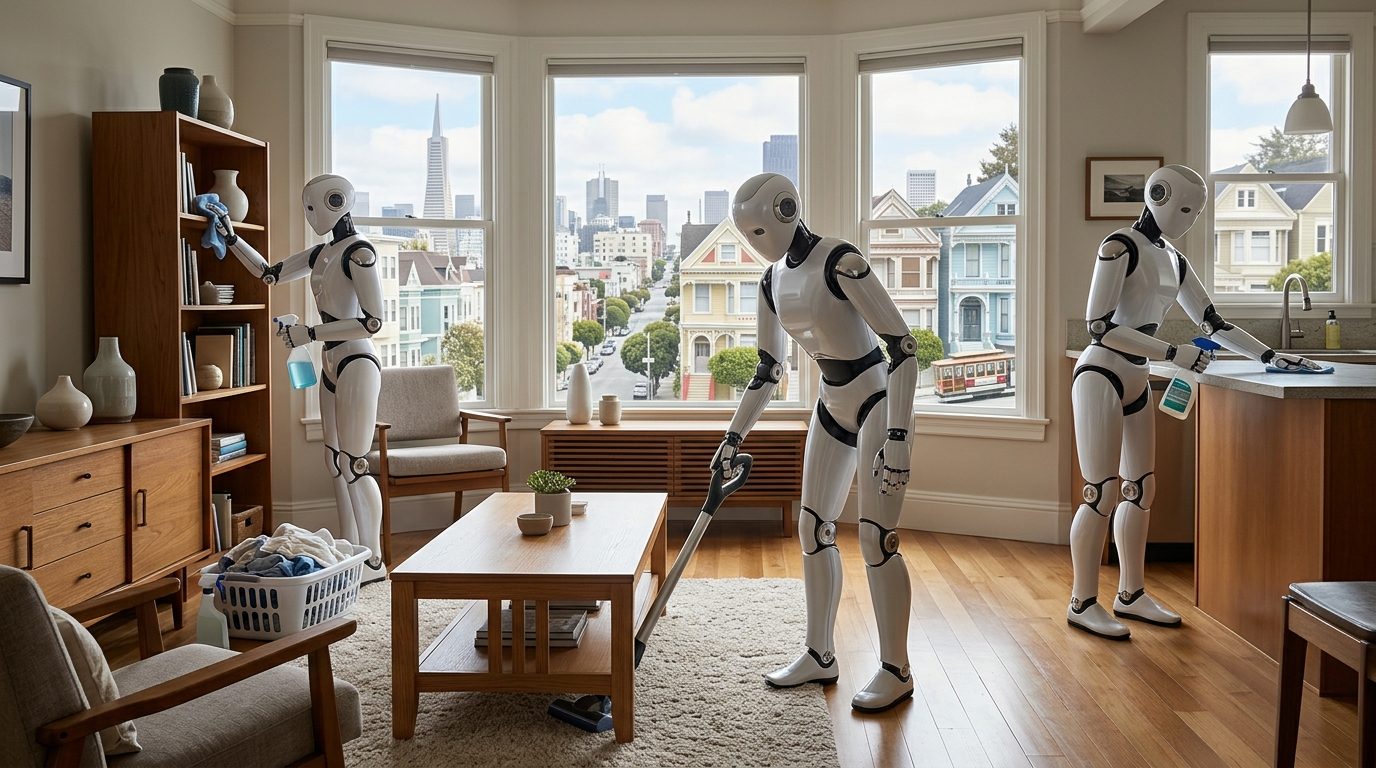
Humanoid robots are cleaning homes in San Francisco for $30 an hour, offering an early look at how artificial intelligence may enter domestic work.
The machines perform routine chores such as mopping floors, tidying rooms, and cleaning kitchens. NBC News correspondent Tom Llamas examined the service and spoke with Tau Robotics CEO and co-founder Alexander Koch about its operation.
The trial comes as robotics companies seek practical uses for human-shaped machines. Homes provide a difficult test because their layouts, objects, and occupants vary widely.
Robots Take On Everyday Chores
Tau Robotics is positioning its machines as paid household helpers rather than one-time consumer purchases. The reported $30 hourly rate gives customers a direct comparison with local cleaning services.
The robots are currently handling several common tasks:
- Mopping household floors
- Organizing and tidying rooms
- Cleaning kitchen areas
These jobs may appear simple, but each requires many physical and computing skills. A robot must identify objects, move through confined spaces, and avoid damaging personal property.
Kitchen work can present added risks. Surfaces may be wet, tools may be sharp, and fragile items may sit close together. A successful machine must respond safely when conditions change.
Full Automation Remains a Challenge
Llamas questioned Koch about how the robots operate and the difficulty of making them “fully A.I. powered.” That distinction matters for customers assessing how independent the service truly is.
A fully autonomous household robot would need to understand broad instructions and complete jobs without continuous human guidance. It would also need to recognize unfamiliar objects and recover from mistakes.
Current AI systems can classify images and plan actions, yet physical work adds uncertainty. A misplaced chair, a pet, or a moving resident can quickly alter the robot’s path.
Human oversight may therefore remain part of some services during testing and deployment. Companies must clearly explain whether workers monitor machines, assist them remotely, or review data after a job.
Price, Privacy, and Labor Questions
The $30 hourly price could attract residents who want help without buying costly hardware. However, the comparison with human cleaners involves more than wages alone.
Human workers can interpret vague requests, notice unusual problems, and adjust priorities through conversation. Robots may offer consistency for repeated tasks, but their limits can require support systems that customers do not see.
Privacy is another concern. A household robot may rely on cameras and other sensors to map rooms and identify objects. Providers will face questions about what information is recorded, where it is stored, and who may access it.
The service could also affect domestic labor if machines become reliable and less expensive. Robots might fill staffing gaps or handle repetitive work. They could also reduce some paid hours for cleaners, depending on adoption and performance.
San Francisco Provides an Early Test
San Francisco offers access to technology workers, investors, and residents familiar with experimental services. Yet success in a limited local rollout would not prove that the model can scale elsewhere.
Expansion would require dependable machines, maintenance staff, customer support, and clear safety rules. Homes with stairs, children, pets, or crowded rooms would place further demands on the technology.
Tau Robotics’ household deployments show that humanoid machines are moving from demonstrations into paid work. The key test is no longer whether a robot can mop one floor. It is whether the service can operate safely, protect household privacy, and deliver reliable value at $30 an hour.

Kirstie a technology news reporter at DevX. She reports on emerging technologies and startups waiting to skyrocket.