
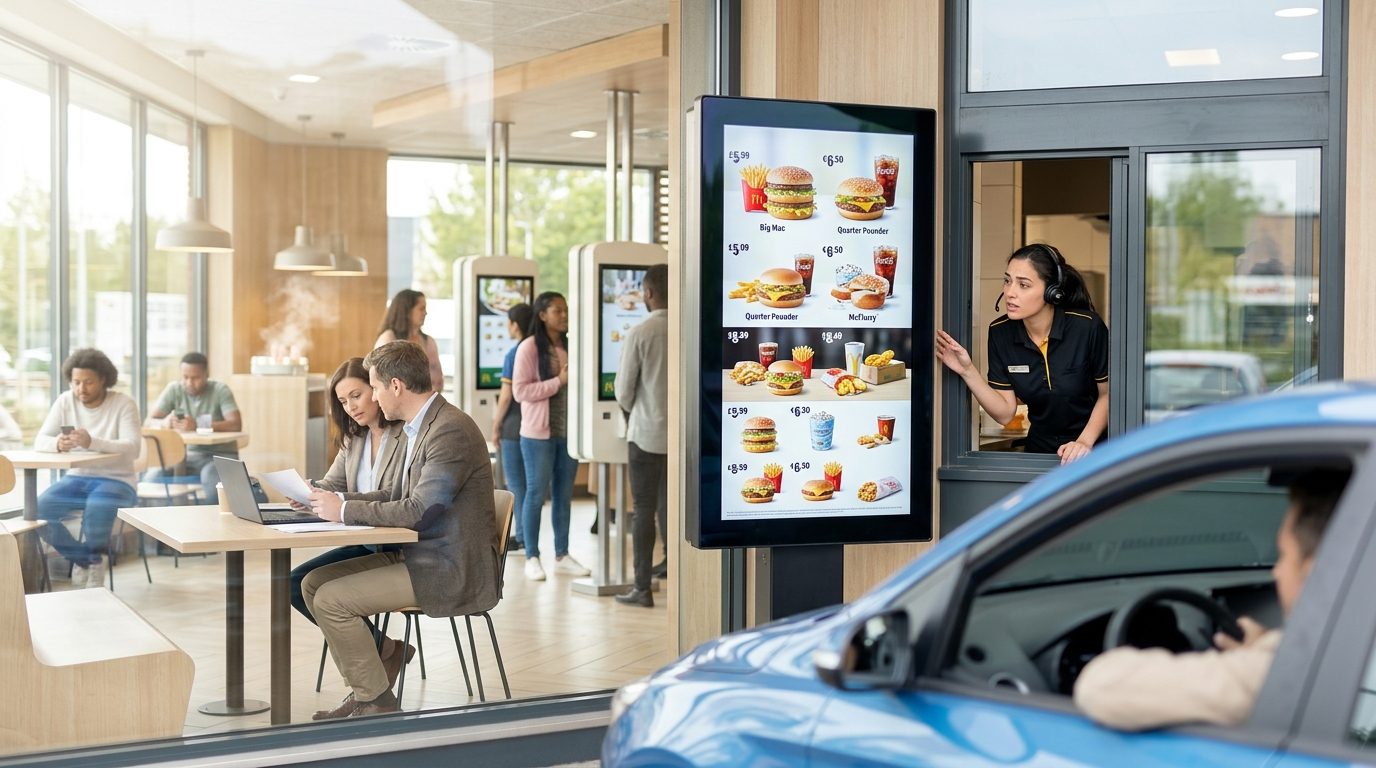
McDonald’s is facing a federal lawsuit over claims that its AI-enhanced pricing tool shares confidential business data among competing franchisees.
The suit alleges that the system violates federal antitrust law by distributing nonpublic pricing information. The central question is whether the tool helps independent operators coordinate prices rather than compete for customers.
The allegation places McDonald’s within a wider debate over algorithmic pricing. Regulators and courts are examining whether software can weaken competition when it collects sensitive data from rival businesses.
How the Alleged Data Sharing Works
McDonald’s franchisees operate under the same brand, but they may compete with one another in nearby markets. Many operators retain some authority over menu prices, subject to franchise agreements and company policies.
According to the lawsuit, the pricing tool uses artificial intelligence and shares information that is not available to the public. The limited allegations provided do not identify the exact data, affected markets, or products.
The lawsuit alleges that the AI-enhanced pricing tool violates antitrust laws because it shares nonpublic data with competing franchisees.
Such information could include current prices, planned changes, sales patterns, or other business measures. However, the reported claim does not establish which categories were exchanged. That issue may become central during evidence gathering.
Why Franchise Competition Matters
Antitrust law generally protects independent pricing decisions. Competitors may monitor public prices, but sharing confidential plans can reduce the uncertainty that drives competition.
The franchise model makes the legal analysis more difficult. Restaurants share branding, products, technology, and marketing. Yet separate owners can still compete for customers, workers, and local sales.
The court may need to consider several questions:
- What nonpublic information entered the pricing system?
- Which franchisees could access or benefit from that information?
- Did McDonald’s control the tool or its recommendations?
- Were prices merely suggested, or did operators follow them?
- Did the system cause higher or more uniform prices?
Access to shared data alone may not settle the case. Plaintiffs generally must connect the challenged conduct to an unlawful agreement or harmful effect on competition. McDonald’s may argue that the system supports routine franchise operations without coordinating prices.
AI Pricing Draws Wider Scrutiny
Businesses increasingly use software to process demand, costs, inventory, and customer behavior. These tools can help companies respond quickly to local conditions and reduce waste.
Concerns arise when competitors feed private information into the same platform. Even without direct conversations, common software could produce similar recommendations or reveal how rivals plan to act.
That debate reaches far outside restaurants. Pricing systems are used in housing, travel, retail, entertainment, and delivery services. The McDonald’s case could help clarify how existing competition rules apply when algorithms guide commercial decisions.
What the Case Must Establish
A federal complaint contains allegations, not proven findings. The outcome will depend on the tool’s design, contracts, data controls, and real-world effects.
Evidence may show whether franchisees acted independently after receiving recommendations. Pricing records could also indicate whether restaurants moved together or continued to respond to local competition.
The case puts data governance and pricing independence at the center of franchise technology. Companies using shared systems may need clearer limits on confidential inputs, access rights, and automated recommendations.
For consumers, the chief issue is straightforward: whether technology improved restaurant operations or reduced price competition. Future court filings should provide a clearer account of the data involved and any effect on menu prices.
The suit also signals that calling a system artificial intelligence does not place it outside established law. Courts will focus on conduct, control, and market harm. Those findings could shape how franchise networks deploy pricing tools across the United States.

Rashan is a seasoned technology journalist and visionary leader serving as the Editor-in-Chief of DevX.com, a leading online publication focused on software development, programming languages, and emerging technologies. With his deep expertise in the tech industry and her passion for empowering developers, Rashan has transformed DevX.com into a vibrant hub of knowledge and innovation. Reach out to Rashan at [email protected]