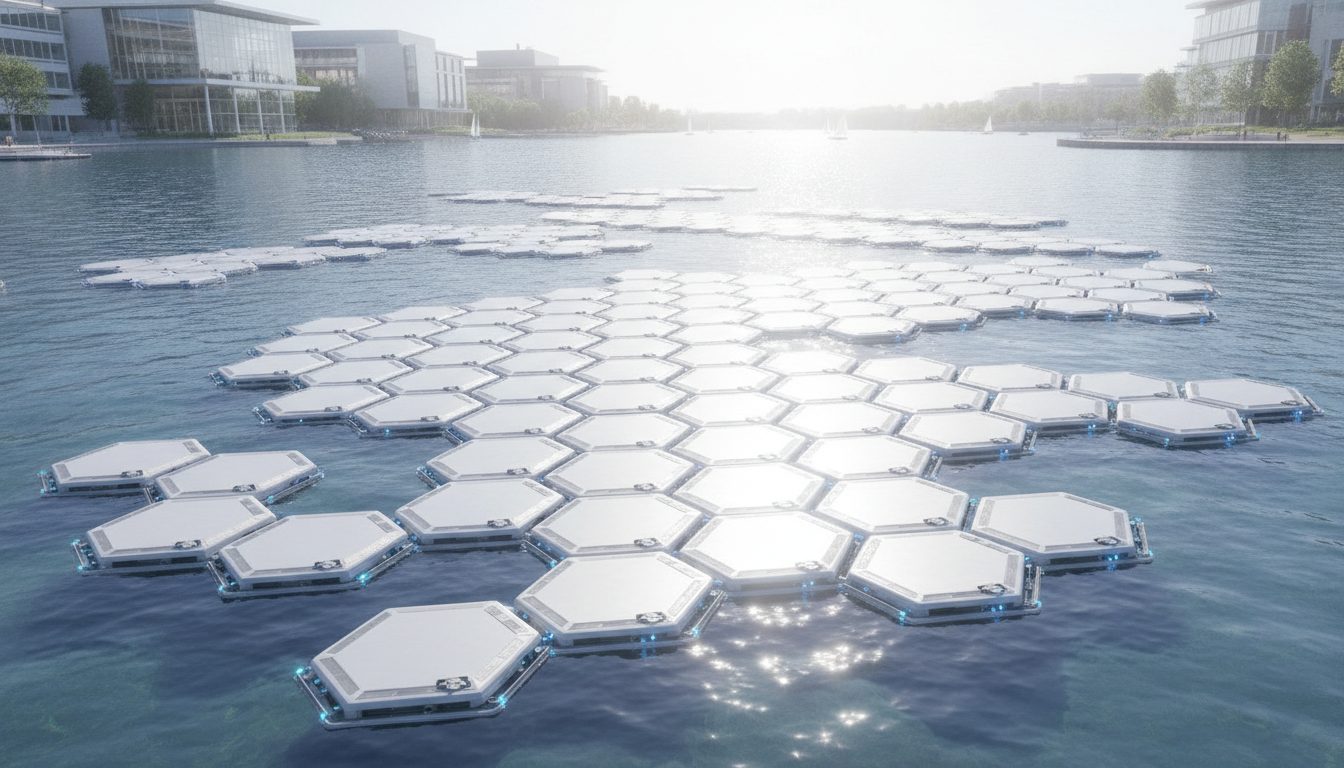
A new project at MIT is proposing a radical way to build on water. Called FloatForm, it is a swarm of small aquatic robots that link up to create reconfigurable structures. The approach points to temporary platforms that can assemble themselves for events, markets, and staging areas, then disperse when no longer needed.
The research highlights a growing interest in adaptable infrastructure for crowded waterfronts and flood-prone cities. It also raises questions about safety, regulation, and environmental impact as cities test new ideas for life on and near water.
What FloatForm Promises
“A swarm of small aquatic robots that assemble into reconfigurable structures.”
That is how the team describes FloatForm. The system is designed to shift shape and purpose in response to changing needs. The researchers say it could support pop-up markets, stages for performances, or work platforms for inspections and repairs. The same hardware could serve many roles within hours.
“It could lead to floating infrastructure that builds itself into things like a temporary platform, a market, or a stage.”
By focusing on swarms, the project distributes risk and cost across many small units rather than one large barge or pontoon. If one piece fails, the rest can continue to function. When demand grows, more units can join to expand the structure.
Context: A Push for Adaptive Water Infrastructure
Cities with dense waterfronts face tight space, rising tides, and frequent storms. Traditional fixed piers and bulkheads are expensive and slow to modify. Modular systems on water offer a flexible alternative. Similar ideas have appeared in pilot programs that test autonomous boats for transport, waste collection, and logistics in canals and harbors.
FloatForm fits into that trend by treating water as programmable space. The approach borrows from modular robotics and swarm control, fields where many simple units cooperate to perform complex tasks. Instead of static pontoons, these units move, dock, and re-dock to match the task.
How a Swarm Could Work
Though the project details remain limited, swarms typically rely on local rules and shared goals. Each unit senses neighbors, plans short moves, and joins stable patterns. The whole structure emerges from many small decisions. This method can be quicker to deploy than crane-built platforms, especially for short-term events.
Key ideas often include:
- Autonomous navigation on the surface with collision avoidance.
- Mechanical latching for fast assembly and safe load sharing.
- Wireless coordination with simple, resilient protocols.
- Health checks to detect failures and re-route around them.
In practice, the success of a swarm depends on reliable docking in waves, stable power, and accurate localization. The team’s focus on reconfigurability suggests a plan to handle variable shapes, such as long walkways, squares for markets, or semicircles for stages.
Use Cases, Benefits, and Trade-Offs
Temporary water structures could give cities new tools. A pop-up market might appear during a festival, then clear the channel by evening. A stage could float close to shore for community events. Work crews could form a platform near a bridge for a day of inspections.
Benefits include fast setup, re-use of the same units for many jobs, and less need for permanent construction. The trade-offs are real. Operators must ensure stability, safe loading, and clear access for emergency services. Navigation rules must keep channels open for other vessels.
Regulation and Environmental Questions
Any large floating structure interacts with tides, habitats, and traffic. Regulators will ask how a swarm maintains safe distances, manages waste, and avoids sensitive areas. Port authorities and coast guards will look for clear lines of responsibility and strong fail-safes if power or communications drop.
Environmental groups will watch for noise, propeller impact, and disturbance to aquatic life. Designers can respond with quieter drives, protective grates, and slow-speed modes near habitats. Transparent reporting on trials will help build trust.
What to Watch Next
The path from lab to harbor often starts with small pilots. Likely milestones include a public demo of units assembling a stable platform, verified load ratings, and coordination with local maritime rules. Partnerships with event organizers or city agencies could test real uses at modest scale.
Key questions remain. How quickly can the swarm build and remove a structure. What are the costs versus renting a barge. How does it perform in wind, chop, and currents. Answers will shape whether FloatForm becomes a common tool or a niche solution.
For now, the concept shows a clear idea: infrastructure that adapts in hours, not months. If the technology meets safety and environmental standards, waterfronts could gain flexible space on demand. The next phase will reveal its range, reliability, and value in busy waters.

Rashan is a seasoned technology journalist and visionary leader serving as the Editor-in-Chief of DevX.com, a leading online publication focused on software development, programming languages, and emerging technologies. With his deep expertise in the tech industry and her passion for empowering developers, Rashan has transformed DevX.com into a vibrant hub of knowledge and innovation. Reach out to Rashan at [email protected]