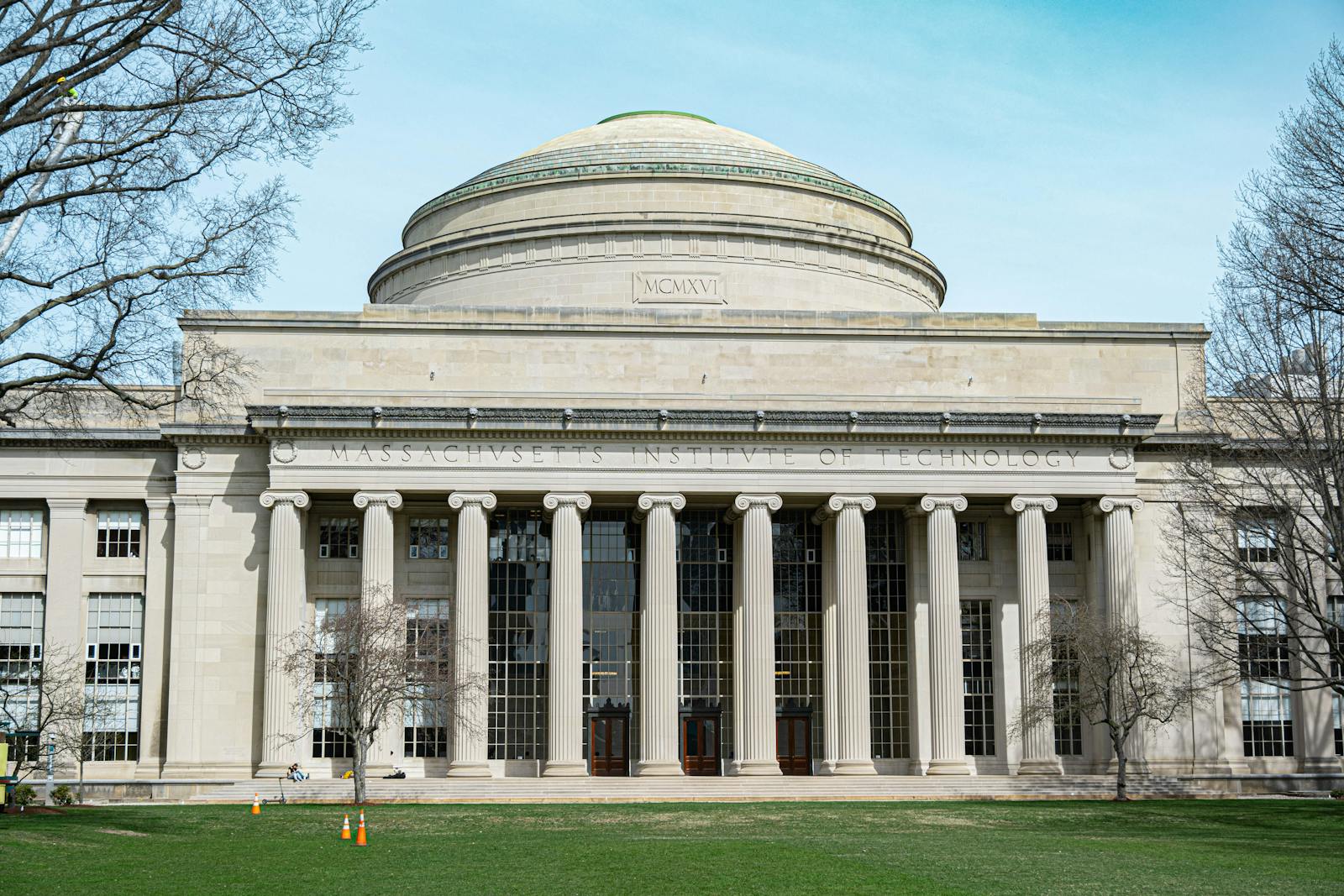
MIT researchers are using AI-enhanced simulations to understand plasma’s turbulent behavior inside fusion devices like ITER. This could help make fusion energy a viable option for the future. Nathan Howard, Ph.D., a principal research scientist at the MIT Plasma Science and Fusion Center (PSFC), finds creating and sustaining fusion reactions one of the most fascinating scientific challenges today.
The science and the promise of fusion as a clean energy source are really interesting. That motivated me to come to grad school [at MIT] and work at the PSFC,” he says. Howard and his team use simulations and machine learning to predict how plasma will behave in a fusion device.
Their research aims to forecast a given technology or configuration’s performance before it’s tested in an actual fusion environment, allowing for smarter design choices. The models are continuously validated using data from previous experiments to ensure accuracy. In a recent paper published in Nuclear Fusion, Howard explains how high-resolution simulations confirm that ITER, the world’s largest experimental fusion device currently under construction in France, will perform as expected when switched on.
He also demonstrates how a different operating setup could produce nearly the same energy output but with less energy input, potentially improving efficiency. Howard utilized CGYRO, a computer code developed by collaborators at General Atomics, to verify ITER’s baseline scenario.
MIT researchers advance fusion energy with AI
CGYRO applies a complex plasma physics model to defined fusion operating conditions, generating detailed simulations of plasma behavior. These simulations were then processed through PORTALS, a framework of tools developed at MIT. PORTALS uses machine learning to build quick “surrogate” models that can mimic the results of more complex simulations much faster.
“PORTALS takes the high-fidelity CGYRO runs and uses machine learning to build a quick model that can mimic the results of the more complex runs, but much faster,” explains Pablo Rodriguez-Fernandez, leader of the MFE-IM group at PSFC. “Only high-fidelity modeling tools like PORTALS give us a glimpse into the plasma core before it even forms. This predict-first approach allows us to create more efficient plasmas in a device like ITER.”
The surrogate runs took a fraction of the time and could be used with CGYRO to produce detailed results more quickly.
Howard’s work with these tools examined a specific combination of operating conditions predicted to achieve ITER’s baseline scenario. Using 14 iterations of CGYRO; he confirmed the current configuration could achieve 10 times more power output than input. “The modeling we performed is maybe the highest fidelity possible at this time, and almost certainly the highest fidelity published,” Howard says.
The surrogate-enhanced CGYRO model revealed the plasma core temperature wasn’t overly affected by less power input, leading to more efficient operation. “The fact that we can use the results of this modeling to influence the planning of experiments like ITER is exciting. For years, I’ve been saying that this was the goal of our research, and now that we actually do it—it’s an amazing arc and really fulfilling,” reflects Howard.
Image Credits: Photo by Yuanda “Darian” Shen on Pexels

Rashan is a seasoned technology journalist and visionary leader serving as the Editor-in-Chief of DevX.com, a leading online publication focused on software development, programming languages, and emerging technologies. With his deep expertise in the tech industry and her passion for empowering developers, Rashan has transformed DevX.com into a vibrant hub of knowledge and innovation. Reach out to Rashan at [email protected]