OpenAI finally broke the anticipation with o1 full and Pro demos yesterday.
And people are already doing wild use cases with it.
10 examples: pic.twitter.com/9YPGbHfuxe
— Min Choi (@minchoi) December 6, 2024
OpenAI has announced a series of daily livestreams called “12 Days of Shipmas.” The event will showcase new product launches and demos. CEO Sam Altman says each weekday will bring a significant release. The campaign highlights OpenAI’s efforts to stay competitive in the fast-moving AI industry.
The company has quickly released groundbreaking products like DALL-E 3 and ChatGPT. Shipmas began with the launch of ChatGPT Pro, a $200-per-month service. It was followed by a new model customization technique.
There are still two weeks left, with 10 weekdays remaining in the 12 days of OpenAI pic.twitter.com/54kziMP4mc
— Tibor Blaho (@btibor91) December 8, 2024
The intense schedule shows how competitive the AI landscape is. Companies are racing to innovate and dominate. Google released its Gemini models.
OpenAI announced an expanded Reinforcement Fine-Tuning Research Program, allowing developers to customize AI models for domain-specific tasks by training them on datasets ranging from dozens to thousands of high-quality tasks and evaluating responses against reference answers
— Tibor Blaho (@btibor91) December 6, 2024
Anthropic is working on its Claude chatbot. Microsoft has its AI-enhanced CoPilot. The field is advancing swiftly.
OpenAI’s partnership with defense contractor Anduril is a big shift for the company. It had committed to avoid military applications. The move seems driven by a need for substantial revenue.
ChatGPT Pro and potential paid ads also show OpenAI’s efforts to make money amidst fierce competition. The AI arms race is intensifying. Major players like Google, Meta, Anthropic, and Microsoft are constantly unveiling new products and services.
Highlights from openai’s Shipmas event
OpenAI’s 12 Days of Shipmas may seem festive. But it underscores the high-stakes environment.
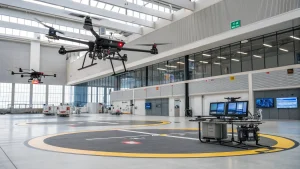
Constant innovation is crucial to staying ahead. The war in Ukraine is changing the tech sector in Eastern Europe. Ukraine has used retrofitted consumer drones and other inexpensive civilian tech for the military.
Neighboring countries, especially Latvia, are preparing for potential conflicts. They are fostering rapid innovation and adapting civilian tech for military use. The war has spurred tech startups in the region to deliver innovations more quickly.
They are bypassing traditional slow development processes. For example, they are customizing consumer products like scooters to carry NATO-standard bullet boxes. This makes them more useful on the battlefield.
But there are risks with this fast development. It allows quicker deployment of new technologies. But it also skips important testing and regulatory processes meant to ensure safety and prevent abuse.
The use of Clearview AI’s technology to identify Russian war dead raises ethical and legal concerns. It may violate international laws. As Eastern European countries prepare for potential threats, rapid tech innovation brings both opportunities and challenges.
The changing landscape shows how regional conflicts can drive technological advances. But it also highlights the importance of careful oversight and ethics.

Rashan is a seasoned technology journalist and visionary leader serving as the Editor-in-Chief of DevX.com, a leading online publication focused on software development, programming languages, and emerging technologies. With his deep expertise in the tech industry and her passion for empowering developers, Rashan has transformed DevX.com into a vibrant hub of knowledge and innovation. Reach out to Rashan at [email protected]