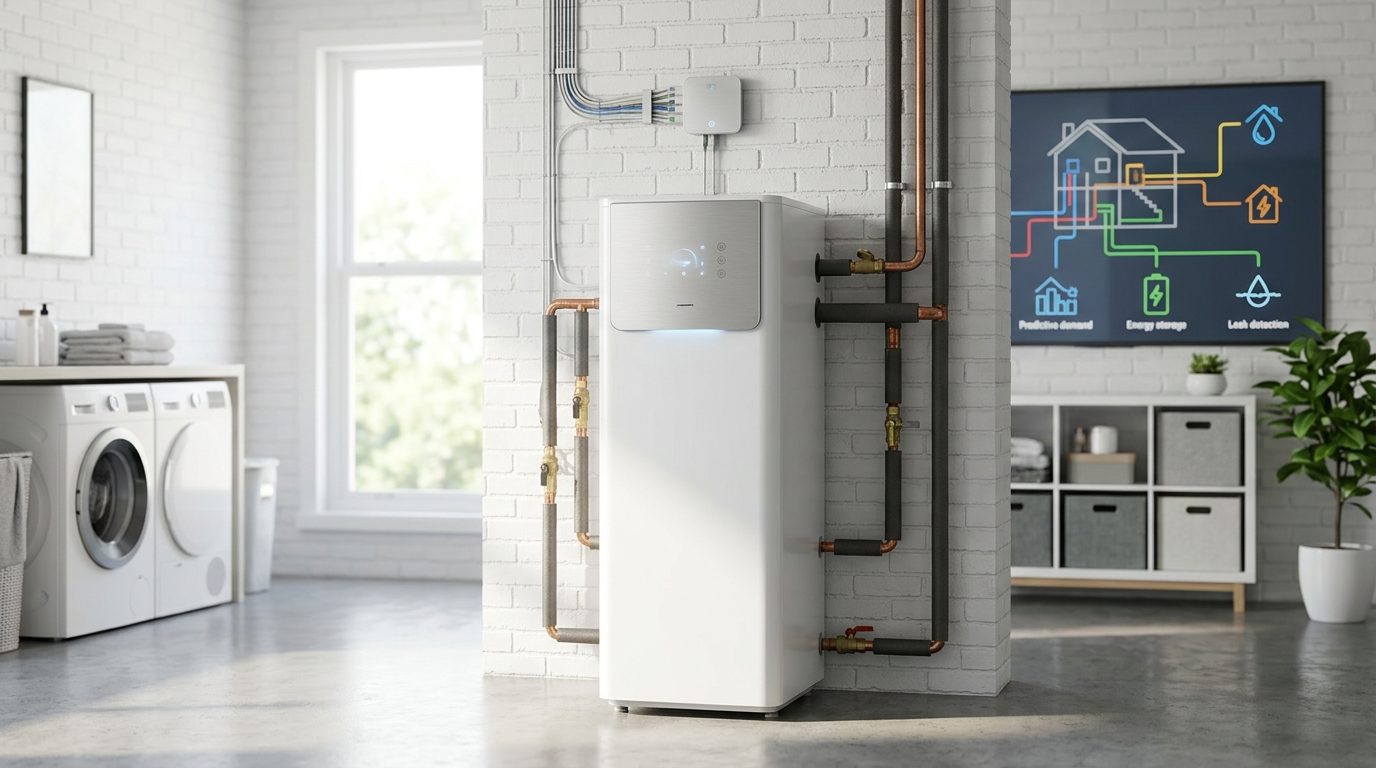
Reservoir has developed a water heater that predicts demand, stores energy, and detects plumbing leaks across a home. The system brings several household energy and safety functions into one appliance, according to the company.
The product targets a daily challenge for homeowners: keeping enough hot water available without wasting energy. Its leak detection feature could also help users identify water loss before it causes severe property damage.
Predicting Household Hot Water Needs
Reservoir describes the heater as ultra-efficient. Its central feature is the ability to estimate when occupants will need hot water.
“Reservoir has built an ultra-efficient water heater that can predict hot water demand, store energy, and detect plumbing leaks throughout a home.”
A predictive system could learn recurring patterns, such as morning showers or evening dishwashing. It could then prepare hot water near those periods while limiting energy use during quieter hours.
However, Reservoir has not provided details about how the prediction system works. It is also unclear how the heater responds when routines change, guests arrive, or demand rises without warning.
Those details will influence whether the technology delivers consistent savings. A useful system must balance efficiency with reliable access to hot water.
Energy Storage Could Support the Grid
Water heaters already store thermal energy by keeping heated water inside an insulated tank. Reservoir’s description suggests its appliance may manage that stored energy more actively.
Flexible heating could allow the unit to warm water when electricity is cheaper or when grid demand is lower. The stored hot water could then serve the household during higher-demand periods.
This approach may interest utilities that offer time-based electricity rates. It could also help homes use more electricity when renewable generation is readily available.
Several practical questions remain unanswered:
- How much energy the heater can store
- How its efficiency compares with heat-pump and conventional models
- Whether predictive controls require an internet connection
- How household data is collected, stored, and protected
- What installation and maintenance will cost
Independent testing will be needed to measure energy use under typical household conditions. Purchase price, local electricity rates, climate, and family size could all affect the financial return.
Leak Detection Adds a Safety Function
The system’s leak detection may give it a wider role than a standard water heater. Hidden leaks can waste water, increase utility bills, and damage floors, walls, and personal property.
Reservoir says the appliance can detect plumbing leaks throughout a home. The company has not explained whether it monitors flow, pressure, temperature, or a mix of signals.
The response to a detected leak will also matter. Alerts may help occupants act quickly, while an automatic shutoff could reduce damage when nobody is home. False alarms, however, could frustrate users or interrupt normal water service.
Performance Evidence Will Shape Adoption
Reservoir’s heater combines three functions that are usually treated separately: water heating, energy management, and leak monitoring. That integration may reduce the need for separate sensors or control devices.
Still, the available information does not include a price, release date, efficiency rating, storage capacity, or testing results. It also does not identify where the product will first be sold.
The next steps will be important. Buyers and industry observers will look for certified performance data, installation requirements, warranty terms, and evidence that leak detection works across different plumbing systems.
If Reservoir can support its claims with measured results, the heater could help households lower energy waste and spot costly leaks sooner. Adoption will depend on whether those benefits justify the price and work reliably in daily use.

A seasoned technology executive with a proven record of developing and executing innovative strategies to scale high-growth SaaS platforms and enterprise solutions. As a hands-on CTO and systems architect, he combines technical excellence with visionary leadership to drive organizational success.