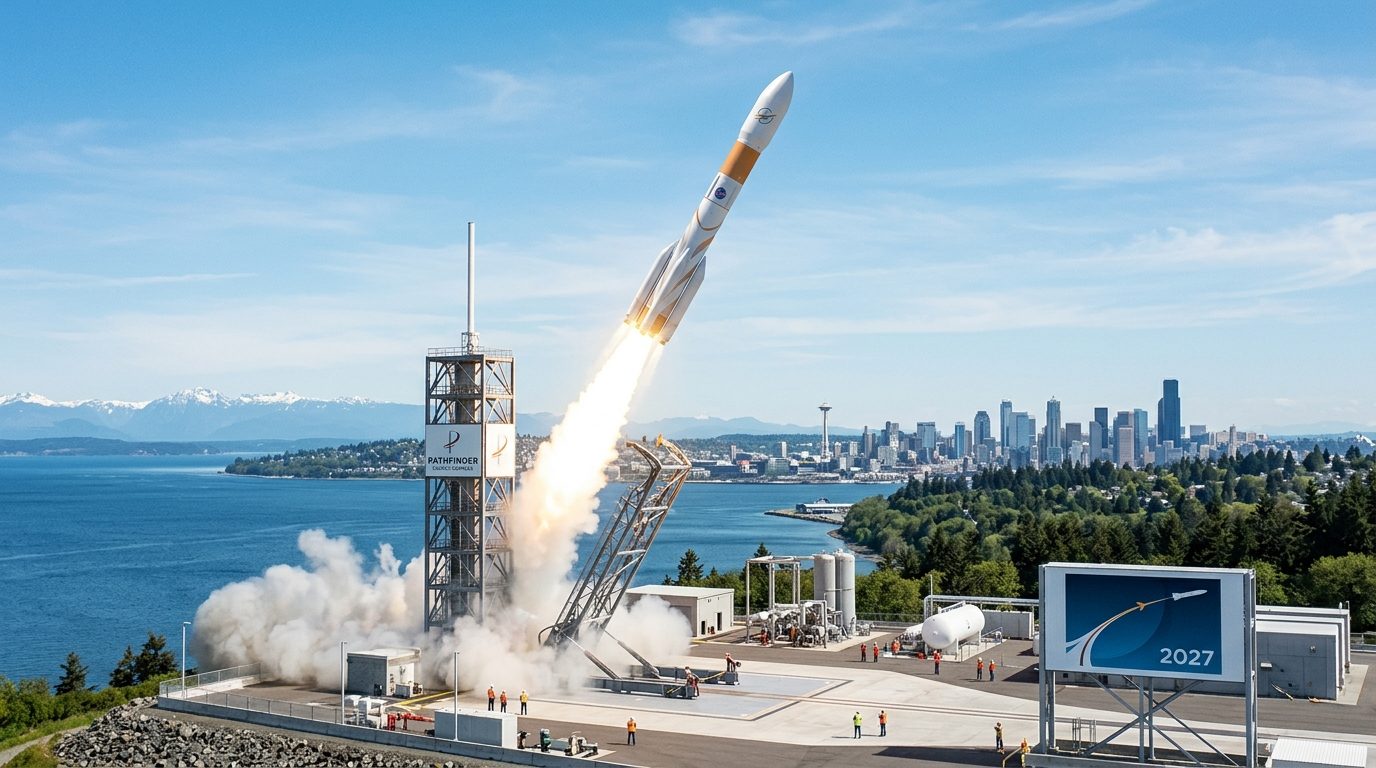
A Seattle-area startup is targeting early 2027 for its first Pathfinder launch, followed by the larger Nova Block 2 in 2029. The schedule gives the company roughly two years between the planned debuts, signaling a phased development strategy.
Few project details have been disclosed. The company’s name, launch site, vehicle specifications, funding, and mission customers were not identified. Those gaps make the dates important planning targets rather than firm launch commitments.
A Two-Stage Development Plan
The startup has described early 2027 as the goal for the “first Pathfinder launch.” The wording suggests that Pathfinder may test systems or operations before the company introduces a larger vehicle.
Nova Block 2 is due to follow in 2029. It was described only as “bigger,” without figures for dimensions, payload capacity, range, or performance.
The announced sequence establishes two major checkpoints:
- Early 2027: Target date for the first Pathfinder launch.
- 2029: Planned debut of the larger Nova Block 2.
A staged approach can help a young company test hardware, software, and launch procedures before moving to a larger design. It can also expose technical problems earlier, when changes may be less costly.
However, the approach depends on lessons from Pathfinder reaching the Nova Block 2 program quickly. A serious delay in the first launch could place pressure on the 2029 target.
Schedule Faces Key Unknowns
Launch programs often require several linked efforts. These can include vehicle production, ground testing, regulatory reviews, launch-site preparation, and access to specialized suppliers.
No information was provided about the startup’s progress in those areas. There was also no indication whether Pathfinder hardware is under construction or remains in design.
The word “target” leaves room for schedule changes. That distinction matters because first launches can move as engineering reviews reveal problems or required approvals take longer than expected.
The two-year gap also raises questions about how closely the vehicles are related. Shared systems could make the larger model easier to develop. Major design changes could create a separate set of testing demands.
What the Timeline Means for Seattle
The Seattle area has a deep pool of aerospace engineers, software workers, and advanced manufacturing talent. A launch startup may benefit from that workforce, even if launches occur outside the region.
Still, the local economic effect cannot yet be measured. The company has not disclosed hiring plans, production locations, investment levels, or supplier agreements.
Potential customers will also need more than target dates. They typically require clear information about performance, reliability, pricing, launch locations, and mission availability before making firm plans.
Milestones to Watch
The next meaningful updates would include completed design reviews, engine or propulsion tests, manufacturing progress, regulatory filings, and selection of a launch site. Customer announcements would also show whether the vehicles have gained market interest.
For now, the clearest development is the schedule itself. Pathfinder is intended to fly first in early 2027, while Nova Block 2 is planned for 2029. Meeting those dates will depend on whether the startup can turn an early test program into a larger operational system within a short period.
The 2027 launch will therefore serve as the first major measure of the company’s execution. Its outcome could determine whether the larger Nova Block 2 remains on course for a 2029 debut.

Rashan is a seasoned technology journalist and visionary leader serving as the Editor-in-Chief of DevX.com, a leading online publication focused on software development, programming languages, and emerging technologies. With his deep expertise in the tech industry and her passion for empowering developers, Rashan has transformed DevX.com into a vibrant hub of knowledge and innovation. Reach out to Rashan at [email protected]