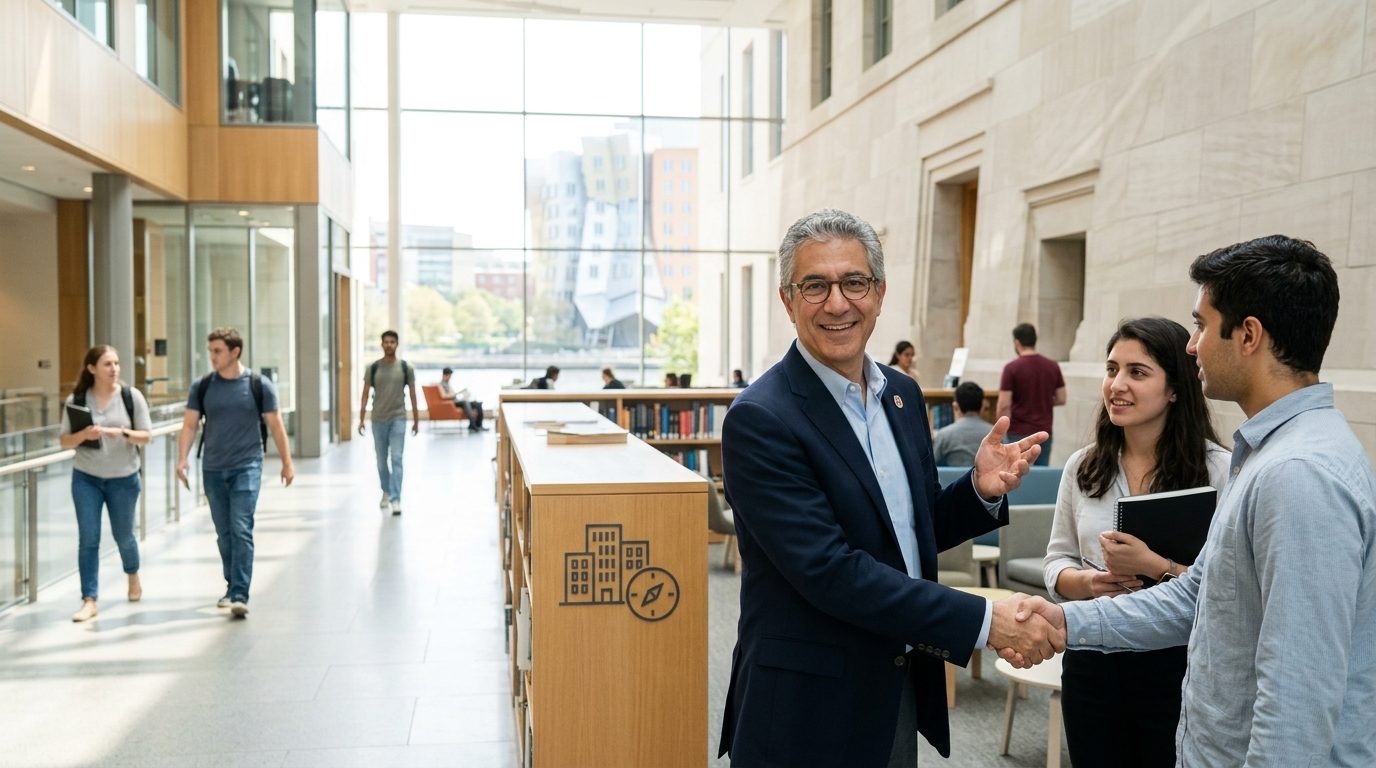
MIT has appointed Senior Lecturer Walter Torous as executive director of its Center for Real Estate, placing him in charge of teaching, fundraising, events, and a planned curriculum expansion.
Torous will also direct the university’s Master of Science in Real Estate Development program, known as MSRED. His appointment brings the center’s academic and administrative work under one leader as technology reshapes property development, finance, and management.
A Broader Academic Role
The position gives Torous responsibility for both the center and its graduate degree program. That structure may help connect classroom instruction with research, industry events, and relationships with donors.
His agenda includes expanding real estate education across MIT departments. This approach could give students more access to expertise outside traditional property studies, including computing, engineering, design, and urban planning.
Real estate development already draws on several disciplines. Projects require financial analysis, construction knowledge, land-use planning, and an understanding of local communities. Cross-department courses could help students examine those issues as parts of the same decision-making process.
Technology and AI Enter the Curriculum
Torous plans to place greater emphasis on technology and artificial intelligence in real estate. The focus reflects growing industry interest in tools that can analyze markets, assess buildings, support investment decisions, and improve property operations.
Potential areas of study may include how digital systems affect development and asset management. However, the appointment announcement did not identify specific courses, research projects, or a timeline for the expansion.
AI education also creates practical questions for universities and property professionals. Automated systems can process large volumes of information, but their results depend on the quality and relevance of the underlying data. Real estate decisions also involve local rules and physical conditions that may not fit standard models.
A technology-focused curriculum may therefore need to address both capability and risk. Key issues for students and industry leaders include:
- How AI models use property, market, and demographic data
- How users test automated valuations and forecasts
- How privacy, bias, and accountability affect adoption
- How new tools change professional roles and required skills
Leadership Beyond the Classroom
Fundraising and events will form another major part of Torous’s role. Those duties can shape a university center’s reach by supporting faculty work, student programs, public discussions, and ties with the real estate sector.
Events may also give students access to developers, investors, policymakers, and technology specialists. Such exchanges can connect academic work with operating concerns, while giving industry participants a place to examine emerging practices.
At the same time, close relationships with industry require clear academic standards. Universities must balance donor and employer interests with independent research and critical teaching. Torous will be responsible for managing those priorities while guiding the center’s growth.
What Comes Next
The appointment signals that MIT sees technology, AI, and cross-disciplinary study as central to the future of real estate education. It also gives Torous a wide mandate that covers academic direction, institutional funding, and public engagement.
The next measures of progress will be concrete ones. Students and industry observers will look for new courses, partnerships across MIT, expanded events, and details about how AI will be taught.
Torous now faces the task of turning that agenda into an organized program. The center’s direction could influence how future developers and investors evaluate technology while making decisions about buildings, capital, and communities.

Deanna Ritchie is a managing editor at DevX. She has a degree in English Literature. She has written 2000+ articles on getting out of debt and mastering your finances. She has edited over 60,000 articles in her life. She has a passion for helping writers inspire others through their words. Deanna has also been an editor at Entrepreneur Magazine and ReadWrite.