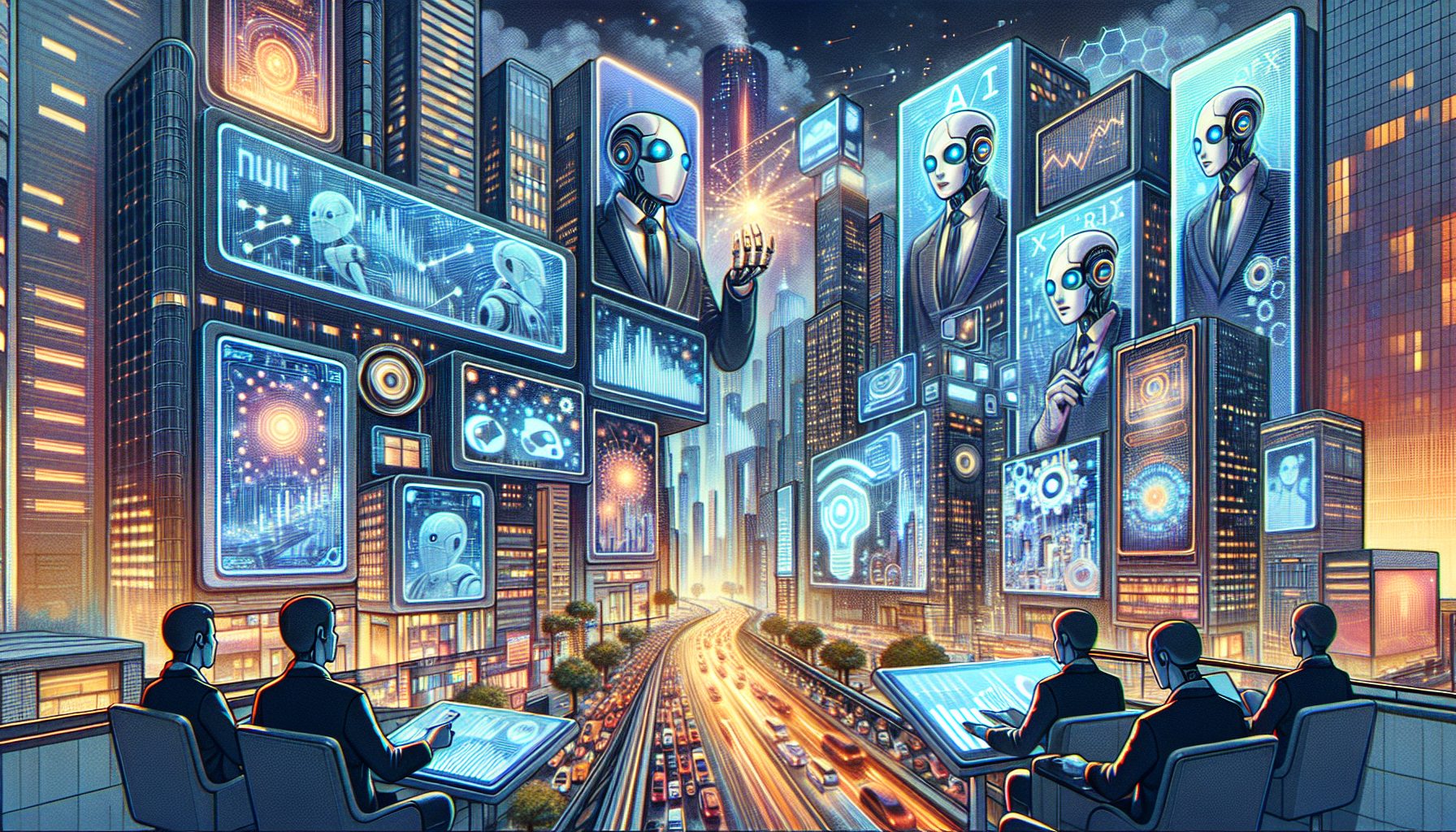
The rapid technological advancements have set unique stages in various business sectors, particularly in advertising. Big tech giants like Google and Facebook are utilizing artificial intelligence (AI) to personalize their content and advertisements, redefining how businesses interact with their audience.
The rise in programmatic advertising and AI’s extraordinary data analysis capabilities is slowly reshaping traditional marketing strategies. The efficient target marketing and decision-making power of AI have led to improved customer engagement and higher sales conversion rates.
Leading technology firms like Google and Meta have announced their latest AI-oriented technological innovations. Google has a new chip technology in the pipeline to enhance the efficiency of their cloud services, giving them a competitive edge. Meta, on the other hand, aims to incorporate AI into various areas of their platform such as virtual reality, data management, and user interface design.
According to Bank of America analyst, Justin Post, Meta’s AI could ultimately lead to a personalized user experience, with superior video suggestions, resulting in increased advertising expenditures.
These breakthroughs signify the “Magnificent Seven” including Google and Meta that consistently hire elite professionals, such as PhD degree holders in Physics.
AI reshaping advertising, changing business
Their powerful drive for innovation has transformed them into a dream destination for ambitious professionals, facilitating their growth and contribution to technological reshaping of society.
Given the ambitious AI aspirations, questions about the width of Meta’s plan to deploy its high-level AI solution sector-wide and implications for consumer privacy have emerged prominently. These questions will play a critical role in shaping Meta’s larger strategic direction and interpreting the interplay of technology and business in shaping the market landscape.
The shift from Google’s focus on ad sales to cloud computing would entail significant changes in strategy, revenue streams, and company culture. Google’s potential entrance in the cloud computing race could invite new opportunities and advancements, given a well-structured transition plan and prudent investments.
Analysts unanimously agree on a slow but certain move towards an AI-dictated future. These ongoing advancements in AI technology are gradually transforming various business sectors. While the impact on the global economy might be underestimated in the short run, the long-term effects might be far more profound.
Related Articles
- Best Programmatic Platform Development Services for Agencies and Brands
- From Cold Calls to Smart Conversations: How AI Is Reshaping Sales Processes

Rashan Dixon is the founder and CEO of DevX, a technology media and education company covering software development, programming languages, artificial intelligence, and emerging technologies. He is also the founder and CEO of Techincon, a technology consulting business focused on technology implementation, analytics, and emerging technology trends.
Rashan brings nearly three decades of experience across enterprise technology, business systems, and consulting. He served as a Senior Business Systems Analyst at Microsoft from 2011 to 2026, following earlier experience as a Systems Analyst and Business Advisor at Kronos Incorporated. These roles inform his practical perspective on the opportunities and operational challenges of adopting new technology.
At DevX, Rashan connects enterprise technology experience with accessible coverage for developers, entrepreneurs, and business decision-makers. His areas of interest include software engineering, AI, technology strategy, digital transformation, and the intersection of emerging tools and business outcomes.