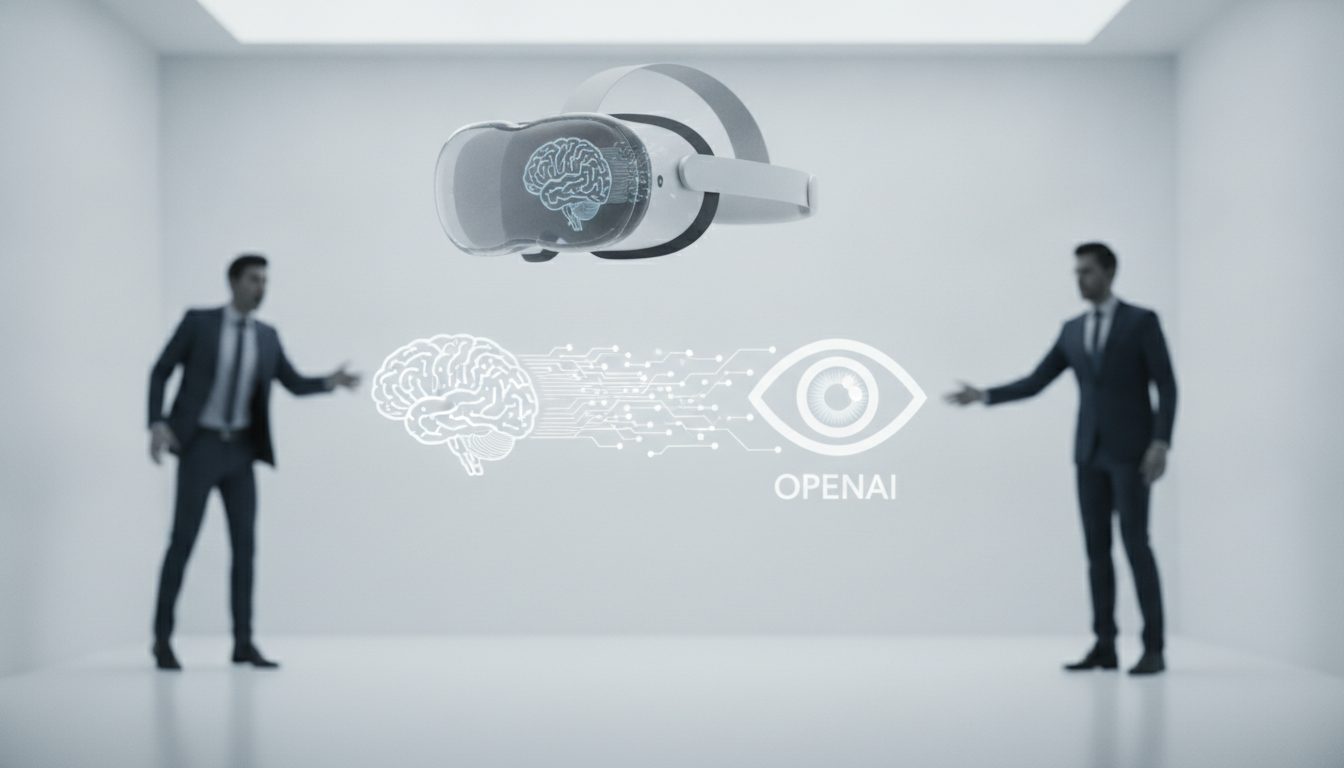
Apple is facing a high-profile executive change, as Paul Meade, the vice president overseeing the Vision Pro headset, is reportedly leaving to join OpenAI’s hardware team. The move, described by people familiar with the matter, comes as Apple expands its mixed reality efforts and OpenAI steps up work on consumer devices. The timing raises questions about leadership continuity at Apple and signals a faster push into hardware at OpenAI.
The Vision Pro arrived in early 2024 with a premium price and an ambitious pitch for spatial computing. OpenAI, known for ChatGPT, has been staffing up for projects that bring AI into physical products. Meade’s reported jump sits at the center of those two storylines, and it could shape how both companies approach hardware and AI experiences.
Background on the Leadership Shift
Apple has long guarded its executive ranks, especially around new product categories. The Vision Pro is Apple’s first new major device family in years, and leadership stability is important as the company seeks developer support and new use cases. Executives who guide hardware roadmaps play a large role in component choices, manufacturing plans, and software integration.
OpenAI has ramped up interest in hardware since 2023, exploring ways to package AI into devices that feel natural and helpful. Industry watchers have tracked hiring across product design, supply chain, and embedded systems. Meade’s background with a complex headset could give OpenAI an experienced hand for coordinating sensors, displays, and real-time software.
What the Move Could Mean for Apple
Any departure from a program as young as Vision Pro can raise concerns, but Apple has deep benches and a track record of shipping updates on schedule. The company is already working on software improvements and regional rollouts. It is also likely refining a second-generation model to cut weight, extend battery life, and reduce cost.
Analysts say Apple’s near-term priorities include growing an app library and making everyday tasks feel simple in a headset. A change in leadership could affect how quickly those plans move, but Apple’s product cadence is set years in advance. Supplier contracts, component roadmaps, and platform teams tend to cushion leadership turnover.
OpenAI’s Hardware Ambitions
OpenAI’s push into devices reflects a belief that AI should feel less like an app and more like a companion tool. That requires strong opinions on interaction models, privacy, and on-device processing. Bringing in an executive with complex hardware experience can help align design, silicon choices, and AI models.
Reports in recent years have tied OpenAI to efforts with top industrial designers and funding partners to explore new form factors. These efforts have looked at hands-free access, voice-first interfaces, and context-aware sensing. A leader with headset experience could apply lessons from spatial computing to smaller or more personal devices.
- Better coordination between hardware sensors and AI models.
- Faster prototyping and supplier engagement.
- Closer alignment of privacy features with device design.
Voices and Early Reaction
“Paul Meade, the Apple vice president in charge of the Vision Pro headset, is reportedly leaving the company to join OpenAI’s hardware team.”
Neither company has issued detailed public comments about the move. Industry reaction centers on two questions. Will Apple’s Vision Pro roadmap stay on pace, and how soon could OpenAI show a device that feels ready for consumers.
Veteran product managers say that executive moves are common in the lead-up to multi-year hardware cycles. They point out that teams often follow established plans, while fresh leadership can bring sharper focus to a few key features.
What to Watch Next
The next milestones for Apple include software updates to visionOS, third-party app growth, and broader retail availability. For OpenAI, signs to track include new hardware job postings, supplier relationships, and developer kits that anchor AI features in specific chips and sensors.
If the reported move is confirmed, it would highlight an acceleration in the race to build AI-first devices. It suggests that hardware, not just apps, will shape how people use AI each day.
The coming quarters should reveal whether Apple can speed mainstream adoption of spatial computing, and whether OpenAI can define a simple, reliable hardware experience for its models. Investors and developers will watch for steady leadership at Apple and product signals from OpenAI. The answers will set the tone for how AI moves from screens into everyday objects.

Deanna Ritchie is a managing editor at DevX. She has a degree in English Literature. She has written 2000+ articles on getting out of debt and mastering your finances. She has edited over 60,000 articles in her life. She has a passion for helping writers inspire others through their words. Deanna has also been an editor at Entrepreneur Magazine and ReadWrite.