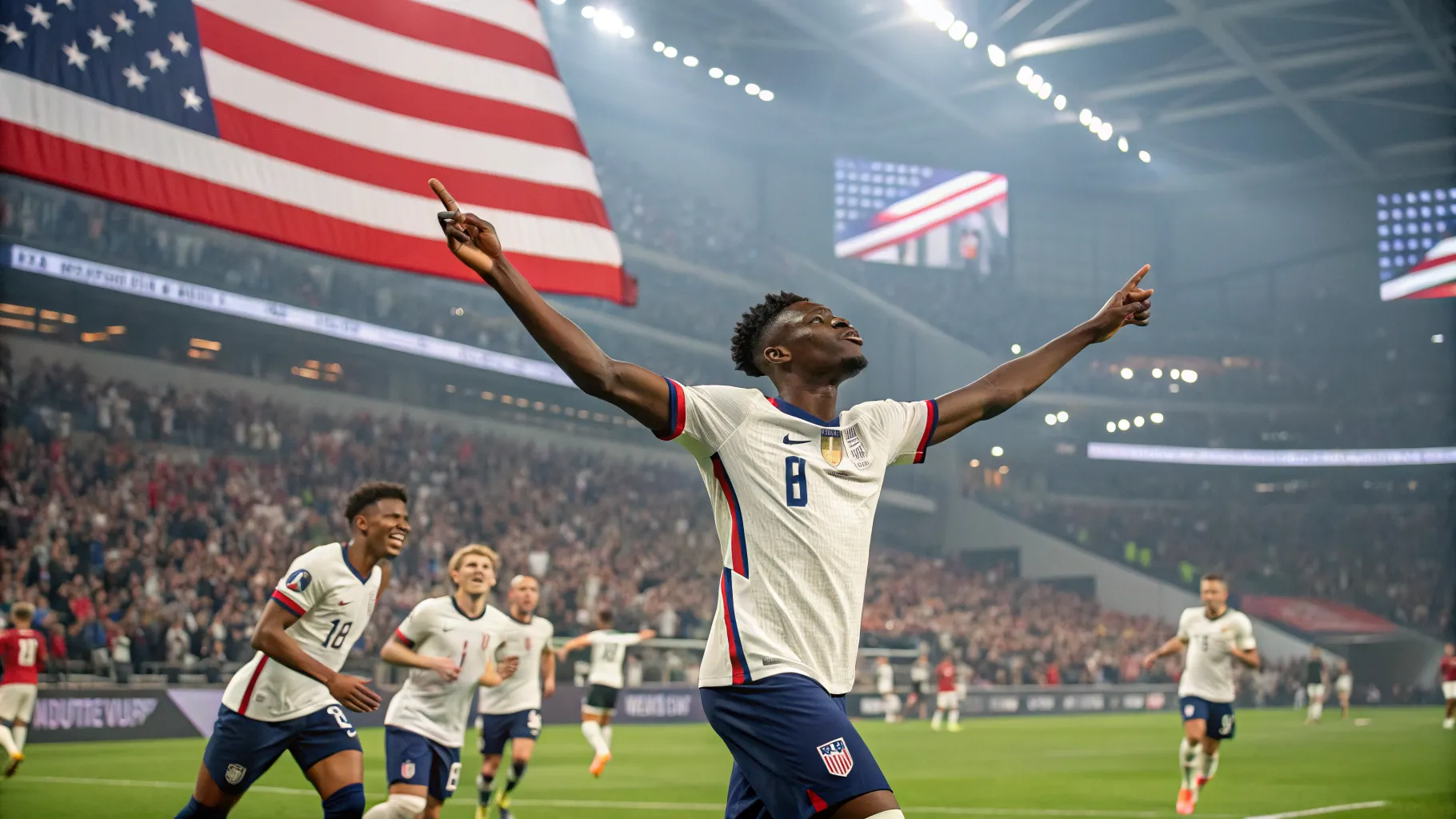
Team USA opened its World Cup campaign with a 4-1 win over Paraguay at SoFi Stadium in Los Angeles, powered by two goals from forward Folarin Balogun. The result gives the United States an early boost ahead of a June 18 meeting with Australia in Seattle, setting a confident tone after a clinical display in front of a large crowd.
The victory came in the tournament’s first match for the Americans and featured a sharp attack and disciplined midfield play. The defense allowed a single goal, but the margin of victory offers a cushion as group standings take shape.
How the Match Was Won
The United States controlled key moments and turned early chances into goals. Balogun’s finishing set the pace, stretching Paraguay’s back line and creating space for runners from midfield. The team’s transitions were direct, and the tempo never drifted far from their plan.
When Paraguay pressed higher, the U.S. stayed composed and broke lines with quick passes. The approach limited turnovers and kept pressure on the visitors. The lone Paraguay goal came during a brief lapse, yet the response was steady and organized.
- Final score: United States 4, Paraguay 1
- Venue: SoFi Stadium, Los Angeles
- Top performer: Folarin Balogun (2 goals)
Balogun’s Emerging Role
Balogun’s double was the headline. His movement between center backs and his timing inside the box created constant threats. He finished with authority and imposed himself in key sequences. The brace marks a strong start for a striker expected to carry scoring duties during the tournament.
For a forward, rhythm in a global tournament matters. Early goals often translate to confidence across the front line. With Balogun drawing markers, wingers and late-arriving midfielders found lanes to exploit. That collective lift was evident in the chance creation throughout the match.
Midfield Control and Defensive Balance
The midfield shape set the platform. The United States won second balls and switched play to pull Paraguay out of position. Ball recoveries were quick, and passing choices were simple and effective. That control limited Paraguay’s time to build sustained attacks.
Defensively, the back four and the goalkeeper faced periods of pressure but managed them with clearances and smart positioning. Conceding one goal will still prompt review, yet the unit’s response after the setback was calm. The team did not sit back after taking the lead and kept pushing for a larger margin.
What the Win Signals for the Group Stage
First matches can shape a tournament. A three-goal margin provides breathing room and can help in tiebreakers. It also reduces strain on the squad as the schedule tightens. Coaches often stress performance patterns over single-game highs, and the U.S. showed repeatable habits—organized pressing, clean exits from their own half, and quality in the final third.
The result also builds trust in the team’s plan. Players looked in sync on set pieces and in open play. That cohesion will face a stronger test next time out, but the baseline is set.
Next Up: Australia in Seattle
The United States travels to Seattle for a June 18 clash with Australia. The short turnaround calls for careful rotation and recovery. Australia brings physical play and speed on the wings, which will challenge the U.S. fullbacks and midfield cover.
Key questions for the next match:
- Will the U.S. press as high against a more direct opponent?
- Can Balogun maintain his scoring touch amid tighter marking?
- How will the back line manage crosses and aerial duels?
Historical Perspective and Stakes
Strong openings have often set the tone for American sides in major tournaments. Wins in game one ease pressure and allow tactical tweaks without chasing points. They also help integrate newer faces into high-stakes minutes.
Paraguay, a disciplined South American team, typically frustrates opponents with compact lines. Breaking through for four goals suggests the U.S. found matchups it liked and executed them. Carrying those patterns into Seattle could be decisive.
With a 4-1 win in hand, the United States enters its second match with momentum and a clear plan. Balogun’s finishing gives the attack a focal point, while the midfield’s control offers stability. The meeting with Australia will reveal if this form holds under a different test. Watch for early tempo, defensive shape against wide threats, and whether the front line continues to turn half-chances into goals.

Senior Software Engineer with a passion for building practical, user-centric applications. He specializes in full-stack development with a strong focus on crafting elegant, performant interfaces and scalable backend solutions. With experience leading teams and delivering robust, end-to-end products, he thrives on solving complex problems through clean and efficient code.