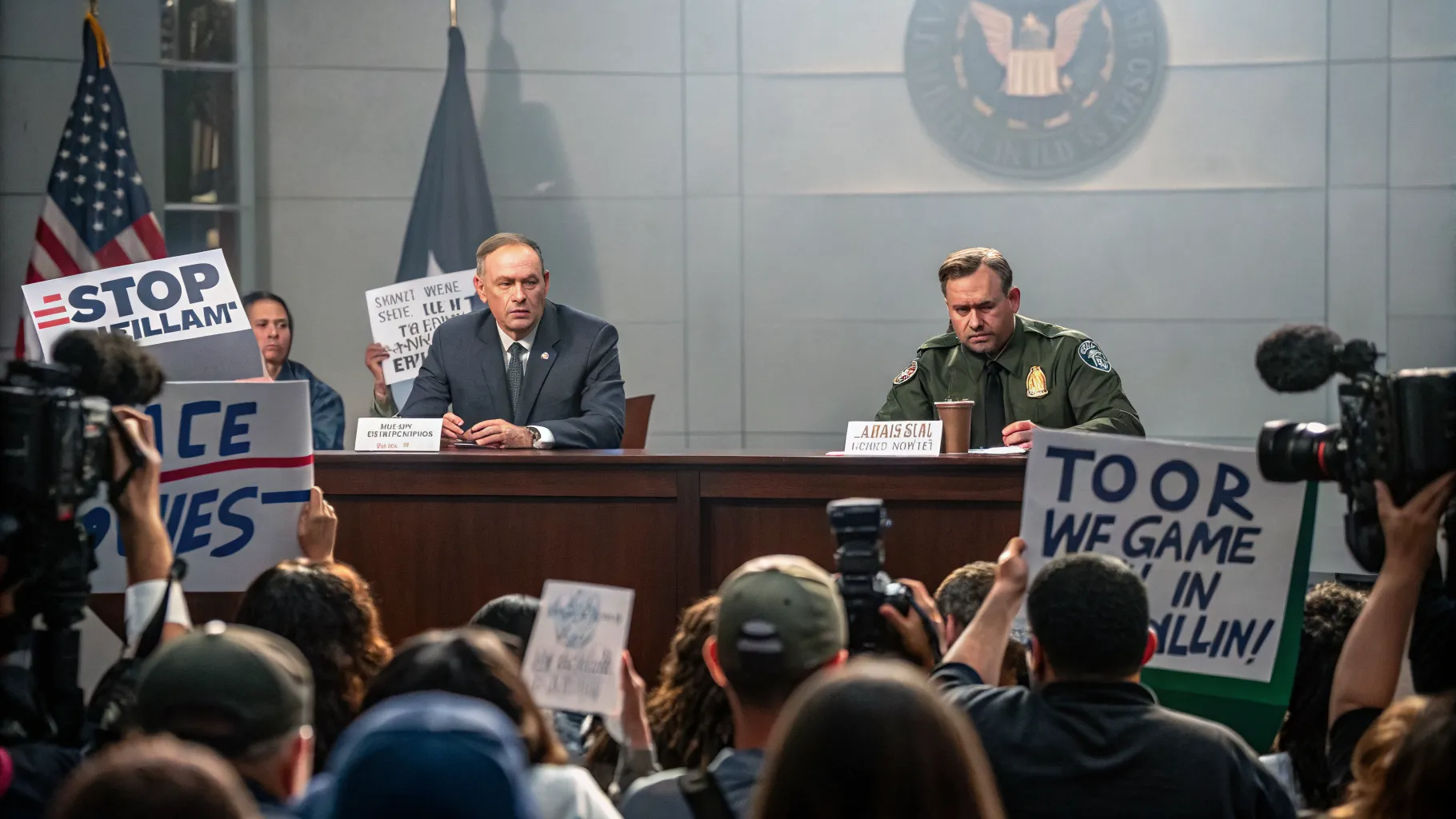
Advocates have accused the Department of Homeland Security of issuing false and misleading statements about Carlos Ivan Mendoza Hernandez, a man who was shot in the face during an encounter with federal personnel. The dispute centers on what officials said happened and what witnesses and supporters claim actually occurred. With key facts still in dispute and few official details public, the case has drawn attention to how federal agencies report use-of-force incidents and how those claims are reviewed.
Background on the Disputed Account
The heart of the controversy is a simple charge: that public statements from DHS do not match what happened to Mendoza Hernandez. Supporters say the difference is significant and could shape public understanding of the use of force. DHS has not released a full timeline or body-camera footage, if any exists, and has not provided comprehensive answers to questions about the incident.
“DHS accused of false and misleading statements about Carlos Ivan Mendoza Hernandez who was shot in face.”
The shooting itself remains under examination. It is not yet clear which DHS component led the operation or what preceded the gunfire. Agencies that often conduct field operations include Customs and Border Protection and Immigration and Customs Enforcement, each with its own policies on force and reporting.
What Supporters and Officials Are Saying
Supporters of Mendoza Hernandez argue that early agency statements omit important facts and frame the event in a way that shields officials from blame. They contend that the language used by DHS could bias the public before an independent review is complete.
DHS, in general practice, points to internal and external review channels. Incidents can be examined by the Office of Inspector General, the Office for Civil Rights and Civil Liberties, and component-level professional responsibility units. These reviews often determine whether policies were followed and whether discipline or training changes are needed.
Policies, Oversight, and Transparency
Federal use-of-force policies require that force be reasonable and necessary based on the threat. Agencies have expanded training on de-escalation and reporting in recent years. Yet disputes often arise over the first public description of a critical incident.
Key accountability tools include:
- Prompt and accurate incident reporting by involved personnel.
- Preservation and release of evidence, such as video, when allowed by law.
- Independent review by oversight bodies with public summaries when possible.
Advocates say delays or vague language can damage trust. Officials counter that early information can be incomplete and must be protected to avoid compromising investigations.
Legal and Community Implications
If the statements are shown to be inaccurate, DHS could face legal risk, including civil claims and challenges to the credibility of agency testimony in court. Defense attorneys in unrelated cases sometimes cite prior irregularities to question official accounts.
Community groups are watching for signs of transparency. Past disputes over law enforcement statements have led to policy changes on body-worn cameras, release timelines for videos, and public briefings after critical incidents. Whether similar steps follow here may depend on the findings of any investigations and the willingness of DHS to release records.
What Comes Next
The immediate questions are straightforward. Who authored the statements at issue? What evidence supports them? And when will independent reviewers publish their findings? Clear answers could determine whether the public accepts the agency’s account.
For Mendoza Hernandez, the shooting has medical, legal, and personal consequences. For DHS, the case tests current oversight systems and the strength of public confidence in official reports after use-of-force events.
The outcome will likely hinge on documentation and third-party review. If evidence supports the advocates’ claims, expect calls for corrections, policy updates, and possible discipline. If the statements hold up under scrutiny, the episode may still spur renewed focus on how agencies communicate after critical incidents and how quickly they release verified facts.
Until then, the case stands as a reminder that early statements shape public understanding. The next steps to watch are the launch and scope of formal investigations, the handling of any video or records, and whether DHS provides a detailed, evidence-backed timeline of the shooting and its aftermath.

Senior Software Engineer with a passion for building practical, user-centric applications. He specializes in full-stack development with a strong focus on crafting elegant, performant interfaces and scalable backend solutions. With experience leading teams and delivering robust, end-to-end products, he thrives on solving complex problems through clean and efficient code.