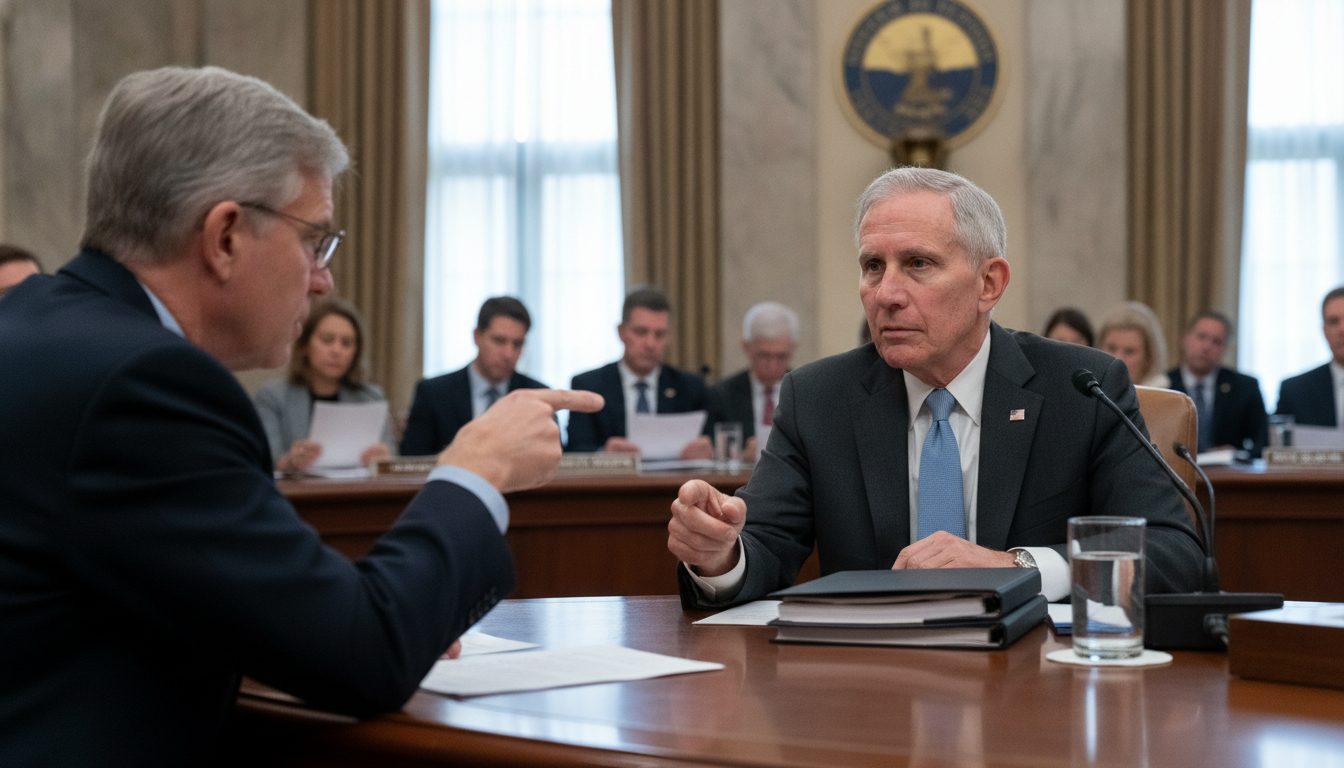
Dr. Anthony Fauci appeared on Capitol Hill for a high-profile hearing focused on how the Covid pandemic began and what federal officials knew at the time. The Senate Homeland Security and Governmental Affairs Committee convened the session in Washington, led by Chairman Rand Paul, to press the longtime infectious disease expert on decisions made during the crisis. The hearing signals renewed political and scientific interest in the origin debate and in federal oversight of research.
Lawmakers set a sharp tone in advance. They said the session would probe what Fauci knew and when. The questions are expected to target early assessments of the virus, lab safety, and government communications as the outbreak spread.
Why the Hearing Matters Now
The origin of Covid remains under review by U.S. intelligence and global health agencies. Some officials have cited a possible lab-related incident. Others point to a natural spillover from animals to humans. No single explanation has been confirmed.
Senators said they would revisit whether U.S.-funded research abroad involved risky experiments and whether safety rules were clear and enforced. The committee is using the hearing to examine how to prevent future outbreaks and to rebuild public trust in health guidance.
“Lawmakers are expected to question Fauci about what he knew and didn’t know as the pandemic was unfolding.”
Fauci’s Role and the Questions at Hand
Fauci led the National Institute of Allergy and Infectious Diseases for decades and served as a top adviser during the Covid response. He became a central public voice on masking, vaccines, and risk. His supporters credit him with steady guidance during a fast-moving crisis. Critics say official messages shifted and sometimes confused the public.
Chairman Rand Paul has long pressed Fauci on research conducted in China and on whether U.S. grants might have supported risky work. The hearing is expected to revisit how agencies define and review high-risk experiments, and how those decisions were communicated to Congress and the public.
“Dr. Anthony Fauci testifies before the Senate Homeland Security and Governmental Affairs Committee as part of Committee Chairman Rand Paul’s investigation into the origins of Covid.”
Key Lines of Inquiry
Senators signaled several focus areas for questioning.
- What internal assessments shaped early public statements on the virus origin.
- How grant oversight worked for international partners and what controls were in place.
- What gaps in lab safety and biosurveillance exist and how to fix them.
- How risk communication can be made clearer during fast-changing crises.
Scientific Debate and Public Communication
The scientific community has examined genetic data, early case clusters, and lab records. Researchers have looked for patterns that could suggest a zoonotic jump or a lab-linked event. Each path requires strong evidence, and much of the data remains incomplete.
Communication during the first months of 2020 remains a flash point. Officials had to speak before the facts were settled. Early guidance on masks, transmission, and testing evolved as studies emerged. That shift saved lives in some areas, but it also fed skepticism.
Lawmakers said they want accountability and clarity. They also said the goal is to prepare for the next outbreak with better data sharing, clearer messages, and stronger biosafety standards.
Politics, Oversight, and Trust
Paul and Fauci have clashed in past hearings. Their exchanges reflect wider divisions over pandemic policy and the balance between speed and certainty. The committee’s inquiry could influence future grant rules, lab audits, and disclosure requirements.
Public trust is at stake. Voters want answers on what went right, what went wrong, and how to improve. A fact-driven review could help reset debates that have grown heated and personal.
What to Watch After the Hearing
The committee could seek documents, witness interviews, and follow-up sessions. It may propose updates to federal definitions of high-risk experiments and adjust oversight for international research partners. Agencies could be directed to standardize risk communication playbooks for future health threats.
Other investigations may track the same ground. Coordination across committees and agencies will be important to avoid gaps and duplication.
“Watch live coverage as Dr. Anthony Fauci testifies before the Senate Homeland Security and Governmental Affairs Committee.”
The hearing marks another step in a long inquiry into how a global pandemic began and how leaders responded. The central questions are familiar, but the stakes remain high. Clear evidence and transparent process will matter more than political points. Any reforms that follow could shape research oversight and crisis communication for years. Readers should watch for document releases, bipartisan proposals on lab safety, and updates from health agencies on origin studies.

A seasoned technology executive with a proven record of developing and executing innovative strategies to scale high-growth SaaS platforms and enterprise solutions. As a hands-on CTO and systems architect, he combines technical excellence with visionary leadership to drive organizational success.