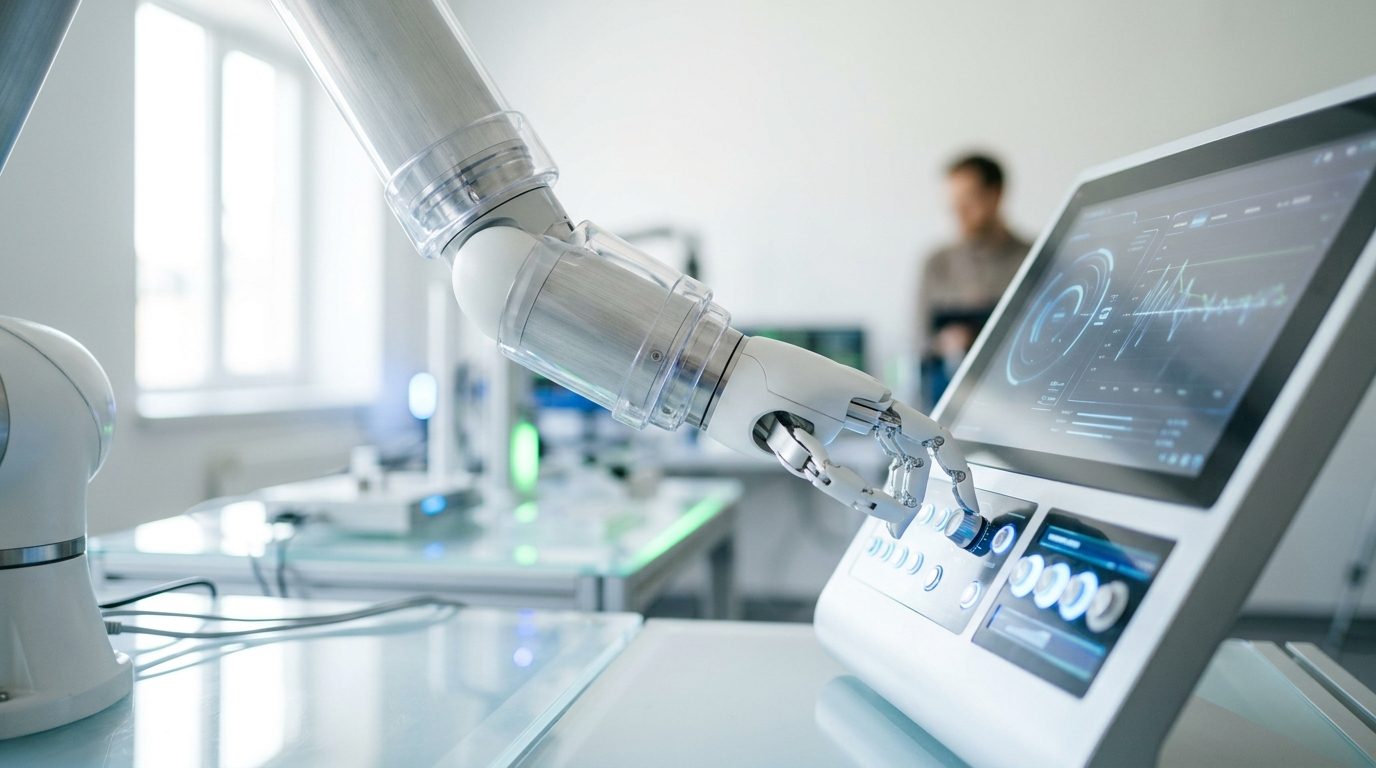
GEN-1.5 can learn a new task from only three to 12 seconds of demonstration data, according to newly released details about the system. The model can also adapt through limited additional training, using minutes of data and as few as one gradient step.
The reported performance points to a different approach to machine learning. Instead of requiring extensive task-specific examples, GEN-1.5 draws on prior training with large amounts of physical experience.
“GEN-1.5 can in-context learn a new task from as little as 3 to 12 seconds of demonstration data.”
Two Routes to Task Adaptation
GEN-1.5 supports two forms of adaptation. The first is in-context learning, where a model uses a demonstration to perform a task without changing its underlying parameters.
The second route involves gradient-based updates. These steps adjust the model using new task data. GEN-1.5 reportedly needs between one and 10 such steps when given minutes of material.
- In-context learning requires three to 12 seconds of demonstration data.
- Gradient-based adaptation uses minutes of data.
- That adaptation takes between one and 10 update steps.
The distinction matters for practical use. In-context learning can support rapid changes when retraining is too slow or costly. Gradient updates may offer greater task specialization when more time and data are available.
Pretraining Supplies Prior Experience
The system’s reported skills emerge from pretraining on large-scale physical experience. This suggests that GEN-1.5 develops reusable knowledge before receiving instructions for a new task.
That method resembles how prior experience can reduce the time needed to learn related activities. A system exposed to varied physical behavior may identify motion, cause and effect, and task structure from a short example.
However, the available description does not define the training data, its scale, or how “physical experience” was collected. It also does not identify the tasks used for evaluation. Those details are needed to judge how widely the results apply.
Efficiency Claims Need Wider Testing
Learning from seconds of data could reduce the burden of collecting and labeling examples. This may be useful in robotics, simulation, interactive systems, or other settings where demonstrations are expensive.
Yet sample efficiency alone does not establish reliability. Independent evaluation would need to measure success rates, error patterns, safety, and performance under unfamiliar conditions. Tests should also compare GEN-1.5 with systems trained on larger task-specific datasets.
The phrase “as little as” describes the best reported data requirement, not necessarily the typical one. Some tasks may demand longer demonstrations, more updates, or repeated correction. The disclosed range also leaves open how task difficulty affects adaptation.
What Comes Next
GEN-1.5 presents a model that can shift between immediate instruction-following and short adaptation cycles. If verified across varied tasks, that flexibility could make physical learning systems easier to deploy and retrain.
The main finding is clear: broad pretraining may allow a model to reuse prior experience after seeing only a brief demonstration. The next tests should examine consistency, task diversity, and real-world safety. Published benchmarks and independent replication will determine whether the reported efficiency carries into practical settings.

Rashan is a seasoned technology journalist and visionary leader serving as the Editor-in-Chief of DevX.com, a leading online publication focused on software development, programming languages, and emerging technologies. With his deep expertise in the tech industry and her passion for empowering developers, Rashan has transformed DevX.com into a vibrant hub of knowledge and innovation. Reach out to Rashan at [email protected]