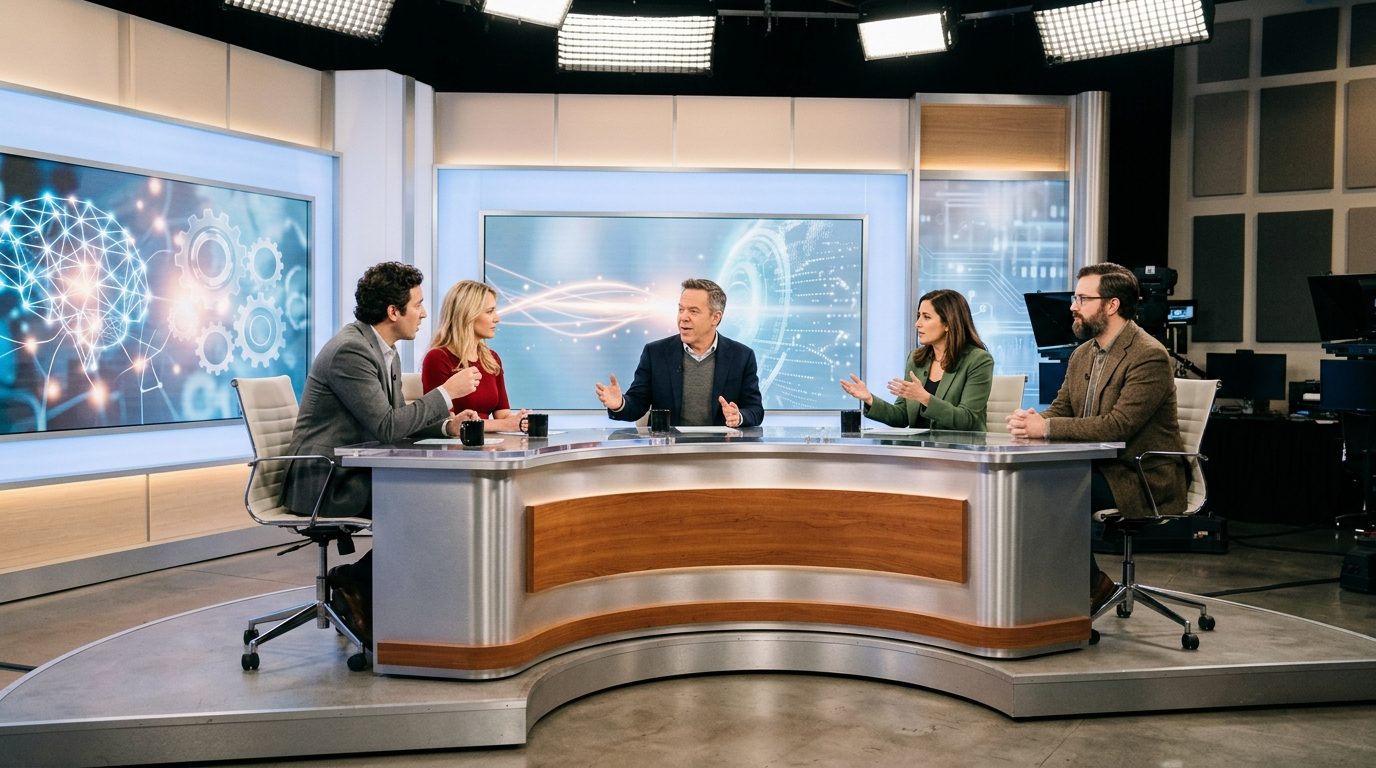
Fox News host Greg Gutfeld and his “Gutfeld!” panel have taken up Pope Leo’s reported concerns about artificial intelligence, framing the debate around whether the technology poses a moral threat.
The discussion placed a major religious leader inside a growing public dispute over AI. That dispute covers employment, privacy, false information, human dignity, and control over automated systems.
The segment characterized the pope’s position as a belief that “A.I. is evil.” However, that brief description does not include a direct papal statement or explain which uses of AI drew concern. The distinction matters because criticism of AI risks is not the same as declaring every form of the technology immoral.
A Moral Debate Reaches Television
Gutfeld’s program often examines political and cultural disputes through comedy and panel commentary. Its treatment of the pope’s reported position brings religious ethics into a debate often led by technology companies and government officials.
AI can generate text, images, audio, and video. It can also sort large amounts of information and help organizations automate routine work. Supporters point to possible gains in medicine, education, research, and business.
Critics focus on different effects. AI systems may reproduce errors found in their training material. They can create convincing false content, collect sensitive information, and influence decisions without clear public oversight.
Those concerns have led religious figures, lawmakers, researchers, and industry executives to ask similar questions:
- Who is responsible when an automated system causes harm?
- How should workers be protected from sudden job losses?
- Should machines make decisions involving health, justice, or war?
- What rules should govern synthetic images and voices?
Why the Wording Matters
Calling AI “evil” turns a policy issue into a stark moral judgment. It can also hide differences among tools and uses.
An automated medical aid, for example, raises different concerns from software used to impersonate a person. A hiring system requires different safeguards from a chatbot designed for entertainment.
The segment’s framing may appeal to viewers who distrust rapid technological change. Yet it risks reducing a complex position to a single label. Without the pope’s full remarks, viewers cannot judge whether he opposed AI itself or warned about its misuse.
Religious teaching has often treated technology as morally dependent on human choices. Under that approach, a tool is judged by its purpose, effects, and treatment of people. Questions about dignity and responsibility become more important than the device alone.
Regulation and Responsibility
The larger debate is moving from theory to policy. Governments are considering rules for disclosure, data protection, copyright, discrimination, and high-risk automated decisions.
Technology companies generally argue that AI can deliver broad benefits if used responsibly. Safety advocates respond that voluntary promises may be inadequate when commercial pressure rewards faster releases.
Religious criticism adds another measure. It asks not only whether an AI system works, but whether its use respects people and serves the public interest.
The central issue is not simply whether AI is good or evil. It is who controls it, how it is used, and who bears the cost when it fails.
The “Gutfeld!” discussion shows how quickly AI has moved into mainstream cultural debate. It also shows the danger of interpreting a major ethical position through a short television description.
Future coverage will need to separate direct papal remarks from panel interpretation. The broader test will be whether religious leaders, governments, and technology firms can turn moral warnings into clear standards for accountability, safety, and human control.

A seasoned technology executive with a proven record of developing and executing innovative strategies to scale high-growth SaaS platforms and enterprise solutions. As a hands-on CTO and systems architect, he combines technical excellence with visionary leadership to drive organizational success.