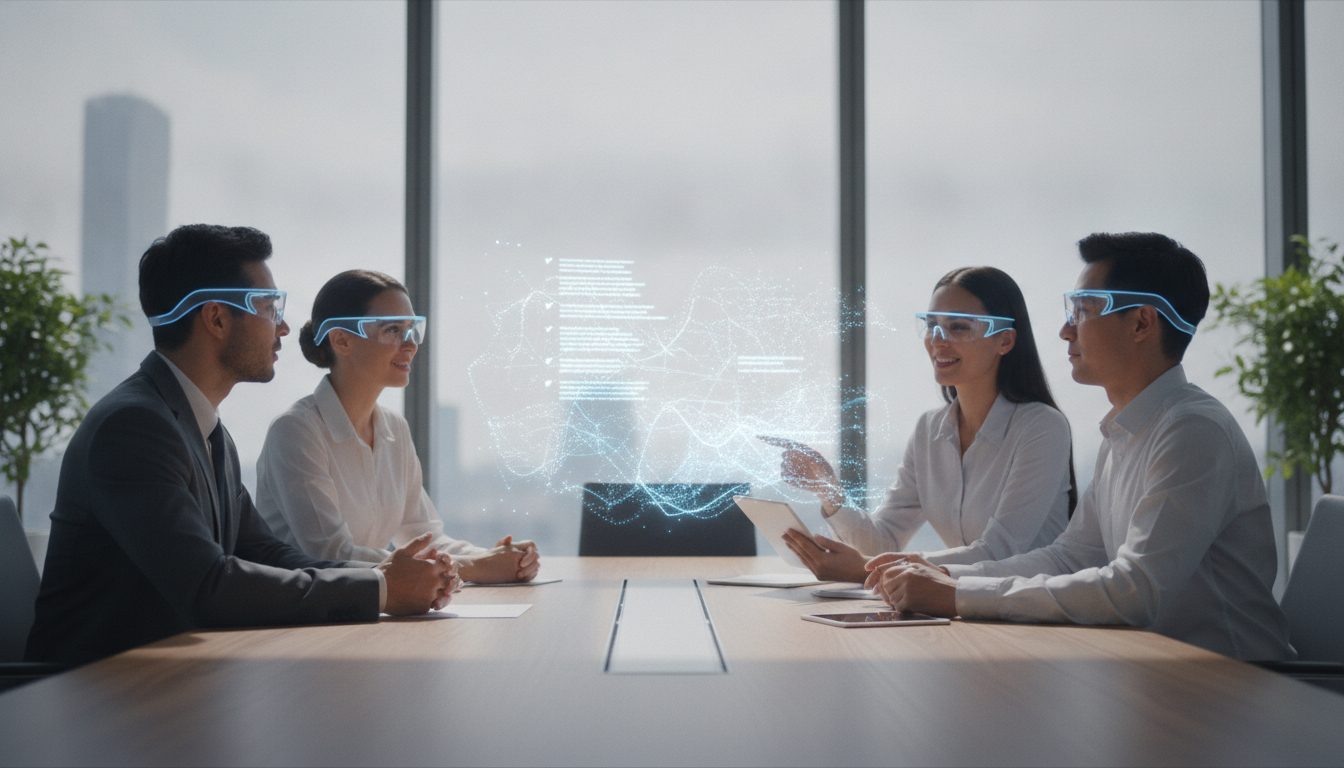
Halliday is pitching a new twist on workplace note taking with its G2 smart glasses, which can listen to meetings and produce summaries without using video. The device targets busy professionals who want accurate records and action items while keeping cameras out of the room. It signals a fresh push to bring audio-first wearables into daily office life at a time when many teams are rethinking hybrid work and documentation.
Halliday’s G2 glasses can listen to and summarize your workplace meetings—with no video involved.
The concept is simple. The wearer attends a meeting as usual, the glasses capture audio, and an onboard or connected assistant turns the conversation into clear notes. The lack of video may help ease privacy concerns and reduce distraction. It also places the focus on what people say, not how they look on camera.
Why Audio-Only Matters Now
Offices have embraced software that transcribes meetings and writes summaries. Tools built into popular video platforms and stand-alone apps already do this on laptops and phones. Wearable audio hardware has lagged, in part because cameras have drawn pushback. An audio-first approach suggests a path forward that is less intrusive and easier to accept in conference rooms.
Unlike earlier smart glasses that promoted photography or live streaming, this model centers on note taking and recall. That makes it a work tool, not a lifestyle gadget. It also lines up with a broader move to reduce screen time during meetings while keeping records for people who join late or skip the call.
How It Could Work in Practice
G2 appears to rely on microphones to capture speech, then uses an assistant to produce key points, decisions, and tasks. The promise is faster wrap-ups and fewer gaps when team members follow up later. The company’s emphasis on no video highlights a choice to avoid facial recording and screen capture, which are often the most sensitive parts of meeting tech.
In a typical week, teams switch between video calls, in-person sessions, and quick huddles. A wearable that spans those formats could reduce manual note taking. The quality of the experience will depend on audio clarity, speaker separation, and the assistant’s ability to handle jargon and accents.
Privacy, Consent, and Office Policy
Any device that records workplace audio raises immediate questions about consent and policy. Organizations will need clear rules that tell employees when and how to use recording features, how to notify guests, and where summaries are stored. Teams will also expect controls to pause listening during sensitive discussions.
- Publish a visible consent policy for internal and external meetings.
- Set storage limits and retention timelines for summaries and transcripts.
- Allow meeting hosts to disable recording by default.
The no video stance can help reduce risk, but it does not remove it. Audio can still include confidential details, trade secrets, or personal data. Companies will look for encryption, strict access controls, and audit logs before widespread use.
Productivity Gains and Trade-Offs
The pitch is clear. Automatic summaries reduce administrative work, speed follow-ups, and make handoffs smoother. In fast-moving projects, this can help new team members get up to speed and cut the need for duplicate meetings. It may also help neurodiverse workers and non-native speakers who benefit from written notes after a live discussion.
The trade-offs include potential errors in transcription, missing context, and overreliance on summaries. Human review remains important for decisions, legal language, and tasks with safety implications. A good workflow will pair automated notes with quick checks, not replace attention during the meeting.
Market Signals and Competition
The move puts Halliday in a growing field of AI meeting tools and wearables. Software-only services have gained traction because they are easy to deploy. Hardware adds convenience, but it must justify cost and fit. Comfort, battery life, and style will influence adoption, especially for people who wear prescription lenses or headsets already.
If the glasses integrate smoothly with calendars, chat, and project trackers, they could find a niche among managers and sales teams. Large enterprises will test pilots first, then expand if security and accuracy hold up.
What To Watch Next
Several questions will shape the outcome. How well do the glasses separate speakers in a crowded room. Can summaries capture decisions and owners, not just topics. Will the assistant respect do-not-record zones and company data rules. Answers to these will determine whether teams adopt the device or stick with existing apps.
Halliday’s pitch is timely. Audio-only smart glasses that focus on work tasks offer a path between convenience and privacy. The next phase will hinge on trust, accuracy, and fit within company tools. If those align, meeting summaries could move from laptops to eyewear, changing how teams capture and share what they decide together.

A seasoned technology executive with a proven record of developing and executing innovative strategies to scale high-growth SaaS platforms and enterprise solutions. As a hands-on CTO and systems architect, he combines technical excellence with visionary leadership to drive organizational success.