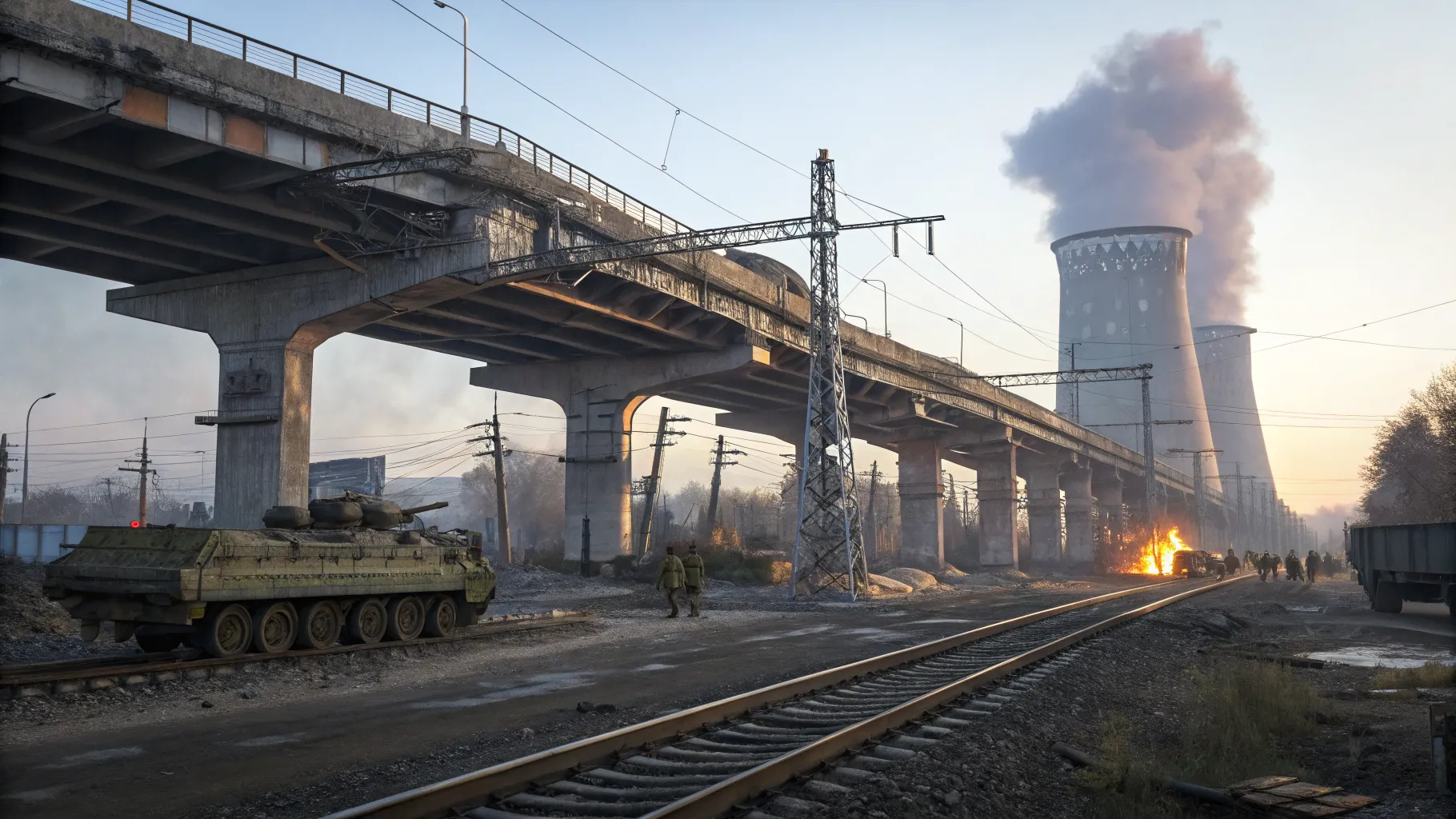
Ukraine struck infrastructure in occupied Crimea, targeting a rail bridge and a power plant, as tight restrictions on public life continued across the peninsula on day 1,582 of the full-scale war. The attacks sought to disrupt Russian supply lines and energy capacity while residents faced curfews, transport checks, and frequent air alerts.
The strikes highlight a steady effort by Kyiv to pressure Russian logistics in the south and set conditions for future operations. They also signal ongoing risks to civilian life in Crimea, where authorities maintain heightened security and blackout schedules after repeated hits on energy facilities.
Why Crimea’s Infrastructure Matters
Crimea has been central to Russia’s military effort since it seized the territory in 2014. The peninsula holds air bases, depots, and transport hubs that feed troops across southern Ukraine. Rail lines carry fuel, ammunition, and equipment to fronts in Kherson and Zaporizhzhia. Power plants supply both civilian needs and military sites, including air-defense radars and communications.
Ukraine has spent the past two years expanding long-range strike capabilities. Drones and missiles have hit ships, airfields, and repair yards. Each strike that disrupts rail or power can slow Russian resupply and force a diversion of resources to defense and repair.
What the Latest Strikes Signal
By targeting a rail bridge, Kyiv aims to interrupt steady cargo flows that rely on fixed rail corridors. Even short-term closures force re-routing to road links or other rail lines, adding delay and cost. Hitting a power plant compounds the pressure by affecting grid stability and the energy available to critical military sites.
- Rail disruptions slow fuel and ammunition deliveries to southern fronts.
- Power plant damage can reduce grid reliability and strain repair crews.
- Heightened air defenses may shift from front-line units to rear areas.
Together, these effects can create temporary gaps that Ukraine seeks to exploit with artillery, drones, and sabotage inside Russian rear zones.
Restrictions Tighten Daily Life
Crimean authorities have tightened controls on movement and public gatherings after repeated strikes. Residents report longer checks at roadblocks, rolling blackouts, and closures around sensitive sites. Air-defense activity and drone alarms disrupt daily routines and business operations.
Tourism, a key sector before the war, remains weak, and transport schedules face frequent changes. Schools and public institutions adjust hours during alerts. These measures show how the conflict has moved deeper into occupied areas, pulling civilians into military risk zones.
Military Impact and Risk Calculus
The focus on rail and energy mirrors a broader pattern in modern war. Logistics and power are soft targets with hard effects. Damage to a bridge can require specialized crews and equipment to fix. Power plants, even if partially hit, can take weeks to restore to stable output.
Yet such strikes carry risk. Russia can increase air defenses in Crimea, complicating future attacks. Repair teams may work quickly to patch lines and restore generation. Both sides adjust tactics, with decoys, electronic warfare, and mixed salvos to stretch defenses.
Legal and Diplomatic Context
Kyiv argues that strikes on military-use infrastructure in occupied territory comply with international law. Moscow calls them terrorist acts and vows retaliation. Western partners have debated the range and use of long-range systems, weighing escalation risks against Ukraine’s need to hit supply hubs.
So far, the trend has favored tighter, target-specific strikes on logistics and command nodes. Allies have stressed careful target selection and efforts to reduce civilian harm. The continued attacks in Crimea suggest that approach remains central to Ukraine’s strategy.
What to Watch Next
Key indicators in the coming weeks include the speed of repairs to the rail link, the stability of Crimea’s power grid, and any shift in Russian air-defense posture. Sustained transport disruptions could slow rotations and resupply to southern fronts. Prolonged energy strain would pressure both military and civilian systems.
For residents, the question is whether restrictions ease or tighten as strikes continue. For the war effort, the measure is whether Ukraine can turn logistical pressure into gains at the front, or force Russia to commit more resources to rear-area defense.
Rail bridge and power plant among latest infrastructure targeted by Kyiv in Crimea, where restrictions on public life have come to prevail.
The latest hits point to a contest focused on endurance and adaptation. If Ukraine keeps degrading rail and power in Crimea, Russia must balance immediate battlefield needs with the cost of constant repairs. That trade-off will shape operations through the summer and determine how much risk both sides accept across the peninsula and the southern front.

Kirstie a technology news reporter at DevX. She reports on emerging technologies and startups waiting to skyrocket.