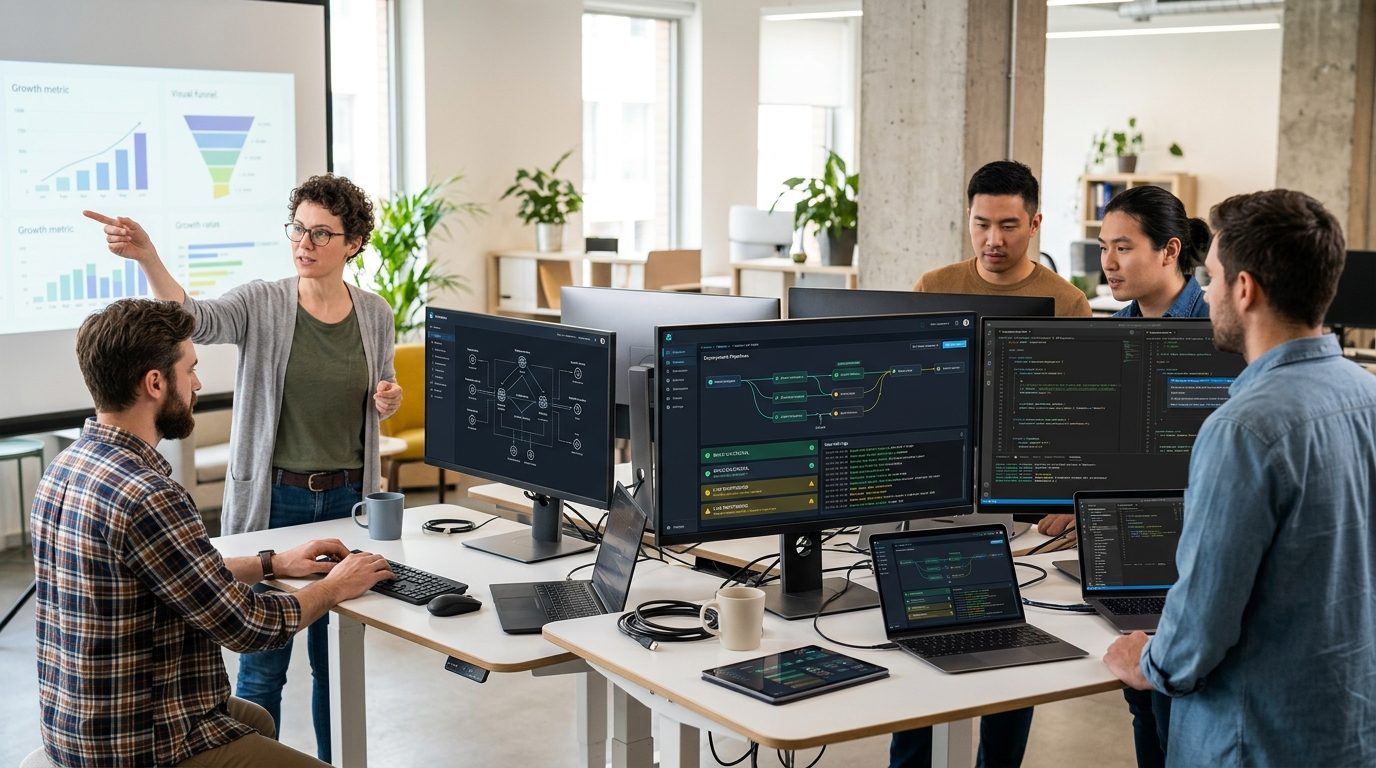
Perplexity is offering automated support for coding, deployment, monitoring, and growth reporting, targeting solo founders and small engineering teams with limited time and staff.
The service brings several stages of software development into one workflow. Its stated focus suggests an effort to reduce the operational work that often slows small technology companies.
Perplexity has not provided details about pricing, availability, security controls, or supported programming tools. Those factors will help determine whether the service can meet the needs of production software teams.
One System Across Four Tasks
Small teams often divide their attention between building a product and maintaining the systems behind it. Perplexity says its automation covers four major areas:
- Coding and software creation
- Deployment of updates
- Monitoring after release
- Reporting on product or business growth
Each task normally requires separate tools, services, or staff. Combining them could reduce manual handoffs and help founders spend more time on customers and product decisions.
“Perplexity automates coding, deploying, monitoring, and growth reporting for solo founders and small engineering teams.”
The scope is wider than that of a basic coding assistant. Deployment and monitoring move the service closer to daily software operations. Growth reporting also adds a business measurement function.
Why Small Teams Are the Focus
Solo founders face a basic resource problem. One person may need to write code, release updates, watch system performance, review user activity, and prepare reports.
Small engineering teams have similar limits. A developer handling an outage cannot work on a new feature at the same time. Automated checks and reports may reduce that pressure.
The model could also lower the need for several disconnected subscriptions. However, that benefit depends on how deeply Perplexity connects with existing development systems.
Automation does not remove responsibility from founders or engineers. Teams still need to review generated code, test releases, protect customer information, and respond when systems fail.
Reliability and Control Remain Key Questions
Coding errors can lead to broken features or security weaknesses. Automated deployment can spread those problems quickly if testing and approval controls are weak.
Monitoring also depends on clear and accurate alerts. Too many warnings can distract a small team, while missed warnings can allow an outage to continue.
Growth reporting presents another challenge. Reports must use consistent definitions for measures such as active users, retention, and revenue. Otherwise, automation may produce polished results that do not support sound decisions.
Prospective users will need information about human review, rollback options, access permissions, data storage, and integrations. Clear audit records would also help teams understand what the system changed and why.
A Broader Shift in Software Work
Software automation has moved from code suggestions into testing, release management, and operational support. Perplexity’s approach reflects that wider shift by linking technical work with business reporting.
For small teams, the strongest benefit may be coordination rather than code generation alone. A single service could connect an update with its deployment, monitor its performance, and report its effect on growth.
That same concentration creates risk. If one provider manages several critical functions, an outage or poor decision could affect the entire development process. Teams may need backup procedures and clear limits on automated actions.
Perplexity’s offer addresses a real constraint for lean companies: too much work and too few people. Its practical value will depend on accuracy, security, integrations, and user control. Pricing and performance evidence will be the next details to watch as small teams assess whether the service can safely take on core engineering duties.

Kirstie a technology news reporter at DevX. She reports on emerging technologies and startups waiting to skyrocket.