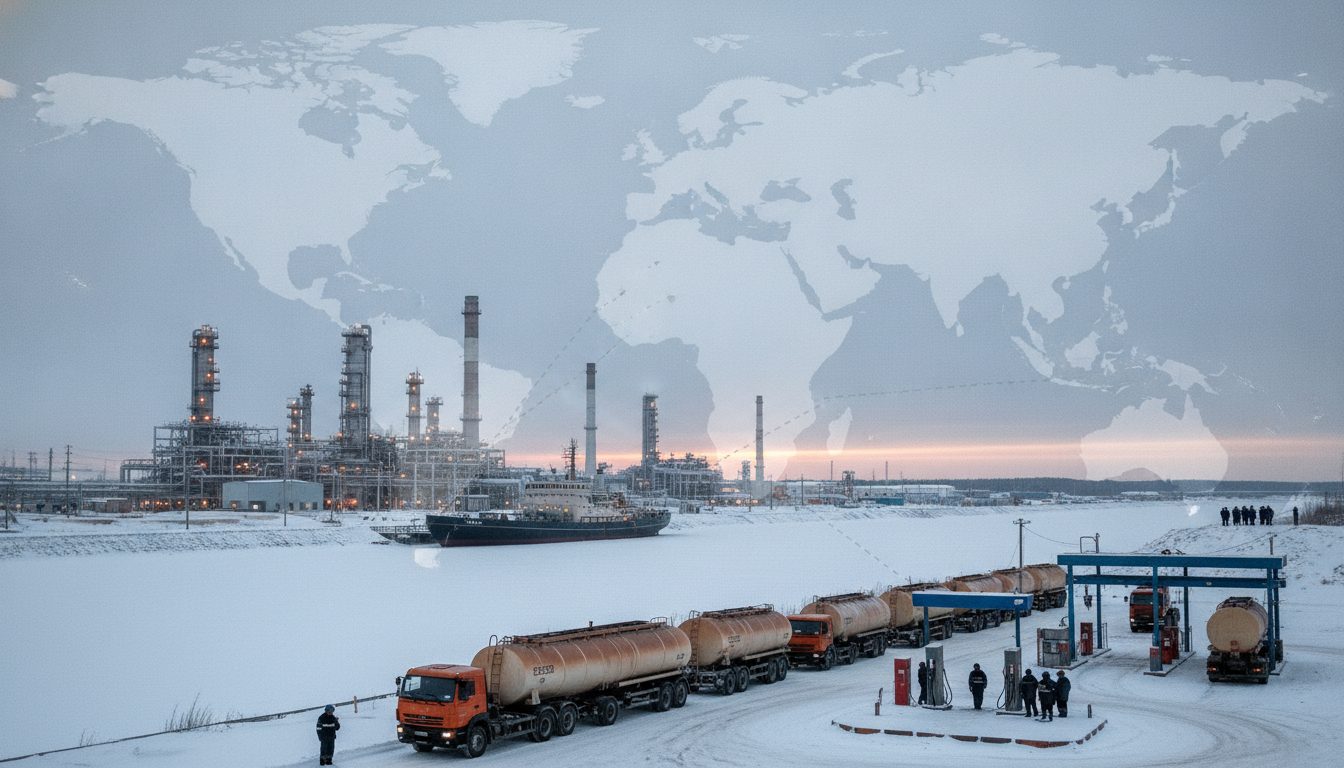
Russia has halted diesel exports after a wave of Ukrainian drone strikes on oil refineries, triggering domestic fuel shortages and rattling energy markets already on edge over risks in the Strait of Hormuz. The move threatens tighter supplies from one of the world’s top diesel shippers and raises the prospect of higher transport and farming costs from Europe to Africa and Latin America.
“Russia has fully banned exports of diesel after Ukrainian drone strikes on its refineries triggered widespread fuel shortages and as the global energy market braces for more disruption in the Strait of Hormuz.”
Background: A Key Supplier Pulls Back
Diesel is the workhorse fuel for trucks, ships, and farm equipment. Russia has been a major source, exporting roughly around one million barrels per day in recent years. After Europe restricted Russian refined fuel imports in 2023, Russian diesel found new buyers in Turkey, North Africa, the Middle East, and parts of Latin America.
Ukrainian drones have hit several Russian refineries in recent months, knocking out units that produce diesel and other fuels. The strikes have reduced output and forced more crude into storage. Domestic shortages inside Russia have followed, pushing authorities to prioritize internal supply.
This is not the first clampdown. Moscow briefly curbed diesel exports in 2023 to cool local prices. The latest halt is broader and comes amid wider geopolitical stress in key shipping lanes.
Immediate Effects on Supply and Prices
The export stop removes a significant stream of diesel from the seaborne market. Traders will likely bid up available barrels from the Middle East, India, and the United States to fill the gap. That could lift freight rates as ships sail longer routes and chase supply.
Import-dependent regions face the sharpest pain. Countries in North and West Africa, which had grown reliance on Russian diesel, may see pump price increases. European markets have become more diversified since 2023, but tighter global balances can still lift prices across the continent.
Refiners outside Russia may try to run harder to capture strong margins. Yet maintenance seasons and limited spare capacity can cap the response. Storage hubs will help buffer the shock, but inventories have trended lower in some regions, leaving less cushion.
Strait of Hormuz Adds a Second Risk
The Strait of Hormuz carries a large share of the world’s oil and fuel exports. Any new disruption there would restrict supplies from Gulf producers just as Russia steps back. Insurance costs and shipping delays through the choke point can ripple into refined products, including diesel.
Even without a shutdown, higher risk premiums raise delivered costs. That flows through to transport, industry, and agriculture. For governments managing inflation, these pressures arrive at a delicate time.
Who Wins, Who Loses
- Refiners with spare capacity may benefit from stronger margins.
- Importers with strategic stocks can smooth near-term shortages.
- Truckers, farmers, and shippers face higher fuel bills if prices rise.
- Low-income consumers risk sharper inflation in food and goods.
What to Watch Next
Two timelines matter now. First is how long Russia keeps exports halted. The second is how fast damaged refineries can restore units that make diesel. Both will shape the duration of the squeeze.
Market watchers will track rerouted flows. Middle Eastern and Indian refiners could redirect more diesel to Africa and Europe. The United States may lift exports if Gulf Coast margins justify it. Freight availability will be a key limiter.
Risk in the Strait of Hormuz remains a wild card. Even short-lived disruptions can move prices quickly. Shippers may diversify routes, but alternatives add time and cost.
Signals From Policy and Producers
Producers within OPEC+ may adjust crude output plans if refined product balances tighten for too long. Yet crude supply alone cannot solve diesel shortages if refining capacity is offline. Policymakers in import-dependent countries could consider fuel tax relief or targeted subsidies to shield consumers, though budgets are already stretched in many places.
For now, the clearest relief would come from Russian refinery repairs and a resumption of exports. Broader stability in key waterways would also ease pressure.
Russia’s halt creates a new stress point in a fragile fuel market. The next few weeks will show whether alternative suppliers can bridge the shortfall and whether shipping risks escalate. Watch refinery restart timelines, freight rates, and any signs of rationing. If the ban persists, higher diesel costs could filter through supply chains, testing inflation progress and household budgets worldwide.

Senior Software Engineer with a passion for building practical, user-centric applications. He specializes in full-stack development with a strong focus on crafting elegant, performant interfaces and scalable backend solutions. With experience leading teams and delivering robust, end-to-end products, he thrives on solving complex problems through clean and efficient code.