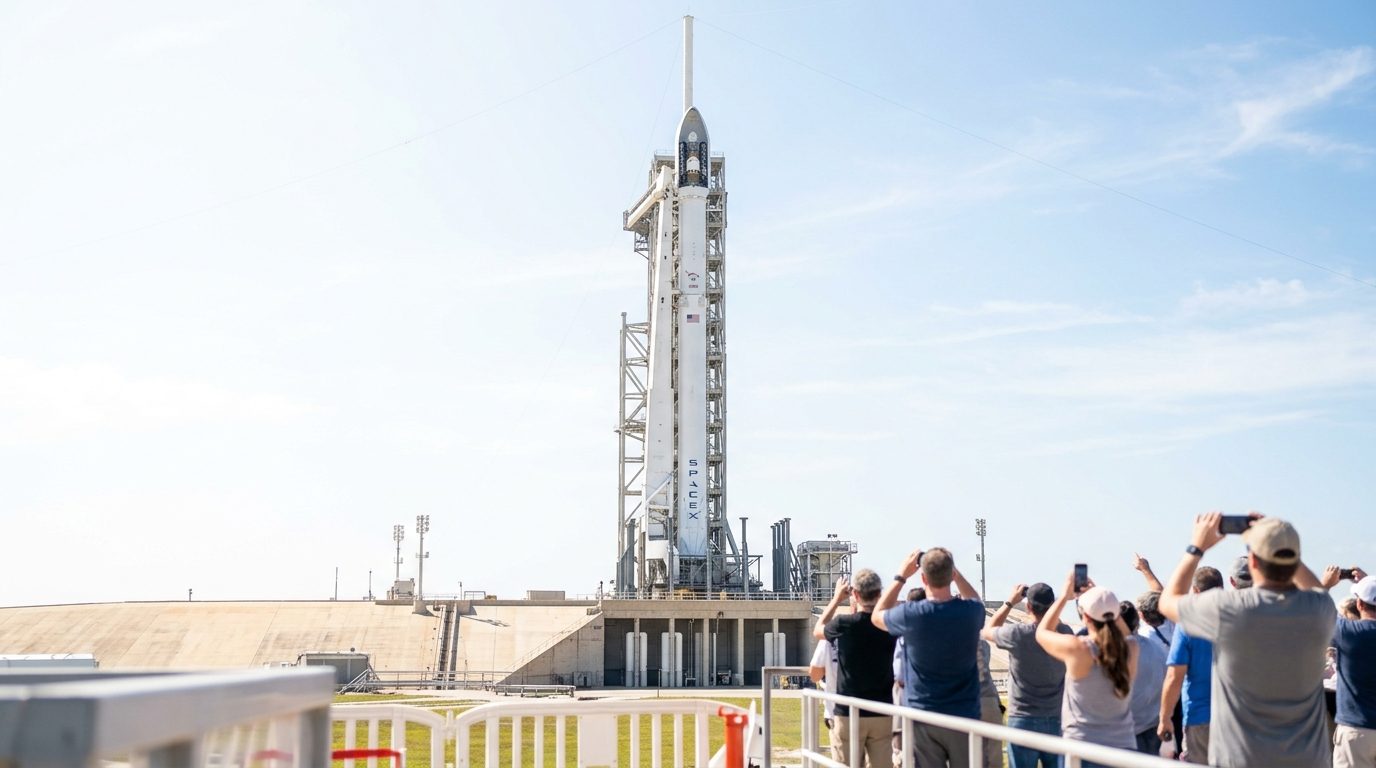
SpaceX has reported its first quarter as a public company as Elon Musk predicts Starlink could carry most global internet traffic within a decade.
The two developments put fresh attention on SpaceX’s financial performance and the scale of its satellite network. They also raise questions about competition, regulation, and the growing influence of private infrastructure in global communications.
Public Reporting Brings New Scrutiny
A first quarterly report marks a major change for any newly public company. Investors gain regular access to financial results, operating measures, and management forecasts.
For SpaceX, that scrutiny extends across a complex business. The company operates rocket launches while building Starlink, a satellite internet service designed to reach users from low Earth orbit.
No revenue, profit, subscriber, or launch figures were included in the available report summary. Those measures will be important for judging the company’s progress and valuation.
Investors will also watch how SpaceX balances spending across launches, satellite production, and network expansion. Each area requires large and continuing investment.
A public listing may provide wider access to capital. However, quarterly reporting can also create pressure for short-term results, even when space projects require years of planning.
Musk Sets a High Target for Starlink
Musk offered an ambitious forecast for the satellite service’s role in global connectivity.
“Starlink could deliver a majority of the world’s internet within a decade.”
The statement does not define whether “majority” refers to users, traffic, coverage, or available capacity. Each measure would produce a different assessment of Starlink’s reach.
Satellite internet can serve rural communities, ships, aircraft, and areas damaged by disasters. It may also help regions where installing fiber or mobile towers is costly.
Yet terrestrial networks remain central to internet access. Fiber systems can carry large amounts of data, while mobile networks serve dense urban populations through established local infrastructure.
Reaching Musk’s target would require progress in several areas:
- More satellites, launch capacity, and ground equipment
- Affordable service and user terminals across varied markets
- Regulatory approval from national governments
- Reliable performance as customer demand grows
SpaceX would also face concerns about orbital congestion, debris, astronomy, and dependence on one private operator. Governments may closely examine how Starlink handles access, security, and service restrictions.
Washington Tech History Returns to View
The GeekWire Podcast also revisited two posters mapping Washington’s technology community, created 17 years apart. The comparison offers a visual record of how the region’s business network has changed.
Such maps can show which companies remained influential, which disappeared, and which new sectors gained ground. A 17-year span covers major shifts in cloud computing, online retail, mobile services, artificial intelligence, and commercial spaceflight.
The episode also raised a timely question about Google’s first office. The brief reference did not provide the office’s location or explain the immediate reason for renewed interest.
Still, the question reflects a broader theme. Corporate offices often become markers of local technology history, especially as large companies expand, relocate, or reduce physical space.
SpaceX’s first public quarter will give investors an initial benchmark, but later reports should offer a clearer view of its finances. Musk’s Starlink forecast is much harder to measure and will depend on pricing, regulation, network capacity, and customer adoption.
The next tests will be whether SpaceX can support rapid growth while meeting public-market expectations, and whether Starlink can expand without creating unacceptable economic or orbital risks.

A seasoned technology executive with a proven record of developing and executing innovative strategies to scale high-growth SaaS platforms and enterprise solutions. As a hands-on CTO and systems architect, he combines technical excellence with visionary leadership to drive organizational success.